





















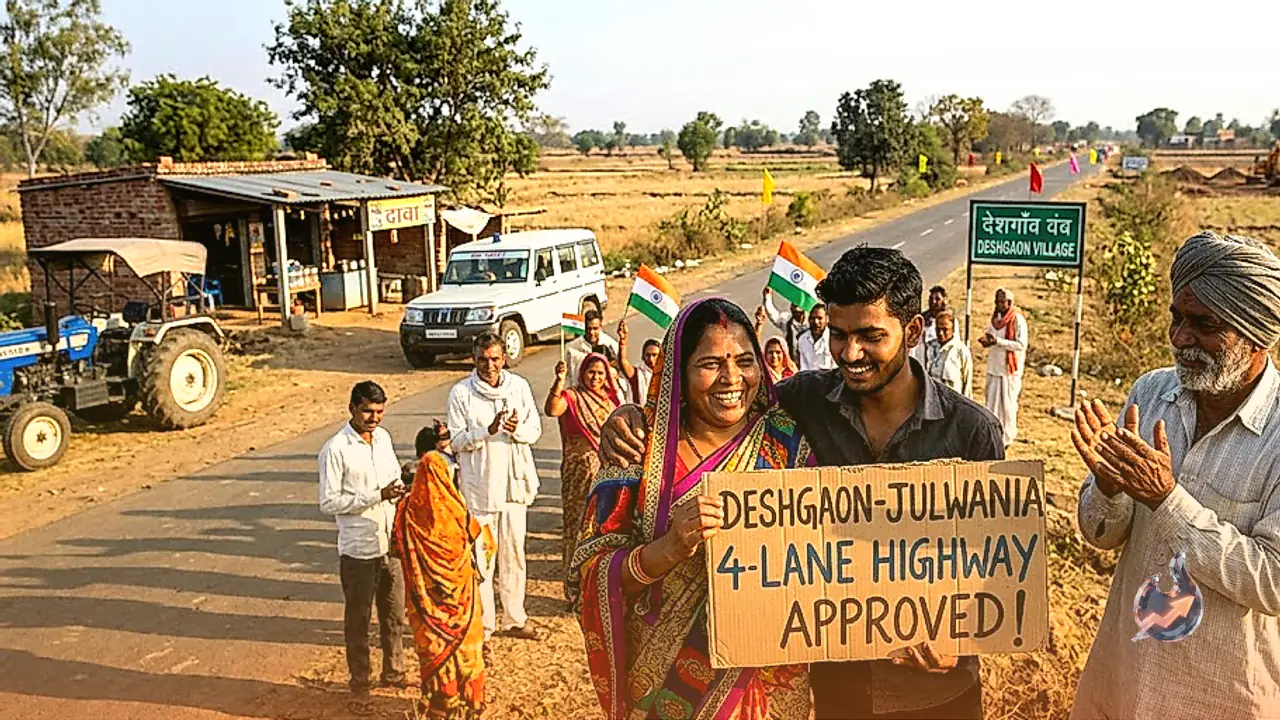

A major road infrastructure development is set to reshape the transport landscape of several key districts in Madhya Pradesh. Following the formalization of the contract between the National Highways Authority of India (NHAI) and the designated construction agency, the highly anticipated Deshgaon to Julwania four-lane highway project has received its final green light. The actual on-ground construction for this extensive road network upgrade is scheduled to commence in January 2027, marking the end of a long wait for local residents who have consistently demanded better transit corridors. This multi-crore infrastructure development is expected to completely revitalize regional movement, offering an efficient solution to the chronic traffic bottlenecks that currently plague the area.
Revamping Regional Connectivity and Reducing Hazards
The existing corridor is notorious for its severe traffic congestion, frequent gridlocks, and a high risk of accidents caused by sharp blind curves. Commuters traveling through this route face daily delays and safety hazards. By transforming this stretch into a modern four-lane highway, the project aims to establish a much faster, smoother, and safer travel experience. Beyond the immediate benefit of reduced travel times, the new highway will serve as a vital lifeline for numerous rural communities, linking once-isolated villages to the main economic centers of Madhya Pradesh. The enhanced infrastructure is anticipated to stimulate local trade, streamline the movement of agricultural goods, and generate fresh economic opportunities across the region.
Geographically, the direct advantages of this mega-road project will extend to multiple districts, including Khandwa, Khargone, Barwani, and Betul. By bridging the gap between rural production centers and urban markets, the highway will fundamentally alter the socio-economic dynamics of these areas. Better connectivity means that emergency services, educational institutions, and healthcare facilities will become far more accessible to the rural population, addressing a long-standing developmental gap in these southwestern districts of the state.
A Two-Phase Road Infrastructure Strategy
To ensure smooth execution and administrative efficiency, the entire construction initiative has been divided into two separate, well-defined phases. The first phase focuses on the stretch connecting Betul to Rudhi, which spans approximately 125 kilometers. Under this phase, the current road, which is currently configured as an intermediate lane, will be systematically upgraded to a standard two-lane highway. This segment of the project is estimated to cost more than Rs 1700 crore and has been assigned a strict two-year completion timeline once work begins.
The second and most critical phase of the plan centers on the 108-kilometer stretch running between Deshgaon and Julwania. This portion of the highway will be fully converted into a high-speed four-lane corridor, requiring an investment exceeding Rs 2600 crore. This extensive financial outlay highlights the critical importance of the Deshgaon to Julwania link in the national highway framework, ensuring that the road can comfortably handle the projected increase in heavy commercial vehicle traffic over the coming decades.
Strategically Planned Bypasses to Decongest Urban Centers
A major highlight of this comprehensive road design is the strategic integration of multiple bypasses. These bypasses are specifically designed to redirect heavy transit vehicles away from congested town centers, thereby improving local air quality and reducing inner-city traffic chaos. New bypasses will be constructed around several key localities, including Saikheda, Birul, Bhikangaon, Bamnala, Lalani, Devalgaon, Khargone, Un, Talakpura, Shegaon, and Julwania.
Among these, a major highlight is the planned construction of a 16-kilometer-long Greenfield bypass in the Khargone district. This dedicated corridor will ensure that long-distance freight and commercial traffic can completely bypass the city limits of Khargone, drastically reducing the strain on the city's internal road network. The target completion date for the entire four-lane project has been set for December 2030, promising a total overhaul of the region's transport network within this decade.
Balancing Infrastructure Growth with Wildlife Protection
While the project focuses heavily on human development and industrial growth, it also incorporates progressive measures to safeguard the local ecosystem. A segment of the highway passes through the ecologically sensitive Satpura-Melghat Tiger Corridor, which is home to a diverse range of wildlife. To mitigate the impact of high-speed traffic on these animal habitats and prevent vehicular collisions with wildlife, the project planning includes specialized environmental safeguards.
Engineers will construct seven dedicated underpasses specifically designed to allow wild animals to cross beneath the busy highway safely. Additionally, specialized monkey ladders will be installed to assist arboreal species in crossing the road corridor without coming into contact with vehicle traffic. These eco-friendly infrastructure designs ensure that economic expansion does not come at the cost of biodiversity conservation, setting a positive precedent for future highway projects in environmentally sensitive zones.