
























President Droupadi Murmu has granted assent to the Frontier Nagaland Territorial Authority (FNTA) Bill, clearing the constitutional pathway for an autonomous administrative framework across six eastern districts of Nagaland. The approval marks a key moment in resolving long-standing regional grievances and fulfilling the administrative expectations of the local tribal populations who have sought greater control over their governance and resource distribution.
Jurisdiction and Devolution of 46 Subjects
The proposed governance structure will encompass the six eastern districts of Tuensang, Mon, Longleng, Kiphire, Noklak, and Shamator. Functioning as a self-governing entity, the FNTA is designed to accelerate infrastructure growth and institutionalize decentralized public administration in a historically remote belt of the state.
Under the statutory framework approved by the constitutional head, 46 administrative subjects are slated to be devolved to the territorial authority. This transfer of authority will grant community representatives direct authority over grassroots planning, policy implementation, and budgetary execution, targeting the deep-seated developmental imbalances that have persisted in the eastern districts.
State Leadership Acknowledges Central Cooperation
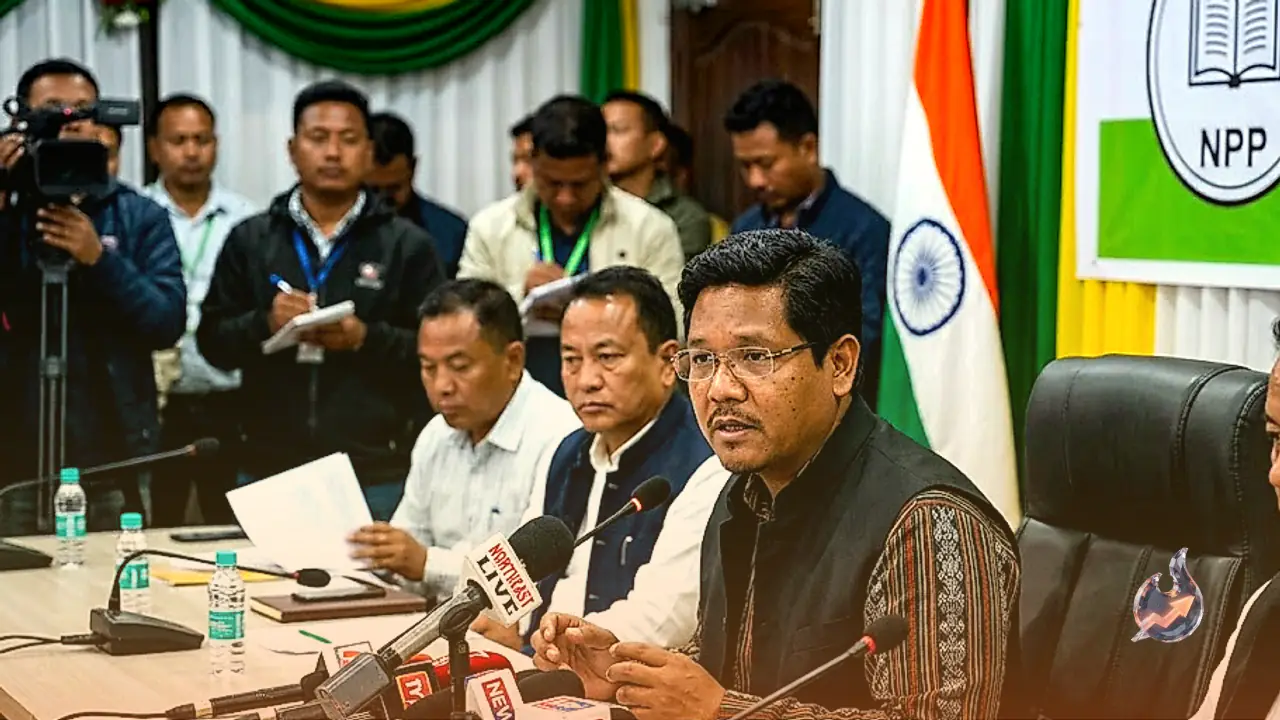
Nagaland Chief Minister Neiphiu Rio publicly welcomed the presidential assent in a statement shared on the social media platform X. Rio expressed his gratitude to President Murmu for endorsing the legislative measure and specifically recognized the Union Ministry of Home Affairs for systematically coordinating discussions between all stakeholders. The Chief Minister described the breakthrough as a vital advance toward meeting the core aspirations of Eastern Nagaland's residents.
Echoing these sentiments, Deputy Chief Minister and BJP Legislature Party leader Yanthungo Patton termed the development a historic milestone for the entire region. Patton commended both the Union government and the President for facilitating the transition, stating that the autonomous mechanism will significantly advance the political and administrative ambitions of the eastern communities.
The Tripartite Pact and Historical Context
The operationalization of the FNTA traces back to a tripartite memorandum of agreement executed on February 5. That accord was formally signed by representatives of the Union Government, the Nagaland State Government, and the Eastern Nagaland People's Organisation (ENPO), an apex collective representing eight recognized Naga tribal groups native to the eastern belt.
The structured pact aimed to resolve calls for self-determination by granting substantial local autonomy while explicitly ensuring that the geographic territory remains an integral part of Nagaland. Since 2010, the ENPO had spearheaded a campaign for a separate statehood, citing decades of state-level neglect and sluggish social infrastructure development. The FNTA was structured as a compromise model to address these economic and infrastructural disparities through localized governance.
Legislative Journey to Final Operationalization
Finalizing the authority's legal framework required extensive administrative deliberations. An initial version of the draft bill was tabled in the state assembly in March, but proceedings were deferred after the Centre, the ENPO, and the Eastern Nagaland Legislators' Union sought formal clarifications on specific jurisdictional and administrative clauses.
Following revisions and consensus-building, the Nagaland Legislative Assembly unanimously voted the bill into law on September 3. With the formal assent of President Murmu secured, the operational launch of the FNTA now shifts to the state administration, which must issue the requisite statutory notifications and executive orders to establish the governing apparatus on the ground.