


















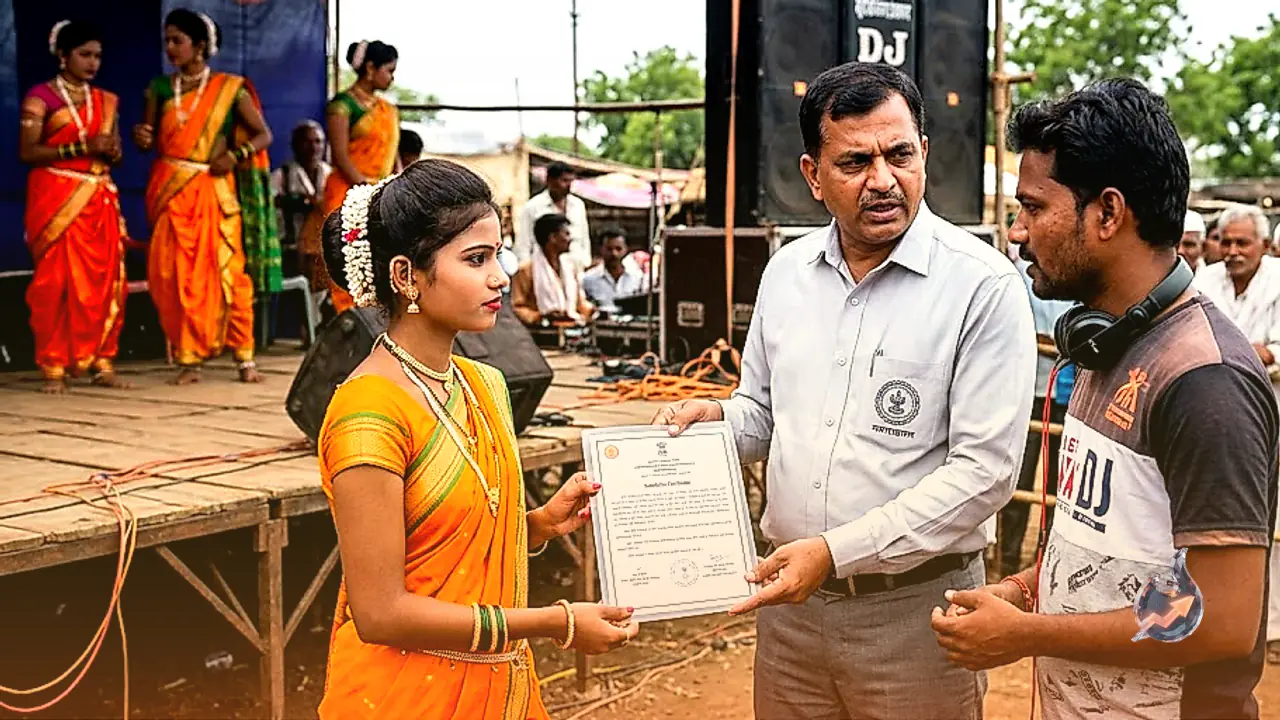

Authorities in Maharashtra have tightened regulatory enforcement surrounding public cultural events, specifically targeting the commercialized 'DJ Lavani' performances across the state. Ahead of the festive season, the state administration has made it strictly mandatory for event organizers to obtain an official 'Suitability Certificate' from the State Stage Performance Censorship Board before hosting any such show. Under fresh instructions issued to law enforcement agencies, local police must refuse event permissions unless organizers present an authorized certificate granted after board review of the performance script, schedule, or presentation summary.
Reasons Behind the Regulatory Crackdown
This administrative action follows an influx of formal complaints alleging that events advertised as traditional Lavani often feature suggestive dance routines, loud amplified music, and film tracks. In a official circular issued on August 14, addressed to the Director General of Police, Police Commissioners, and District Superintendents of Police, the censorship board highlighted the misuse of existing event permits. The board noted that clearance certificates granted for classical folk art shows were being improperly used to stage unapproved live DJ events featuring vulgar performances. The circular emphasized that such practices degrade traditional art forms and mislead the public.
Police Mandate and Enforcement Criteria
The censorship board has instructed police departments across Maharashtra to verify mandatory board approvals prior to granting venue or public assembly permissions. This requirement covers a wide spectrum of public entertainment including plays, one-act performances, folk dramas, Tamasha, traditional Lavani, folk music gatherings, and festive melas (fairs). Furthermore, the board clarified that holding a valid Suitability Certificate does not offer immunity to organizers. If performers breach approved content parameters or engage in obscene routines on stage, law enforcement authorities retain full power to initiate penal action against the event management and artists.
Traditional Folk Heritage versus Commercial DJ Lavani
Lavani remains one of the most prominent traditional performing arts of Maharashtra, historically combining poetry, music, dance, and theatre to portray themes of romance, social commentary, and heroism. Rooted in the Peshwa era, the term originates from 'Lavanya', meaning beauty. In authentic presentations, female artists wear traditional nine-yard (Nauvari) sarees, heavy ghungroos, and perform alongside traditional instruments such as the dholki and tuntune.
In contrast, modern 'DJ Lavani' has emerged as a commercialized variant often seen at local fairs and festival gatherings. Traditional acoustic instruments are replaced with high-decibel sound systems playing Hindi and Marathi film tracks or item numbers. Costumes frequently shift from classic sarees to modern attire, accompanied by provocative dance styles. Traditional artists and cultural preservationists have voiced concern over this trend, noting that the dilution of classic Lavani harms the livelihood of authentic folk artists and erodes the state's cultural legacy. The strict guidelines aim to curtail such commercial excesses while preserving the integrity of stage performances.