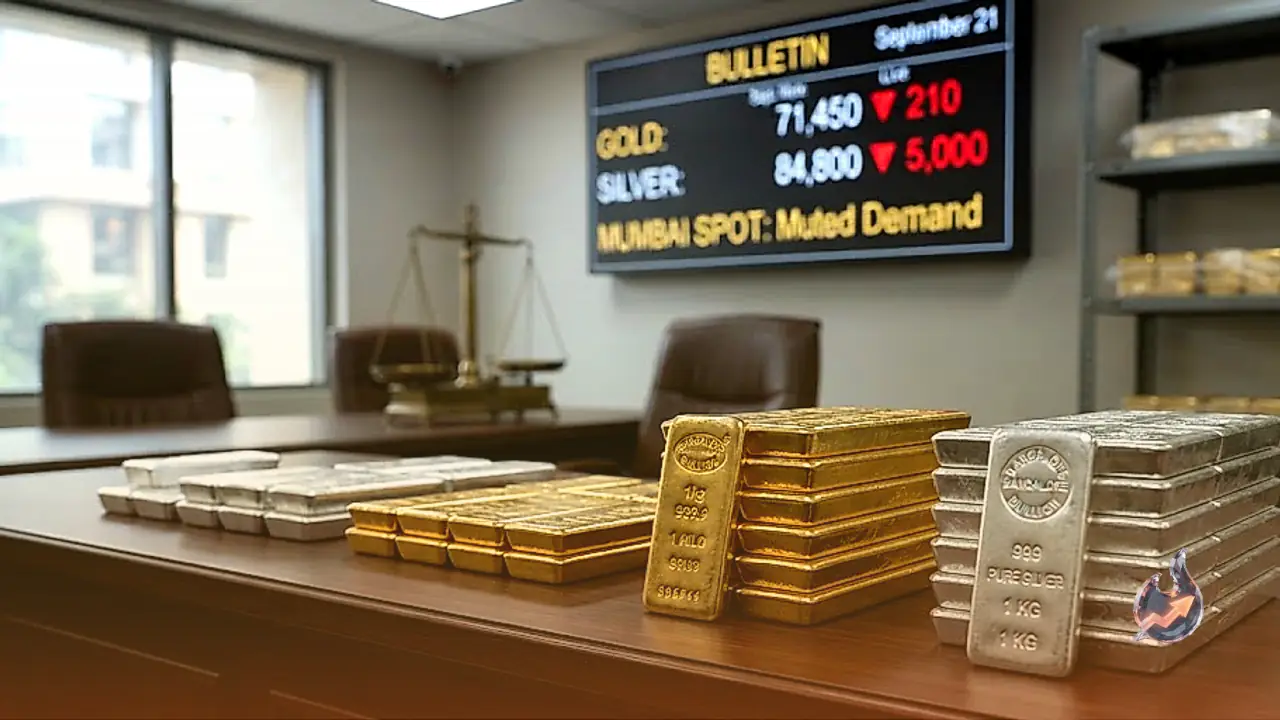

























Precious metal contracts traded with contrasting momentum on the Multi Commodity Exchange on Thursday, October 29, coinciding with the Karwa Chauth festival across India. Gold futures witnessed mild buying support following the US Federal Reserve's determination to maintain status quo on benchmark interest rates, whereas silver struggled under persistent selling pressure. The divergence arrived during an active seasonal purchasing window when domestic households traditionally acquire bullion, jewellery, and commemorative coins.
By 10:41 am IST, MCX gold futures for December 4, 2026, delivery advanced to Rs 1,43,860 per 10 grams. This represented an uptick of Rs 155, or 0.11 percent, over the prior close of Rs 1,43,705. Trading began at Rs 1,43,668, with aggregate trading volume reaching 894 lots. Alongside this futures quote, the corresponding spot price was pegged at Rs 75,340.
Conversely, silver futures remained weighed down throughout the morning session. At 10:46 am IST, the MCX silver contract maturing on December 4 changed hands at Rs 1,93,679 per kilogram. The price marked a decrease of Rs 646, or 0.33 percent, from Wednesday's closing level of Rs 1,94,325. Silver had commenced trading at Rs 1,92,643, recording a volume of 959 contracts, while its prevailing spot rate stood at Rs 90,951.
Federal Reserve Policy and Yield Environment
The US Federal Reserve maintained its policy interest rate within the 3.75 percent to 4 percent band, providing immediate breathing space to gold after a series of selling bouts. By refraining from tightening credit conditions further, policymakers averted an abrupt tightening in global liquidity, even though the move alone does not ensure an uninterrupted bull run for precious metals.
Short-term trajectory for bullion continues to hinge on forthcoming American consumer inflation updates, movements in the greenback, Treasury bond yields, and market assessments surrounding upcoming central bank meetings. Because holding gold yields no regular interest, fluctuations in debt market returns heavily sway investor preference between non-yielding physical assets and fixed-income government bonds.
Silver Exposure to Industrial Cycles
The inability of silver to capitalize on the central bank pause stems from its dual identity in commodity markets. Unlike gold, which acts predominantly as a safe haven and monetary reserve, silver carries broad manufacturing applications across electronics, green technology, and industrial components. Consequently, shifts in industrial growth expectations and broad-based cyclical demand exert substantial pull on its pricing behavior.
Physical Retail Pricing Across Carat Categories
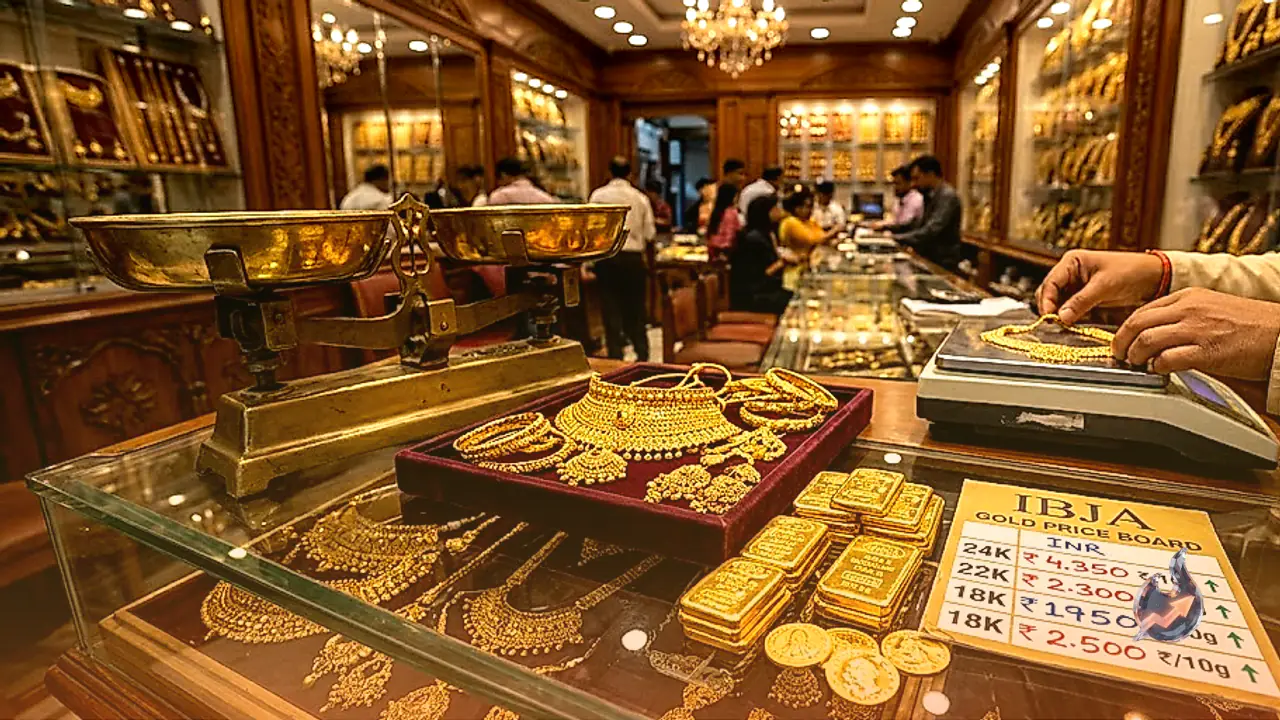
Spot and retail rates in physical Indian jewellery markets continued to trade at premiums compared to futures parity, factoring in local duties, transportation, and fabrication expenses. On Thursday, retail gold pricing stood as follows
- 24 Karat gold: Priced at Rs 14,395 per gram, translating to Rs 1,43,950 for 10 grams and Rs 14,39,500 for a 100-gram lot.
- 22 Karat gold: Quoted at Rs 13,195 per gram, amounting to Rs 1,31,950 for 10 grams and Rs 13,19,500 per 100 grams.
- 18 Karat gold: Stood at Rs 10,796 per gram, aggregating to Rs 1,07,960 for 10 grams and Rs 10,79,600 for 100 grams.
Retail silver experienced downward revisions in line with futures softness. Physical silver was available at Rs 215 per gram, down by Rs 5 per gram compared to the Rs 220 per gram rate recorded in the prior trading session. The reduction provided minor price relief to domestic shoppers buying silver utensils, pooja articles, and ornamental pieces during the festival. Consumers are nonetheless advised to survey local showrooms, as final invoices incorporate varied city-level markups.
Technical Indicators and Market Stance
Market technicians are monitoring critical support bands to gauge potential stabilization in bullion. Kaveri More, Commodity Technical Analyst at Choice Broking, noted that dollar strength could continue challenging gold, although softer macroeconomic conditions might facilitate an eventual recovery.
According to More, immediate intraday support lies within the 193000 to 191600 range, which serves as an essential zone to anchor prices amid ongoing bullion sector turbulence. More also highlighted that the gold-to-silver ratio stands at 74.8:1, underscoring that gold maintains a persistent relative advantage over silver.