




















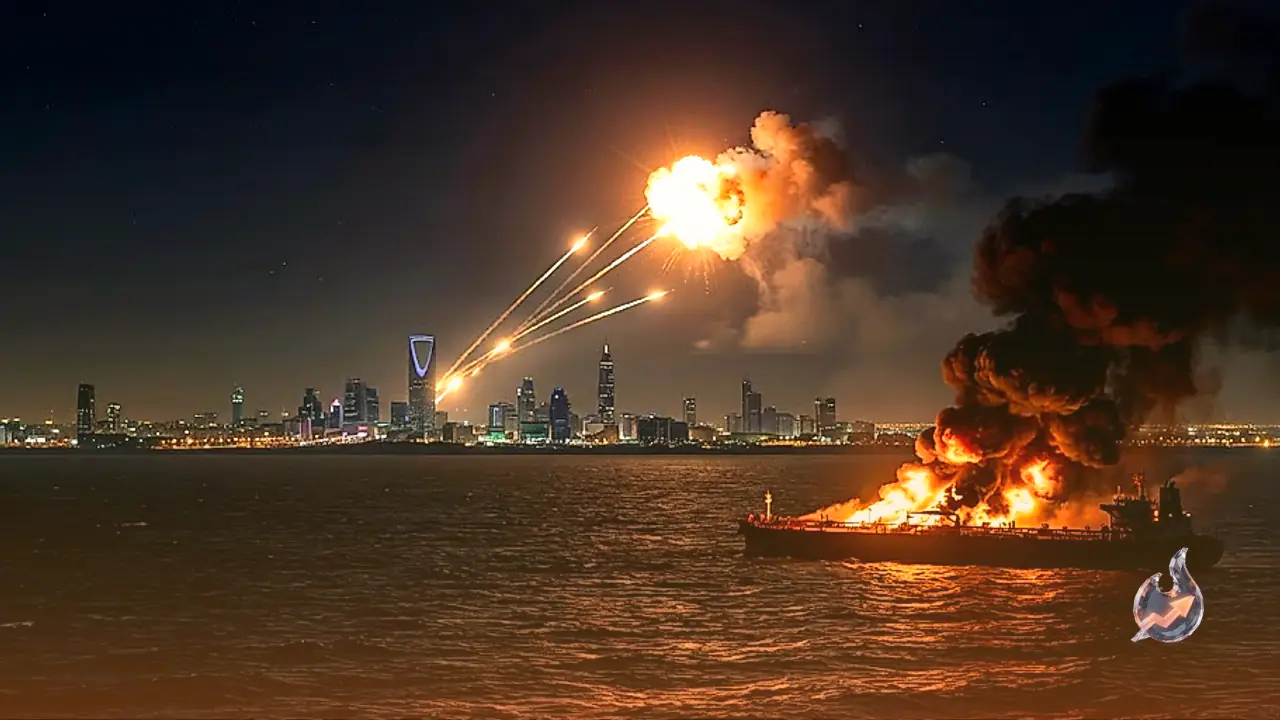

Security conditions across the Middle East deteriorated sharply on Tuesday as a series of heavy explosions echoed through the Saudi capital of Riyadh, coinciding with rising maritime peril in the Persian Gulf. Saudi air defense systems were triggered into high alert following the launch of ballistic missiles from Yemen, while naval forces reported a burning oil tanker near the strategic Strait of Hormuz, underscoring the expanding geographic footprint of the regional conflict.
Missile Interceptions Over Riyadh Cause Capital-Wide Security Shock
Residents in Riyadh reported hearing at least four loud detonations on Tuesday morning shortly after military authorities activated regional threat warnings. Saudi civil defense officials confirmed that air defense batteries successfully intercepted two ballistic missiles launched toward the capital by Iran-backed Houthi forces from Yemen. However, it was not immediately clear whether the loud blasts heard across the city resulted from falling missile debris or the high-altitude detonations of the interceptor missiles.
Civil defense authorities stated via official updates on X that shrapnel from the intercepted missiles rained down over several neighborhoods in Riyadh. The falling debris caused structural damage to a building, disrupted a local construction site, and damaged a parked civilian vehicle. Emergency alerts had also been briefly issued for several southern governorates, including Abha, Najran, and Khamis Mushait, before being rescinded once the immediate aerial threat was neutralized. No major civilian casualties were initially confirmed in the capital.
Houthis Claim Strikes on Saudi Defense Ministry and Energy Facilities
In a public statement released on X, Houthi military spokesman Brigadier General Yahya Saree claimed full responsibility for the aerial offensive. He asserted that Houthi forces launched a ballistic missile directly targeting the headquarters of the Saudi Ministry of Defense in central Riyadh.
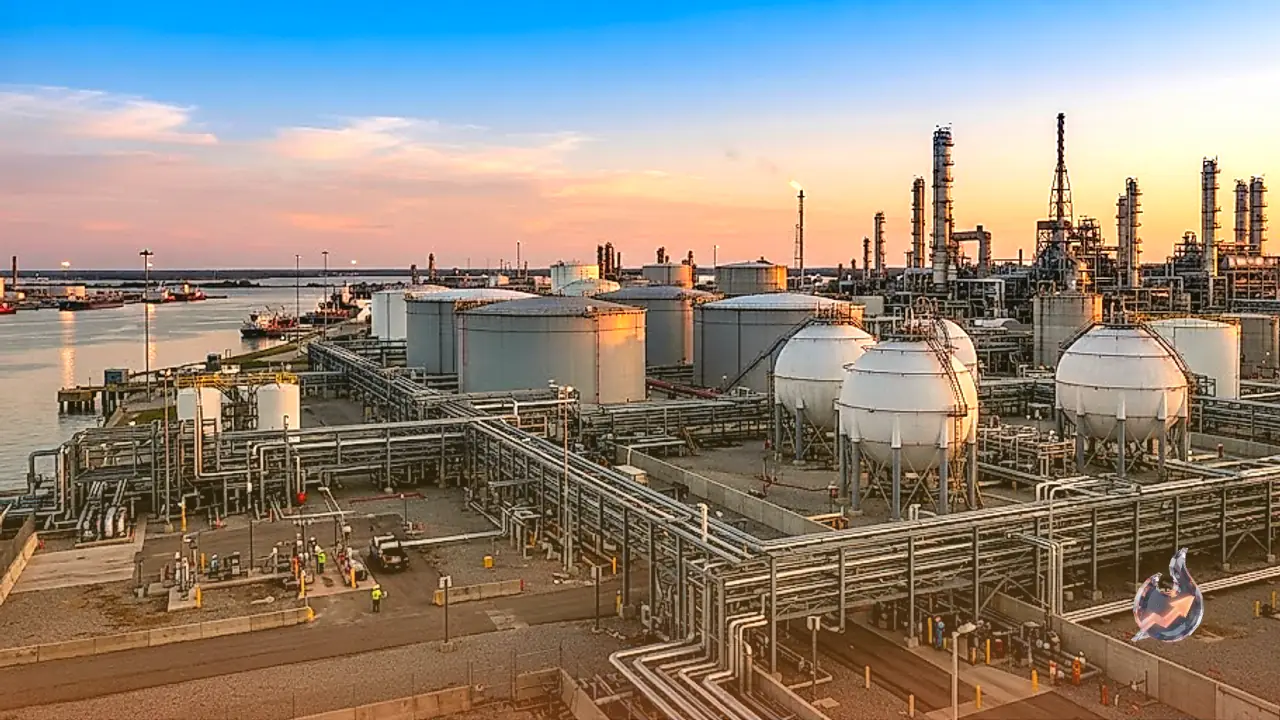
Furthermore, Brigadier General Yahya Saree claimed that Houthi units executed a separate missile strike against the Ras Tanura oil refinery, located in Saudi Arabia's eastern province. Saudi government officials and state energy representatives did not immediately comment on the status of the Ras Tanura facility, and the claim could not be independently verified.
Additional Aerial Interceptions Reported Across Eastern and Southern Saudi Arabia
The missile assault on Riyadh was accompanied by broader barrage attempts across other regions of the kingdom. Saudi defense authorities stated that three additional ballistic missiles fired from Yemen toward the eastern province were identified and destroyed in mid-air by air defense networks on Tuesday.
Brigadier General Turki al-Malki, speaking on behalf of the Saudi-led military coalition on X, detailed that coalition forces successfully downed four Houthi attack drones aimed at targets in southern Saudi Arabia. He corroborated the destruction of the three eastern-bound ballistic missiles, though coalition statements did not provide public imagery or technical breakdowns of the intercepted projectiles.
Lethal Strikes Reported Near Taiz as Internal Yemeni Fighting Escalates
Parallel to cross-border missile exchanges, violence within Yemen intensified significantly around the city of Taiz. The Houthi-controlled health ministry alleged that Saudi-backed Yemeni government forces launched a heavy bombardment targeting a commercial gas station near Taiz late Monday evening.
Health ministry spokesman Anees al-Asbahi claimed the strike on the fuel station resulted in two civilian fatalities and left multiple others injured. In response, the official Yemeni military posted on X that its forces had carried out targeted airstrikes directed exclusively at established Houthi military positions and tactical strongholds in the region.
Airstrikes Reported Near Mocha and Bab al-Mandeb Amid Siege of Taiz
Footage broadcast by the Houthi-aligned Al-Masirah television network showed body bags and wounded individuals receiving emergency treatment in local medical facilities. The network further reported that government forces conducted airstrikes on Tuesday near the Houthi-controlled port city of Mocha and the Dhubab district, situated close to the strategic Bab al-Mandeb strait.
A resident in Mocha confirmed via phone that two powerful explosions shook the area around 4:00 AM, with one blast occurring in close proximity to the port infrastructure. The witness spoke on condition of anonymity due to severe safety concerns regarding Houthi retaliation.
Taiz, recognized as Yemen's third-largest city and the capital of Taiz Governorate, remains a focal point of the ongoing civil war. Houthi forces have maintained a tight siege over the municipality for several weeks, severing vital supply routes connecting to government-controlled territories, while government units continue counter-offensives to break the blockade.
Oil Tanker Ignites Following Sea Mine Collision Near Strait of Hormuz
The security crisis expanded dramatically into international maritime lanes on Tuesday. The Iranian military reported that a commercial oil tanker struck a naval sea mine east of the Strait of Hormuz, causing a fire to break out aboard the vessel.
According to reports from Iranian military sources and state media, the specific name and flag registry of the damaged tanker were not immediately disclosed. Iranian defense officials alleged that the vessel had disabled its automatic identification tracking system and attempted to navigate through a restricted maritime transit zone. While the tanker suffered physical hull damage, no casualties among the crew were reported.
Iranian Naval Warnings and Political Declarations in Moscow
Following the mine explosion, the Iranian Navy issued a formal maritime notice declaring the Strait of Hormuz unsafe and closed for unauthorized transit. Naval commanders warned that vessels attempting uncoordinated passage through the waterway face extreme operational risks, stipulating that all commercial shipping must coordinate directly with Iranian armed forces to secure passage.
Concurrently, Iranian President Masoud Pezeshkian addressed global leaders at the Gas Exporting Countries Forum summit held in Moscow. President Masoud Pezeshkian sharply criticized foreign military deployments, asserting that US military presence in the Persian Gulf is directly destabilizing energy markets, triggering price volatility, and posing a fundamental threat to global economic growth.
Houthi Leadership Issues Stern Warning to Egypt Over Saudi Support
Adding to the diplomatic volatility, Houthi political leadership issued a direct warning to Egypt regarding its foreign policy stance in the region. Mohammad al-Bukhaiti, a prominent member of the Houthi political bureau, stated in an interview that recent parliamentary declarations in Cairo expressing support for Saudi Arabia risk drawing Egypt directly into the Yemeni war.
Mohammad al-Bukhaiti emphasized that Houthi authorities would treat Egyptian alignment with Riyadh as a hostile act against Yemen, characterizing Saudi military operations in Yemen as unprovoked aggression. As Egypt represents the most populous nation in the Arab world, any formal military entry by Cairo could significantly alter the regional strategic balance.