






















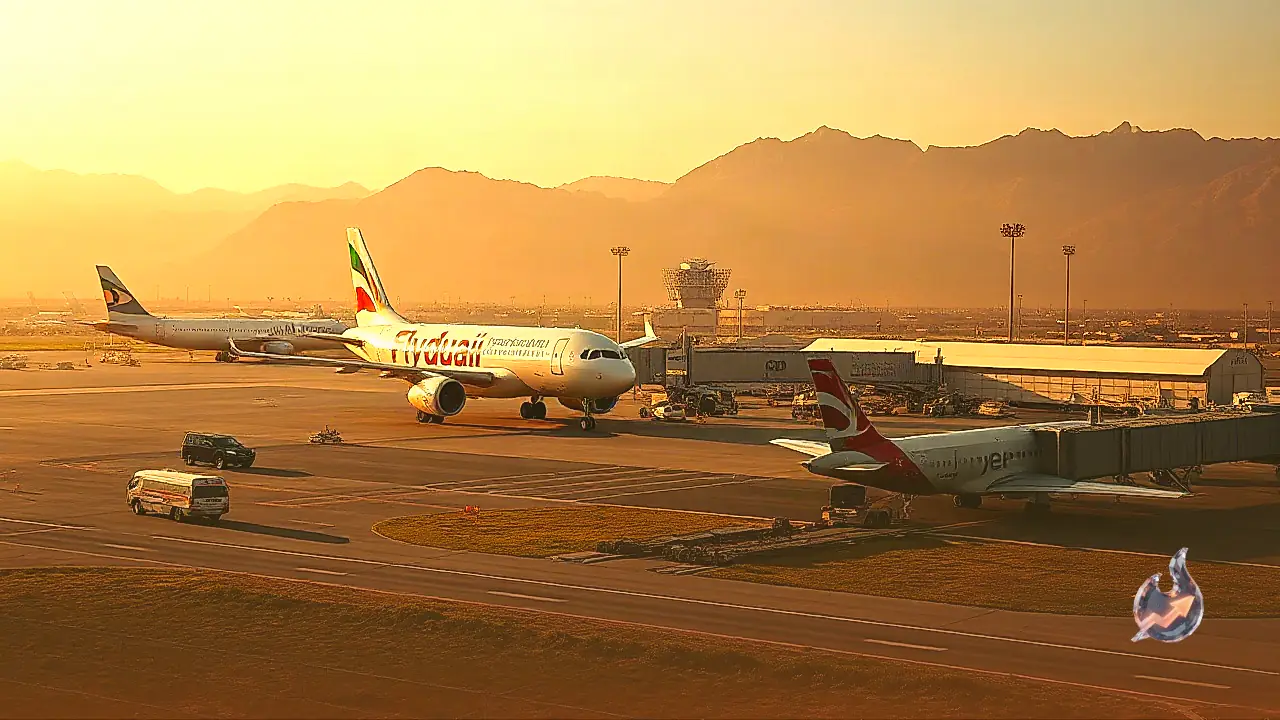

A scheduled international passenger journey between Dubai and Tel Aviv took a chaotic turn midway through its flight path when a physical confrontation erupted inside the flight deck. The mid-air brawl involving the captain and first officer forced the aircraft to abort its planned course toward Israel. Carrying approximately 150 people on board, the commercial airliner was promptly diverted and landed safely at an airport across the border in northeastern Saudi Arabia, triggering high-level military and government alerts in the process.
Mid-Air Hijack Code and Transponder Confusion
The Flydubai aircraft had departed Dubai International Airport in the United Arab Emirates early on Wednesday morning, bound for Ben-Gurion Airport in Tel Aviv. Approximately two hours into the journey, flight tracking data recorded the plane broadcasting an emergency squawk signal. Within minutes, the aircraft transponder briefly shifted to the specific international code reserved for an unlawful interference or hijacking attempt, before crew members switched the transponder setting back to a standard general emergency broadcast.
The brief hijacking transmission caused immediate concern across regional aviation and defense networks. However, the Israeli prime minister's office clarified that the event was not believed to be an actual hijacking situation. Defense officials indicated that the sequence of distress signals was triggered directly by a physical brawl and severe dispute between the captain and the co-pilot while operating the aircraft at cruising altitude.
Diversion to Tabuk Airport in Saudi Arabia
The aircraft was carrying around 150 occupants, the majority of whom were Israeli passengers. Given the severe breakdown of crew coordination and order in the cockpit, the flight could not continue on its intended course toward Tel Aviv. Instead, the plane diverted into Saudi airspace and touched down at Tabuk Airport in northeastern Saudi Arabia. The unexpected diversion to Saudi soil under such unusual operational circumstances highlighted the severity of the disturbance inside the cockpit.
Military Response and High-Level Security Consultations
The alarming signals coming from an inbound civilian airliner prompted an immediate defense reaction in Israel. The Israeli air force scrambled fighter jets into the air to monitor the situation and respond to any potential aerial threat. Concurrently, Prime Minister Benjamin Netanyahu convened urgent consultations with security and defense personnel to evaluate the developments. Commercial aviation protocol relies strictly on cockpit crew resource management, making an outright physical fight between pilots an extraordinary breach of operational standards that requires extensive formal inquiry.