






















Military friction in the Middle East has escalated sharply into a severe direct conflict following new cross-border operations by American forces. United States Central Command (CENTCOM) confirmed that US military units initiated a fresh round of targeted strikes on Tuesday night against facilities belonging to Iran's Islamic Revolutionary Guard Corps (IRGC) inside Iranian territory. According to an official statement published on X at 12 PM ET, the tactical intervention represents a major escalation in the ongoing regional standoff.
Direct Military Action in Iranian Territory
According to the US military command, the decision to strike targets located within Iran comes as a direct response to recent hostile actions executed by the IRGC. Washington indicated that Iranian units had repeatedly attempted to target commercial maritime vessels operating within the Strait of Hormuz as well as US military personnel deployed across the broader region. This direct operation inside Iranian borders marks a critical shift in the long-running confrontation between Washington and Tehran.
Tension in Gulf of Oman and Iranian Retaliation
Simultaneously with the onset of the US military strikes, Iranian forces launched anti-ship missiles targeting US Navy warships deployed in the Gulf of Oman. Detailed assessments regarding the impact of these missile strikes remain unconfirmed. It has not yet been established whether any of the launched anti-ship missiles hit their intended naval targets, caused physical damage to American vessels, or were intercepted mid-flight by onboard defense systems.
Impact on Strait of Hormuz and Explosions in Bandar Abbas
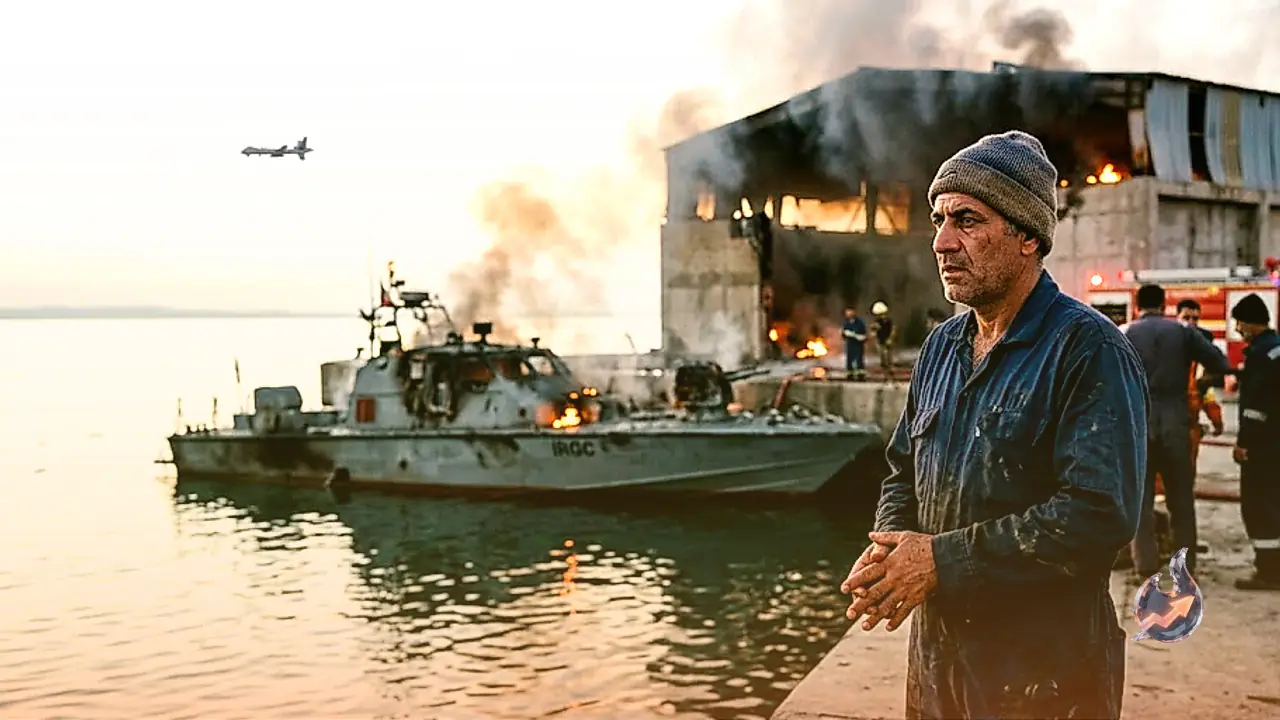
Following the exchange of fire, multiple powerful explosions echoed across key maritime and military corridors in southern Iran. Iranian state broadcaster IRIB confirmed that heavy blasts occurred east of the coastal city of Bandar Abbas, near Masan village on Qeshm Island, and along the Strait of Hormuz. The rapid sequence of US aerial bombardments and retaliatory Iranian missile launches highlights an intensifying bilateral escalation across vital strategic waterways.