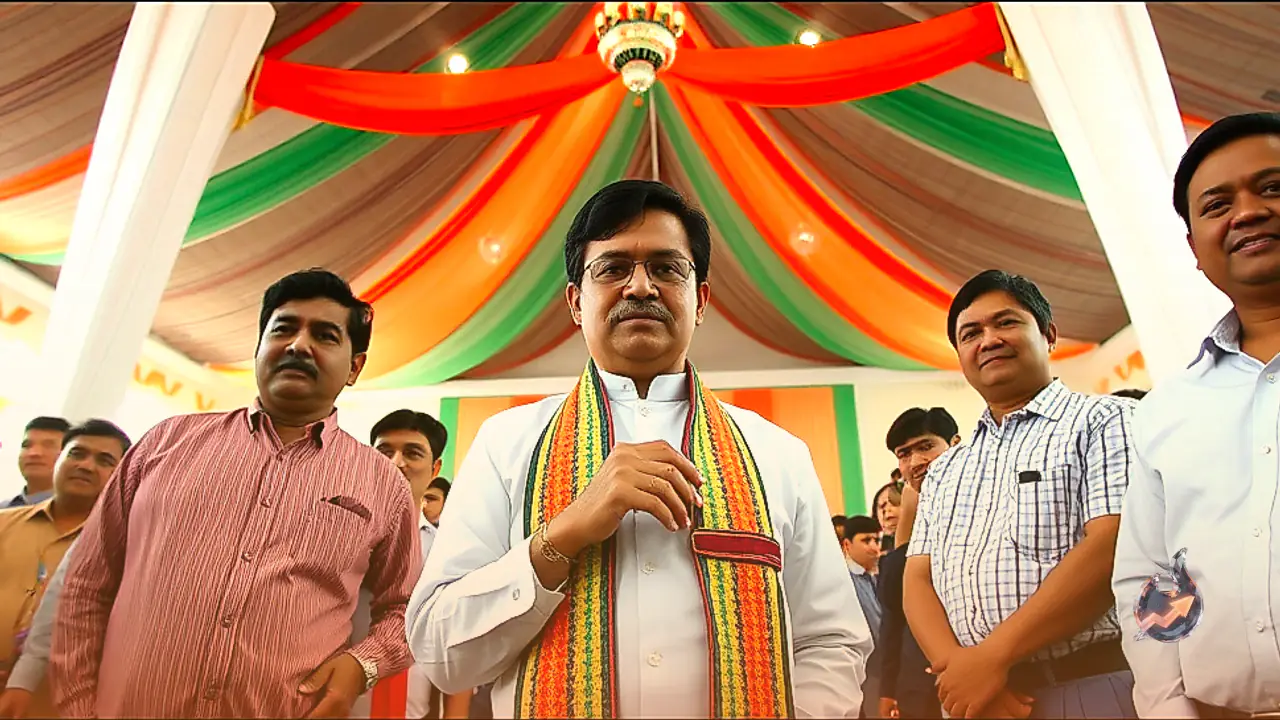


















Mizoram has initiated a significant technological overhaul of its financial operations to strengthen accountability, curb administrative delays, and enhance the prudent handling of public funds. Chief Minister Lalduhoma officially unveiled four digital initiatives spearheaded by the Finance Department. The comprehensive package consists of the Mizoram Integrated Works Accounts System (MIWAS), an online expenditure approval tool named e-Sanction, an electronic budgeting portal called e-Budget, and an end-to-end Direct Benefit Transfer (DBT) mechanism. Together, these systems aim to replace cumbersome paperwork with automated checkpoints across state machinery.
Standardising Works Accounting Across Key Infrastructure Arms
A central pillar of this rollout is MIWAS, designed to institute uniform bookkeeping practices across six heavy-spending infrastructure wings. The platform covers the Public Works Department (PWD), the Public Health Engineering Department (PHE), the Power & Electricity Department (P&E), the Irrigation & Water Resources Department (IWRD), the Environment, Forest & Climate Change Department (EFCC), and the Land Resources, Soil & Water Conservation Department (LRS&WC).
By bringing these engineering and conservation branches under a shared digital ledger, the administration aims to simplify the reconciliation of expenditure figures submitted to the Accountant General. Furthermore, the portal mandates that all project-related payment vouchers must be sequentially submitted and verified through state treasuries, reducing accounting discrepancies and ensuring systematic auditing.
Automating Approvals and Eliminating Out-of-Budget Expenditures
The state has also embedded modern workflow modules directly within its Integrated Financial Management Information System (IFMIS). Through the newly introduced e-Budget platform, departments can now draft and route their annual financial proposals entirely online. Transitioning away from physical files is expected to minimize manual data entry mistakes, eliminate arithmetic errors, and drastically shorten the lifecycle of budget approvals.
Complementing this is the e-Sanction facility, which digitizes the sanctioning chain for departmental spending. Drawing and Disbursing Officers, alongside departmental directors, can forward expenditure requisitions electronically to administrative desks and the Finance Department. Importantly, the architecture incorporates automated budget ceilings, actively preventing any department from sanctioning funds beyond its allocated limits.
Direct Transfers and Funding Projections
The final component focuses on citizen-centric welfare through a 100% DBT architecture. Beneficiaries under key state-sponsored programmes, such as Thlai Thar Leina, the Bana Kaih initiative, and the ongoing Power Subsidy scheme, will receive monetary support straight into their bank accounts immediately after treasury sanction. Both citizens and verifying officials can track the exact disbursement stages using the IFMIS portal.
During the launch proceedings, Lalduhoma highlighted that digital governance is vital for protecting public revenue and optimizing resource distribution. Highlighting fiscal allocations, the Chief Minister noted that the state had secured Rs 350 crore under SASCI Part IX during the previous year and is targeting approximately Rs 650 crore through SASCI Part IV and Part IX in the 2026–27 fiscal period. He also credited the collaborative efforts of the Finance Department, ICT Department, technology partner Interlace India Pvt. Ltd., and the Centre for Development of Advanced Computing (C-DAC) in establishing the state's modern financial infrastructure.