

















Mizoram has initiated a sweeping technological overhaul of its public expenditure framework to curb administrative inefficiencies and reinforce fiscal discipline. Chief Minister Lalduhoma has unveiled four dedicated digital solutions designed to streamline public fund administration and eradicate bureaucratic delays across state departments. Developed under the aegis of the Finance Department, these automated instruments are engineered to modernize bookkeeping standards, digitize sanction approvals, and guarantee that public resources are utilized strictly within authorised allocations.
Standardised Accounting Across Core Engineering Departments
A central pillar of this reform is the Mizoram Integrated Works Accounts System, designated as MIWAS, which establishes a uniform accounting standard across six key infrastructure departments. The platform covers the Public Works Department, Public Health Engineering Department, Power & Electricity Department, Irrigation & Water Resources Department, Environment, Forest & Climate Change Department, and the Land Resources, Soil & Water Conservation Department. By centralising expenditure tracking for these bodies, the portal will significantly improve the reconciliation of financial records submitted to the Accountant General, while mandating that every project voucher is formally vetted and processed through the Treasury network.
Paperless Budget Submissions and Automated Expenditure Caps
The state has also replaced legacy paper-based workflows with two purpose-built digital modules: e-Budget and e-Sanction. Through the e-Budget framework, individual departments can draft, adjust, and transmit budgetary allocations entirely online via the Integrated Financial Management Information System, or IFMIS. This transition eliminates arithmetic discrepancies, reduces manual intervention, and prevents procedural delays in budget clearance. Complementing this, the e-Sanction tool enables Drawing and Disbursing Officers along with department heads to dispatch spending requests electronically to administrative branches and the Finance Department. Crucially, the platform automatically blocks attempts to sanction expenditures beyond available budget limits, preventing fiscal overruns.
Complete Direct Benefit Transfers for State Welfare Schemes
Citizen-facing welfare delivery has also transitioned to an airtight electronic pipeline under a mandatory 100% Direct Benefit Transfer mandate. Under this structure, financial entitlements linked to flagship welfare measures, including Bana Kaih, Thlai Thar Leina, and the statewide Power Subsidy scheme, will be deposited straight into the verified bank accounts of eligible recipients as soon as treasury clearances are granted. Furthermore, both government auditors and individual beneficiaries can monitor transaction progress in real time through the IFMIS interface, eliminating intermediary leakages.
Capital Investment Targets and Technological Collaborations
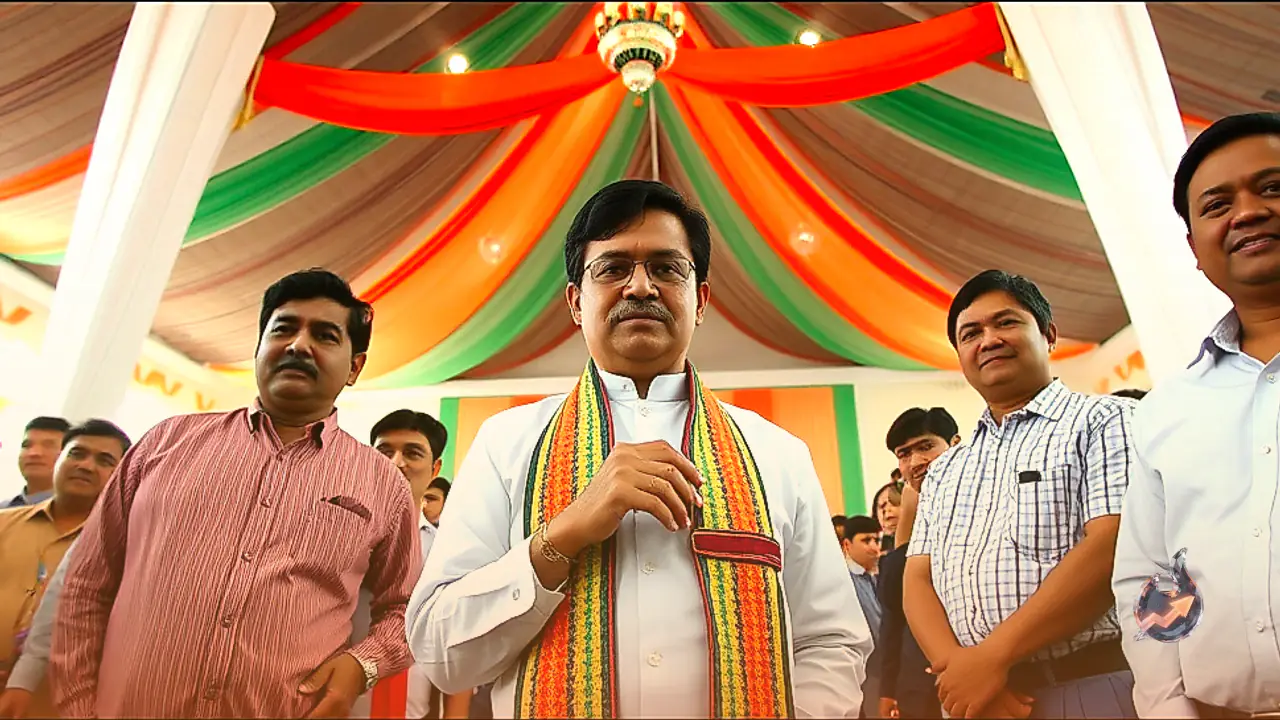
Addressing the launch assembly, Lalduhoma highlighted that modern technological guardrails are fundamental for ensuring equitable public asset distribution. He outlined that the state had previously secured Rs 350 crore under SASCI Part IX and is actively positioned to mobilize approximately Rs 650 crore across SASCI Part IV and Part IX during the 2026–27 financial term. The Chief Minister expressed appreciation for the collaborative technical assistance provided by the state ICT Department, the Centre for Development of Advanced Computing (C-DAC), and Interlace India Pvt. Ltd. in erecting Mizoram's integrated financial network.