
















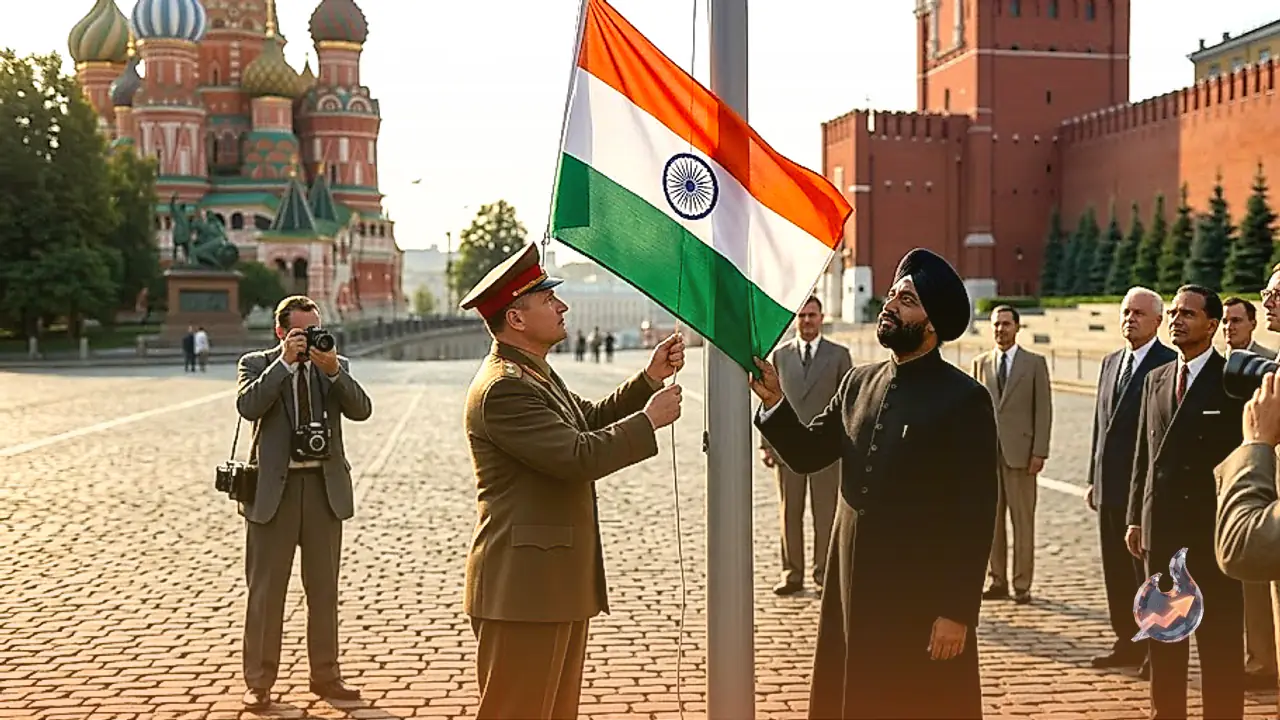

Just eight days before India was set to break free from British colonial rule, the atmosphere across the subcontinent was heavy with apprehension rather than celebratory joy. On August 7, 1947, as partition violence raged across several regions, three pivotal occurrences shook the nation's political landscape. While millions anticipated the dawn of freedom, deep anxieties over communal clashes and the impending division of the country dominated public consciousness. Against this grim backdrop, three remarkable developments unfolded, highlighting the sharp differences, symbolic milestones, and desperate struggles that marked the final countdown to independence.
Mahatma Gandhi's Deep Resentment Over the Flag Design
The morning of August 7, 1947, began with headlines in major newspapers across India reporting a dramatic statement from Mahatma Gandhi. Expressing profound dissatisfaction with the finalized layout of independent India's national flag, Gandhi declared that if the iconic spinning wheel, or charkha, was missing from its center, he would refuse to salute the tricolor.
The controversy had brewed a day earlier, on August 6, while Gandhi was staying in Lahore. During a meeting, delegates presented him with details of the approved national flag design. To his shock, he learned that the charkha, which had long served as the central symbol of self-reliance, economic freedom, and the non-violent struggle, had been removed. In its place, the Constituent Assembly had adopted the Ashoka Chakra, taken from the Lion Capital of Emperor Ashoka.
Upon learning of this alteration, Gandhi reacted with intense dismay. Immediately after the gathering concluded, he instructed Mahadev Bhai to issue a formal press statement clarifying his position. In his statement, Gandhi emphasized that the very concept of the national flag was originally his creation, and he could not bring himself to envision a national emblem that excluded the spinning wheel.
Gandhi's opposition went beyond a mere preference for the charkha. He voiced fundamental reservations about incorporating a symbol associated with Emperor Ashoka. In Gandhi's view, Ashoka had been a monarch responsible for widespread warfare and bloodshed prior to his conversion to Buddhism. Gandhi questioned how an emblem linked to a historical ruler associated with violence could be chosen to represent the founding values of a newly independent, peaceful India.
The nationwide publication of Gandhi's remarks on August 7 triggered intense public debate. Intellectuals, political figures, and citizens were divided on the issue. Some defended Gandhi's stance, arguing that the charkha represented the spirit of the freedom movement, while others viewed his total rejection of the new design as uncharacteristically rigid. Despite the widespread discussion sparked by his objection, the leadership ultimately retained the Ashoka Chakra as the official centerpiece of the national flag.
The First Official Unfurling of the Tricolor in Moscow
On the exact same day that Gandhi's objections made headlines across India, an unprecedented diplomatic moment took place thousands of miles away in the Soviet Union. Vijaya Lakshmi Pandit, the sister of future Prime Minister Jawaharlal Nehru, had been appointed as free India's first ambassador to Moscow, marking a historic milestone for Indian diplomacy.
Around 6:00 AM on August 7, 1947, Vijaya Lakshmi Pandit's aircraft landed at the Moscow airport. To mark her arrival and honor the incoming Indian diplomatic mission, Soviet officials unfurled the new Indian national flag adorned with the Ashoka Chakra. This moment constituted the very first official, state-sanctioned hoisting of independent India's new national flag anywhere in the world, taking place abroad even before it was officially raised within India itself.
The event created a distinct sensation back home. While citizens felt immense national pride seeing their country's new flag raised on international soil, the timing highlighted a glaring paradox. At the exact moment the Ashoka Chakra flag was being showcased to the international community as the supreme symbol of Indian sovereignty, the nation's most revered leader was publicly announcing his refusal to salute it.
The diplomatic event also revived discussions surrounding Gandhi's previous statements regarding flag design and symbolism. Just weeks earlier, in late July 1947, Gandhi had expressed a surprisingly flexible stance regarding the inclusion of foreign symbols on the Indian flag. As documented in Volume 88 of 'The Collected Works of Mahatma Gandhi', he had openly pondered whether incorporating a small Union Jack in one corner of the Indian flag would pose any real harm.
In those documented remarks, Gandhi had expressed the view that if the British were leaving voluntarily and surrendering governance back to Indian hands, displaying a small Union Jack in a corner as a gesture of courtesy would not constitute betrayal. He noted that the British flag itself had not harmed India, and that Indians should acknowledge the positive qualities of their departing rulers. However, Gandhi expressed regret that Congress leaders were unwilling to show such generosity, lamenting that his suggestion was not well received by the party leadership.
Communal Violence and the Desperate Moves in Rawalpindi
While debates over flag design dominated political corridors, a far darker reality was unfolding on the ground in Punjab and Sindh. With the terms of partition finalized, the realities of division set in across regions designated to become part of Pakistan. In cities like Rawalpindi, widespread communal violence broke out, creating an atmosphere of terror for minority Hindu and Sikh populations.
On August 7, 1947, leaders of the Pakistani Hindu Sabha gathered in Rawalpindi for urgent deliberations. Reports confirmed that Punjab, Rawalpindi, and Sindh would be incorporated into the newly formed nation of Pakistan. As news spread, brutal riots erupted across the region, leading to widespread attacks on Hindu families, homes, and commercial properties.
Trapped in an escalating humanitarian crisis, the members of the Pakistani Hindu Sabha debated measures to safeguard their communities from further violence. In an effort to demonstrate peace and secure protection under the new regime, leaders discussed adopting symbolic gestures, including displaying the Muslim League flag, to signal their allegiance and prevent further bloodshed amid the chaotic transition.