


















Preparations for the 2027 Punjab Assembly elections have gathered fresh momentum within the Bharatiya Janata Party, following a high-level meeting between Prime Minister Narendra Modi and Haryana BJP leaders in New Delhi. The gathering, held on Saturday at 7 Lok Kalyan Marg, formally reviewed organizational growth, social media outreach, and governmental performance, while also outlining an ambitious political roadmap aimed at carving out a decisive footprint across neighboring Punjab.
Haryana Legislators Assigned Core Ground Responsibilities
According to emerging organizational plans, the party intends to deploy a substantial contingent of its 48 Haryana MLAs across Punjab over the coming months. These leaders will not simply be participating in high-profile rallies or state-level conventions; instead, they will be given specific operational responsibilities spanning entire assembly segments down to the booth level. Their core tasks will involve coordinating with local cadre, revitalizing grassroots networks, and engaging directly with residents.
The leadership expects the deep geographical, cultural, and socio-economic affinities between Haryana and Punjab to provide a distinct tactical advantage. Having managed governance and electoral campaigns in Haryana, these legislators carry practical experience in navigating local administrative issues and regional voter expectations. By placing them on the ground well in advance, the party aims to build a resilient organizational machinery across Punjab's assembly segments.
Nayab Singh Saini Champions the 'Haryana Model'
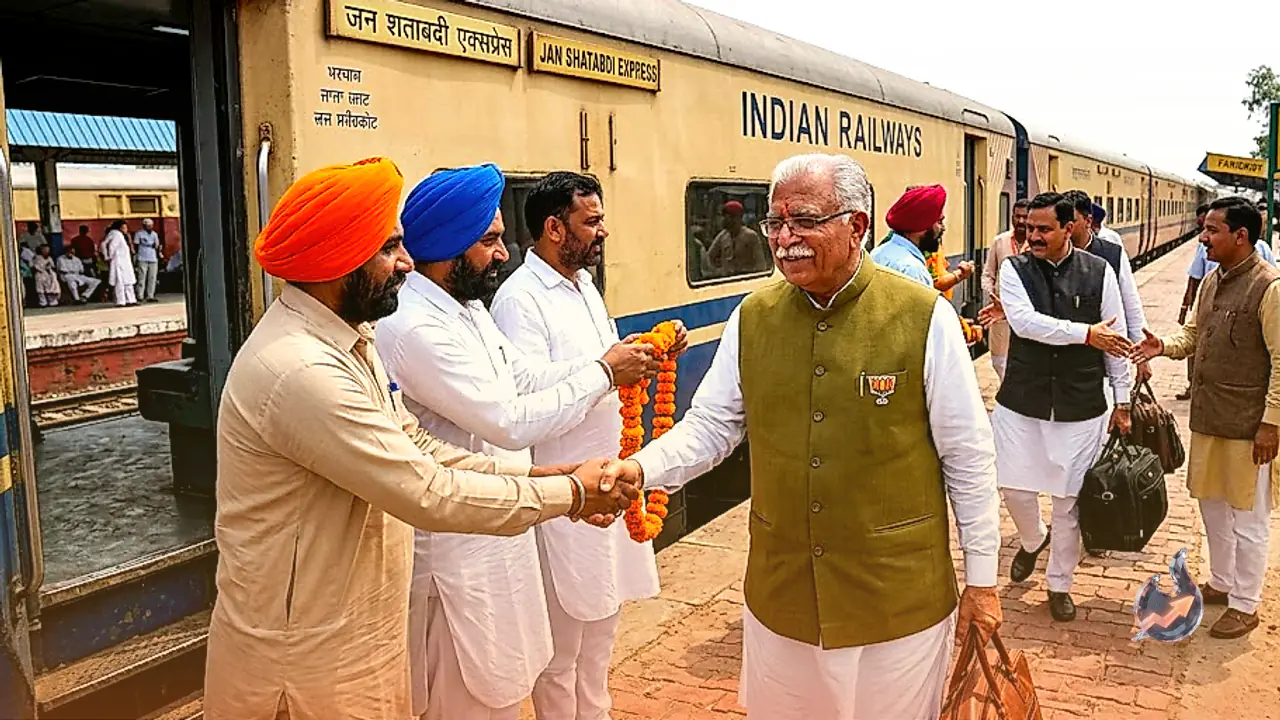
A central pillar of this outreach is presenting the governance record and welfare delivery of the Haryana government as an attractive alternative for voters in Punjab. Haryana Chief Minister Nayab Singh Saini has already taken a proactive lead in driving this narrative. Over the past year alone, Saini has attended around 90 public programs across Punjab. During these visits, he has paid respects at prominent religious shrines and frequently appeared wearing a turban, prompting state party workers to often address him as 'Sardar Nayab Singh Saini'.
Throughout his extensive tours, Saini has drawn direct comparisons between the performance of the two neighboring states. He has emphasized that out of the 217 commitments outlined in the BJP's 2024 Haryana manifesto, 70 promises were fulfilled within just 18 months. In contrast, he has launched sharp critiques at the ruling Aam Aadmi Party government in Punjab, alleging that it failed to deliver on any of its 57 electoral pledges over a five-year period. The party now plans to make this stark statistical contrast a central talking point of its door-to-door campaigning.
Pledging 'Viksit Punjab' Along Development Lines
Addressing gatherings across Punjab, Chief Minister Saini has maintained that if the BJP is voted to power in the state, it will work towards realizing a 'Viksit Punjab' modeled directly after Prime Minister Narendra Modi's national vision of 'Viksit Bharat'. He has also pledged that all welfare schemes currently operational in Haryana would be replicated across Punjab under a BJP administration.
This indicates that the party's electoral messaging will go beyond central government initiatives. By highlighting the measurable outcomes and welfare schemes delivered in neighboring Haryana, the party hopes to offer Punjab's electorate a tangible state-level governance benchmark, projecting itself as an administration capable of swift policy execution.
Echoes of the 1990s and PM Modi's Regional Experience
Prime Minister Narendra Modi's foundational organizational work in northern India is also viewed as an important reference point for the party's unfolding Punjab strategy. During the mid-to-late 1990s, Modi served as the BJP's organizational in-charge for northern states, directly overseeing operations in both Haryana and Punjab.
That era witnessed crucial alliance-building milestones. In 1996, the BJP forged a partnership with Bansi Lal's Haryana Vikas Party in Haryana, leading to Bansi Lal becoming Chief Minister. Concurrently, the party cemented its long-standing alliance with the Shiromani Akali Dal in Punjab. That combined effort yielded significant electoral success in the 1997 Punjab Assembly elections, propelling the coalition into power.
Building a Standalone Electoral Force in Punjab
Nearly three decades later, the political landscape in Punjab has transformed radically. While the BJP previously functioned primarily as a junior partner in regional coalitions, it is now striving to establish an independent and formidable presence across the entire state. Punjab is presently governed by the Aam Aadmi Party, while the Congress and other traditional players maintain entrenched voter bases. Within this competitive arena, the BJP is seeking to position itself as a credible primary alternative.
The extensive discussions at the Prime Minister's residence suggest that the BJP is not leaving its Punjab preparations to the final months before polling. By mobilizing sitting MLAs from Haryana and anchoring its appeal on tangible administrative performance, the party is initiating an early, sustained campaign. The upcoming phase will reveal the specific assembly seats assigned to Haryana leaders and how effectively the 'Haryana model' resonates with Punjab's diverse electorate.