























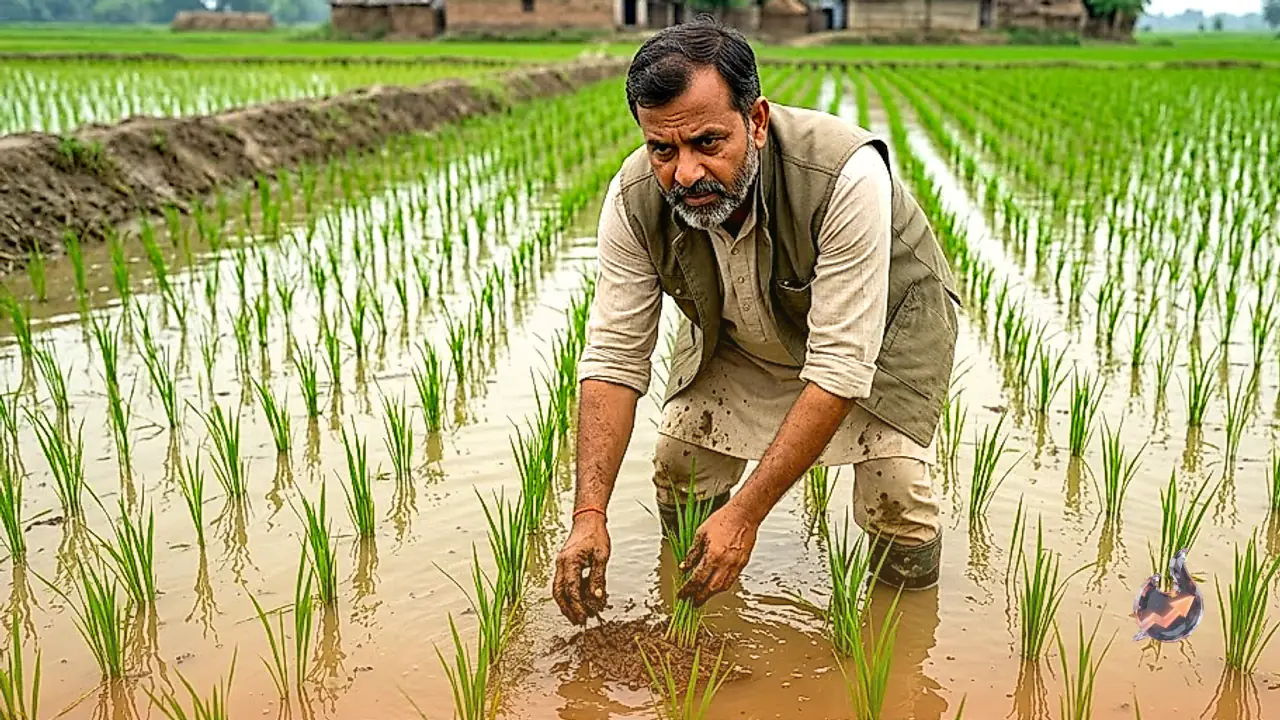

Continuous and heavy rainfall across the Gorakhpur district of Uttar Pradesh has disrupted daily urban life while creating serious complications for the farming community in rural belts. While waterlogging and traffic congestion have paralyzed urban infrastructure, farmers in the countryside are facing an uphill battle to protect their livelihood. Those who recently finished transplanting paddy crops now find their fields submerged under excessive levels of rainwater. To prevent their young crops from rotting, agricultural workers are striving to drain surplus water from their inundated lands.
Adverse Effects of Prolonged Waterlogging on Paddy Crops
Although paddy cultivation relies on adequate water during its initial growth phases, excessive and stagnant accumulation poses a grave threat to the crops. When water remains pooled in the fields for extended periods, plant roots are deprived of necessary oxygen supplies, leading to root weakening, decay, and stunted plant growth. Furthermore, the combination of stagnant water and elevated humidity increases the vulnerability of paddy plants to destructive fungal and bacterial diseases. In response to these risks, farmers in several villages around Gorakhpur are digging temporary channels and ditches to drain excess water away from their fields.
Weather-Related Challenges in Applying Pesticides and Crop Treatments
Unfavorable weather conditions have also disrupted regular crop maintenance schedules, preventing farmers from applying essential pesticides and chemical treatments. Constant rainfall combined with heavily saturated soil diminishes the effectiveness of agricultural sprays, as rain quickly washes away the applied chemicals before they can act. This leaves crops exposed to potential pest infestations and plant diseases, compounding the stress on farmers who are anxiously awaiting clear skies to resume field care and crop protection measures.
Expert Recommendations from Professor Anupam on Natural Farming
Addressing the agricultural challenges caused by the weather, Professor Anupam from the Agriculture Department at Gorakhpur University has offered valuable guidance to local farmers. He highlights that integrating natural fertilizer prepared from cow dung and jaggery right from the early stages of cultivation significantly enhances soil health and structure. Utilizing this organic mixture boosts the soil's inherent fertility, fosters stronger root development, and substantially decreases farmers' reliance on synthetic chemical fertilizers and pesticides.
Enhancing Soil Fertility, Plant Immunity, and Agricultural Yields
According to Professor Anupam, natural manure plays a crucial role in activating beneficial microorganisms present within the soil ecosystem. This microbial activity boosts the natural immunity of paddy plants, helping them withstand diseases and adverse environmental stress. Fields treated with natural compost also demonstrate superior water retention and moisture balance compared to chemically treated plots. Agricultural experts emphasize that combining timely water drainage with sustainable natural farming practices can effectively mitigate weather-induced crop damage and protect agricultural output.


