























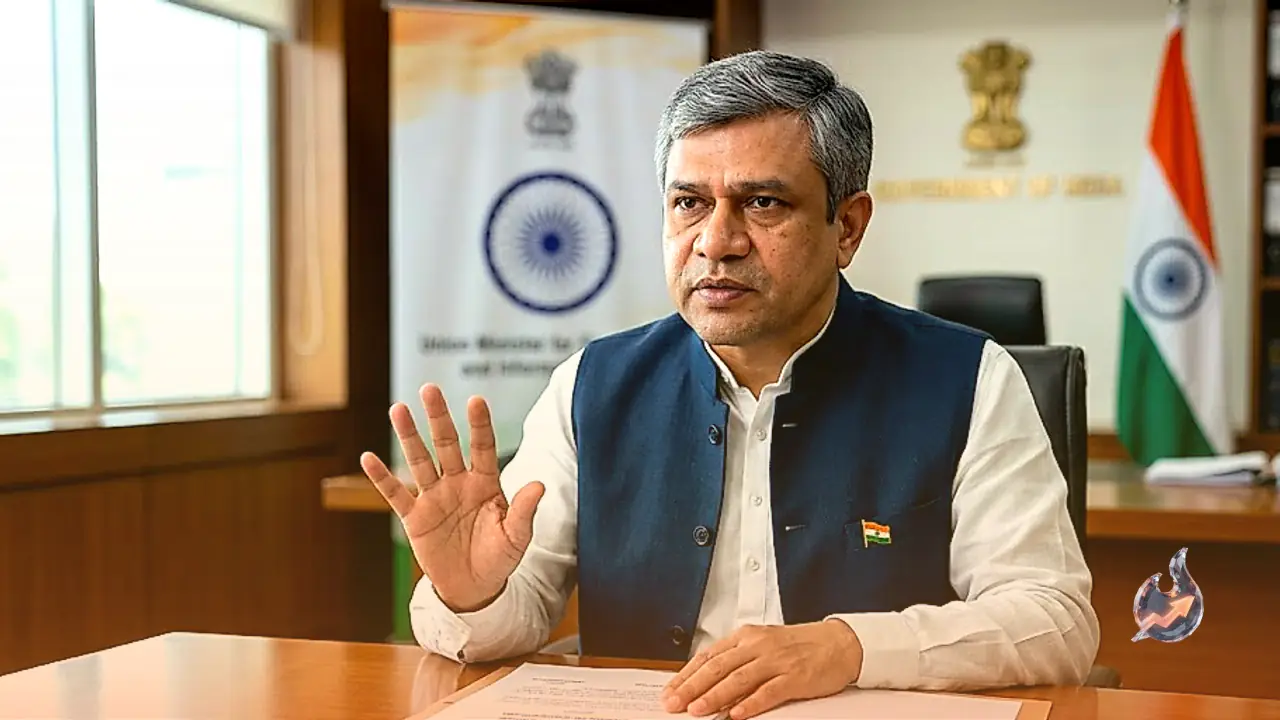

The Government of India has launched a massive crackdown to sanitize the country's digital space, blocking or disabling over 50 OTT platforms within the last two years. This sweeping action targets the rampant spread of obscenity, pornographic material, and content deemed severely harmful to minors. The central administration's primary objective is to transform the internet into an open, safe, trusted, and highly accountable ecosystem. By imposing these strict bans, the government aims to cultivate a secure digital environment where vulnerable demographics, especially young children, can navigate online spaces without exposure to malicious or inappropriate material.
Parliamentary Confirmation on Strict Digital Monitoring
The comprehensive details of this ongoing digital purge were presented to the nation by the Union Minister of Electronics and Information Technology, Ashwini Vaishnaw, through a detailed written reply in the Lok Sabha on July 22, 2026. He emphasized that as internet penetration deepens across the country, ensuring the digital safety of citizens has become a top legislative priority. Reinforcing this stance, the Minister of State for Information and Broadcasting, Dr. L. Murugan, informed the parliament that relentless and uncompromising actions are being taken against OTT platforms that continue to broadcast objectionable and obscene content. The government has made it entirely clear that regulatory oversight will only intensify to protect the cultural and social fabric of the nation.
Legal Framework Driving the Platform Bans
The 50 OTT platforms penalized over the past 24 months were found to be chronic violators of national broadcasting standards. According to the government, this decisive blocking action was executed under two primary legal frameworks. The first is Section 294 of the Bharatiya Nyaya Sanhita (BNS), which strictly prohibits the public exhibition of obscene acts or broadcasts. The second is the Indecent Representation of Women (Prohibition) Act of 1986, which has been leveraged to immediately halt the distribution of content that degrades or commodifies women on digital platforms. The administration clarified that regular, systematic punitive measures are deployed against both OTT platforms and intermediary tech companies the moment verifiable complaints regarding such severe violations are received.
Slashing Content Takedown Times to Three Hours
Recognizing that objectionable content can go viral and cause irreparable damage in a matter of minutes, the government has drastically tightened the regulatory leash on social media giants. Following recent stringent amendments, social media platforms are now legally mandated to remove any illegal content within an absolute maximum of 3 hours upon receiving a directive from a court or a government authority. Previously, tech companies enjoyed a generous 36-hour window for this compliance. Furthermore, the mandatory resolution time for general user grievances has been halved from 72 hours to 36 hours. More crucially, in cases involving highly sensitive matters, the response time has been aggressively slashed from 24 hours down to a mere 2 hours, forcing platforms to act almost instantaneously.
Zero Tolerance for Deepfakes and Intimate Content
Amid the rapid proliferation of artificial intelligence technologies, the government has declared an absolute zero-tolerance policy regarding Child Sexual Abuse Material (CSAM), AI-generated deepfakes, all forms of pornographic content, and Non-Consensual Intimate Images (NCII). Social media companies are now bound by law to take immediate, proactive action the moment such content is flagged. Specifically, if a platform receives a complaint regarding nudity, morphed photographs, or the malicious sharing of private pictures, it must execute technical measures to remove or completely block that content within 2 hours. In addition to takedowns, it is now a mandatory requirement for platforms to clearly attach visible labels to AI-generated deepfakes and synthetic media, while strictly preserving the associated metadata to aid future law enforcement investigations.
Shielding Children from Data Mining and Tracking
Protecting the privacy and psychological well-being of minors forms the core of the government's digital strategy. Under the robust framework of the Digital Personal Data Protection (DPDP) Act of 2023, sweeping new protections have been activated for younger users. Tech companies are now legally barred from processing any data belonging to minors without securing explicit, verifiable parental consent. Providing immense relief to privacy advocates, the law enforces a complete blanket ban on the online tracking of children. Platforms are strictly prohibited from conducting behavioral monitoring or creating digital profiles of minors based on their browsing habits. Consequently, the delivery of targeted advertising to children, a practice known to exploit their vulnerabilities and push unwanted products, has been entirely outlawed.
Combating the Digital Addiction Epidemic Among Youth
Beyond obscenity, the administration has recognized the severe psychological toll of unregulated digital consumption. The implementation of the Online Gaming (Promotion and Regulation) Act of 2025 has been highlighted as a monumental step toward curbing the escalating crisis of digital addiction and the devastating online financial losses plaguing the younger generation. The recently tabled Economic Survey 2025-26 raised deep alarms, categorizing digital addiction among youth aged 15 to 29 years as a rapidly escalating, severe public health challenge. The economic data underscores that this compulsive behavior is inflicting heavy damage on mental health. Furthermore, it correlates with a massive spike in aggressive cyberbullying cases and exponentially increases the risk of youth falling into the traps of online gambling, leading to insurmountable debt and financial ruin.
Massive Scale Cyber Security and Awareness Drives
Legislation alone cannot solve the digital crisis, public education is equally critical. The government informed parliament that extensive grassroots work is being carried out under the Information Security Education and Awareness (ISEA) project. To date, an impressive 6,650 dedicated cyber awareness workshops have been successfully organized across the nation. These vital educational programs have seen active participation from over 11.37 lakh citizens. To ensure the message reaches every demographic, tailored educational materials including interactive posters, detailed video modules, comprehensive handbooks, and brochures have been developed for schools, colleges, educators, law enforcement, and government employees. Specialized cartoon stories have even been crafted to teach young children about digital dangers in an engaging format. Additionally, apex bodies like CERT-In, the Ministry of Education, CBSE, and NCERT are running continuous, widespread campaigns to instill digital etiquette and cyber hygiene.
The End of Safe Harbour for Non-Compliant Platforms
In a final, stern warning to global tech monopolies and local digital platforms alike, the government has made it explicitly clear that willful non-compliance will carry heavy legal consequences. If any social media or digital platform fails to strictly adhere to these updated IT rules, they will instantly forfeit the protective legal shield of 'Safe Harbour' granted under Section 79 of the IT Act. Stripping away this immunity means the platform itself will be held legally liable and prosecuted for any illegal, defamatory, or harmful content posted by its users. The central administration maintains that given the exponential rise in sophisticated cybercrimes, the unchecked spread of obscenity, the weaponization of deepfakes, and the looming threats to child safety, this uncompromising strictness is the need of the hour. Moving forward, the regulatory surveillance of platform compliance will be significantly amplified to guarantee that the internet ecosystem becomes a safe, secure, and constructive environment for every citizen.