
Chief Justice of India Surya Kant has formally turned down a meeting request sought by the Leader of the Opposition in the Lok Sabha, Rahul Gandhi, regarding allegations of voter roll manipulation. Emphasizing the institutional boundaries of the judiciary, the Chief Justice noted that a reasoned communication explaining the decision has already been dispatched. He also underlined that the Supreme Court remains entirely accessible to all citizens and functions as an institution devoted to serving the public interest.
Judicial Procedure Preferred Over Administrative Meetings
The development unfolded amid escalating political tension surrounding the voter registration framework and the Special Intensive Revision initiative. Seeking to register their objections directly, Rahul Gandhi alongside several opposition figures had requested an appointment to submit a formal memorandum outlining grievances related to electoral rolls.
The request was declined on the grounds that the concerns highlighted are already within the judicial purview of the courts and ought to be addressed through formal legal channels. Rather than scheduling an administrative consultation, the political leadership was informed that the proper route is the filing of an appropriate legal petition before the bench. The Chief Justice reaffirmed that the apex court belongs to the general populace, ensuring that justice is administered through transparent and constitutional hearings rather than private dialogues.
Opposition Demonstrations and Demands for Resignations
The opposition bloc has stepped up its offensive against the Election Commission, demanding a complete halt to alleged voter suppression and an immediate suspension of the ongoing Special Intensive Revision drive. Furthermore, opposition parties have insisted upon the resignation of Chief Election Commissioner Gyanesh Kumar. As part of this push, the alliance also planned a public demonstration marching toward the Supreme Court complex.
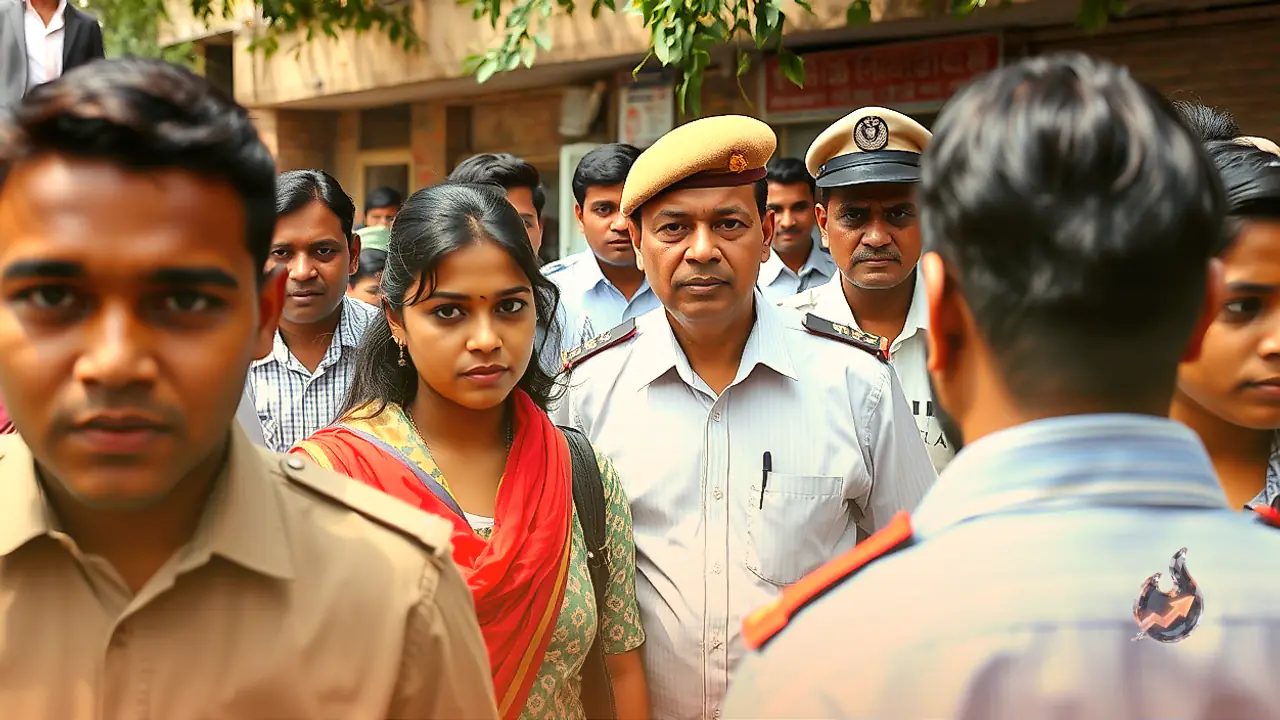
This mobilization occurred alongside protests initiated by the Cockroach Janata Party, a youth-centered political outfit that has been actively agitating against the Election Commission over perceived discrepancies in the roll revision exercise. Consequently, security arrangements across New Delhi were significantly heightened. Law enforcement authorities erected barricades at several strategic junctions and detained numerous participants to preserve public order.
Allegations of Police Force and the Election Commission's Response
In the wake of police action during the rallies, Rahul Gandhi alleged that heavy-handed measures were deployed against peaceful protesters. He further asserted that workers affiliated with the Bharatiya Janata Party and the Rashtriya Swayamsevak Sangh participated in acts of violence during the confrontations.
The Election Commission has categorically refuted any allegations of partisanship, maintaining that established corrective mechanisms remain in place. The poll panel emphasized that eligible citizens whose names might have been omitted erroneously retain the right to apply for fresh enrollment. Simultaneously, the ruling BJP dismissed the opposition's claims, arguing that challenging routine and legitimate electoral processes is merely an attempt to create unwarranted controversy.
Former Solicitor General Harish Salve Criticizes Opposition Tactics
The decision to seek a direct meeting with the Chief Justice and stage a march to the apex court drew sharp rebukes from legal experts, including former Solicitor General Harish Salve. He described the approach as completely misguided, questioning why seasoned politicians and trained advocates were bypassing standard courtroom procedures in favor of personal appointments.
Harish Salve pointed out that the Chief Justice does not personally adjudicate every single grievance brought forward by public figures. Instead, matters are assigned to designated benches based on roster systems, where disputes are resolved strictly according to established jurisprudence. He stressed that political groups seeking judicial intervention must adhere to formal petitioning processes rather than trying to present policy demands directly to the head of the judiciary.