





















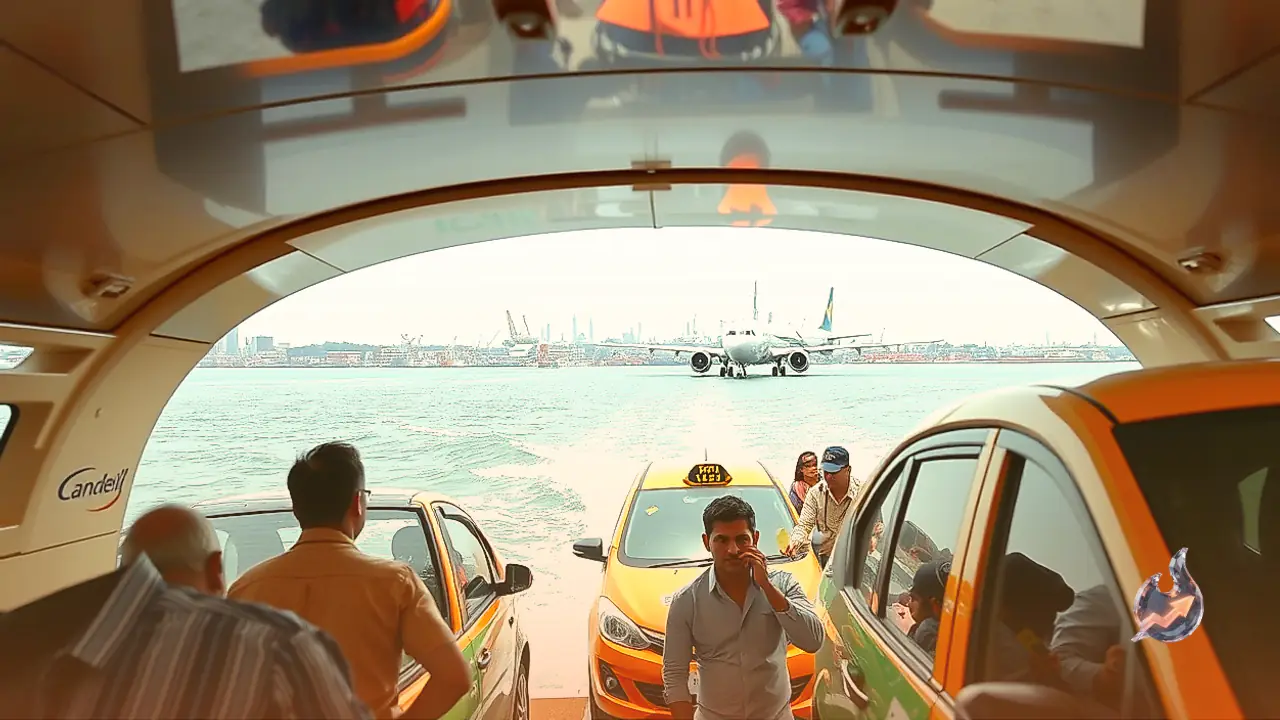

Navigating the relentless traffic bottlenecks across Mumbai has long tested the endurance of local commuters and travellers alike. Getting stuck behind gridlocked avenues becomes especially critical when racing against the clock to catch a scheduled flight or train. To offer a sustainable escape from these highway jams, the authorities are looking towards the Arabian Sea. A new high-speed maritime corridor will soon allow passengers to travel directly between the iconic Gateway of India and the upcoming Navi Mumbai Airport in just 30 minutes.
Swedish Marine Tech: 11 Candela Hydrofoil Vessels Procured
To establish this ambitious aquatic transit link, the Maharashtra government has acquired 11 specialized electric vessels sourced from the Port of Stockholm. Designed by a Swedish marine tech developer, these crafts are known as Candela hydrofoil boats. Engineered to travel at peak speeds reaching 50 kilometers per hour, each vessel carries a passenger capacity of 30 people per trip. By gliding seamlessly across coastal waters, the transit time is capped at a straightforward 30 minutes. In sharp contrast, taking vehicular roadways across the same stretch currently forces commuters to endure 1.30 to 2 hours of congested travel while burning significant amounts of vehicle fuel.
Computer-Guided Navigation and Superior Energy Efficiency
In standard operation, the electric cruise vessel will cruise over the water at 25 knots, translating to roughly 40 to 45 kilometers per hour. While Swedish marine engineers developed the core vessel technology, the commercial operations on Mumbai waters will be managed locally by a Mumbai-based firm named Jalviman. The entire craft relies on an automated computer-guided system. By using hydrofoils, most of the hull lifts above the water line during transit, drastically reducing drag and demanding far less operational energy. The craft utilizes 80 percent of its propulsion energy while drawing the remaining 20 percent from hydrodynamic water flow, substantially boosting overall operational efficiency.
Noise-Insulated Cabins and Planned Network Expansions
Onboard passenger comfort has been prioritized with fully soundproof interiors designed to eliminate marine engine noise. The passenger cabins are equipped with complete air conditioning, onboard Wi-Fi, and modern travel conveniences. While the initial phase focuses strictly on connecting the Gateway of India to the Navi Mumbai Airport, planners have laid the groundwork to scale the service further. Future expansion phases are expected to extend this maritime route to Alibaug and Elephanta Island. Once operational, the rapid water taxi service will ensure airport-bound passengers no longer face the unpredictability of highway gridlock.