
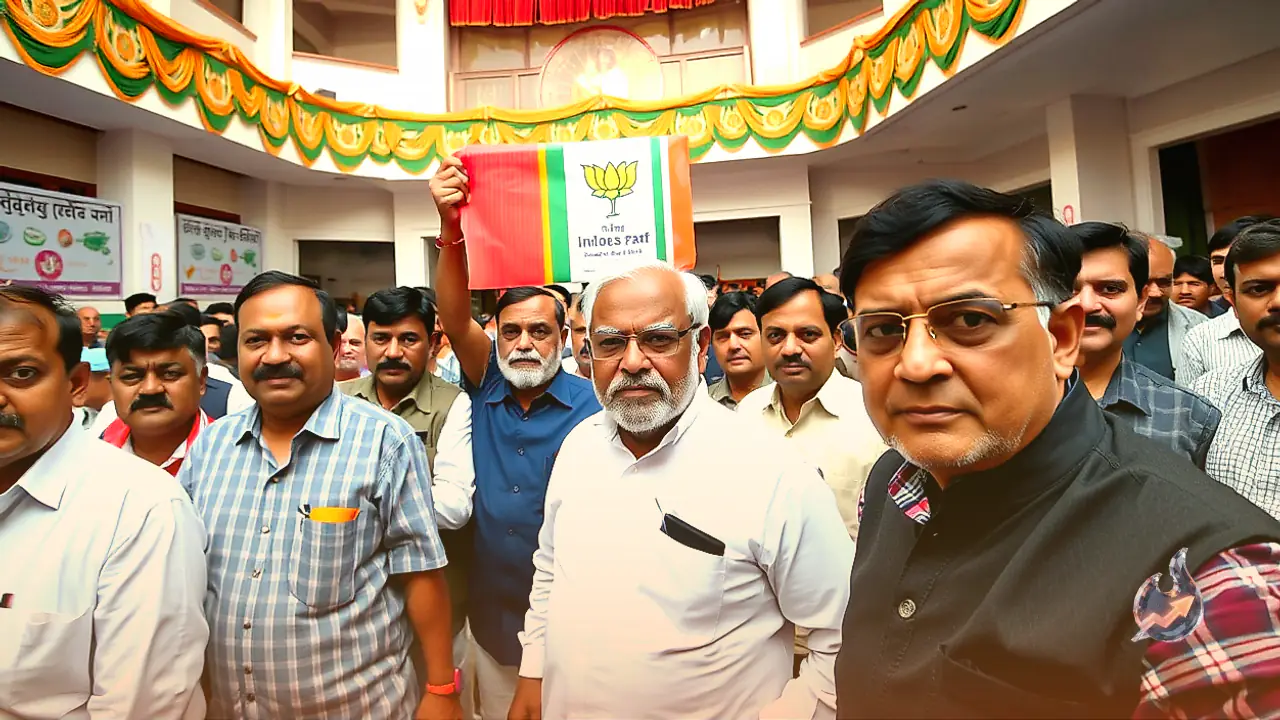














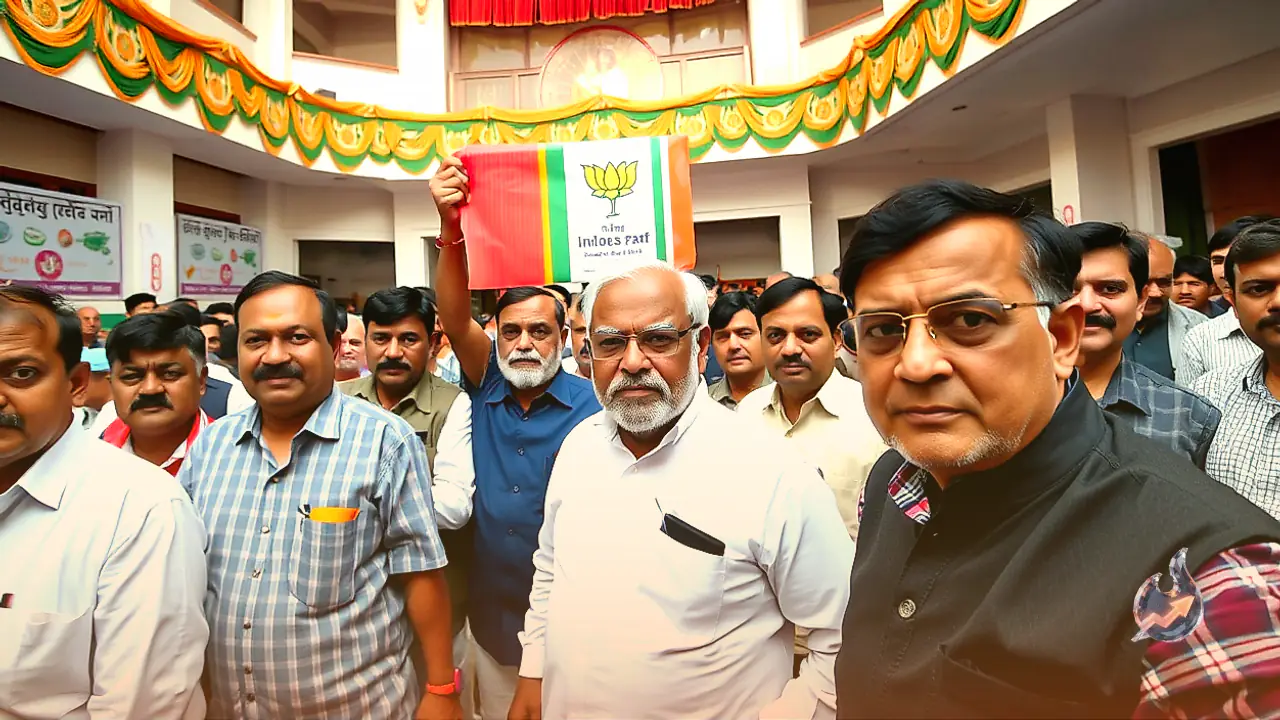

In Uttar Pradesh's vast electoral landscape, the Shahjahanpur assembly constituency stands out as an exceptional bastion where a single leader and party have dominated the hustings for well over three decades. Suresh Kumar Khanna, currently serving as the state finance and parliamentary affairs minister, has secured this seat nine times in succession. Ever since his breakthrough win in 1989, Khanna has maintained an unbroken winning streak across nine assembly elections. Even during the early 2000s, when the Bharatiya Janata Party endured a prolonged organizational slump across Uttar Pradesh, Shahjahanpur remained firmly in his grasp. Neither the Bahujan Samaj Party wave of 2007 nor the Samajwadi Party landslide of 2012 could unseat him. Both principal regional rivals repeatedly fielded strong candidates, yet none succeeded in breaching his local fortress. Numbered as constituency 135 and forming an integral segment of the Shahjahanpur parliamentary seat, this urban-rural pocket has witnessed a gripping three-decade electoral history that is now setting the stage for intense political maneuvering ahead of the 2027 state elections.
Early Electoral Struggles, Breakthrough in 1989 and Record 1991 Margin
Khanna's long electoral journey in Shahjahanpur actually commenced during the early 1980s. He contested his maiden assembly election from this seat in 1980 under the Janata Party (Secular) banner, followed by another attempt in 1985 as the official Bharatiya Janata Party nominee. Both initial outings ended in defeat. Persistent grassroots engagement finally yielded results in the 1989 assembly election, when he defeated incumbent lawmaker Nawab Sikander Ali Khan to enter the legislative assembly for the first time.
Riding the wave of the Ram Janmabhoomi movement during the 1991 midterm assembly election, Khanna entered the fray once again on a Bharatiya Janata Party ticket. He polled 50,579 votes, defeating his nearest challenger Mohammad Iqbal of the Janata Dal by an imposing margin of 28,237 votes. Iqbal finished second with 22,342 votes. That outcome remains Khanna's largest victory margin across all eight assembly elections conducted between 1991 and 2022. In that contest, Congress candidate Ashfaq Ulla Khan secured 18,648 votes, while former legislator Nawab Sikander Ali Khan, running on a Janata Party ticket, was relegated to fourth place with just 6,071 votes.
Withstanding the SP-BSP Coalition in 1993 and Dominating 1996
The 1993 assembly elections witnessed a landmark social coalition as the Samajwadi Party and the Bahujan Samaj Party joined forces across Uttar Pradesh. Because of this seat-sharing pact, the Bahujan Samaj Party did not field a nominee in Shahjahanpur, allowing Samajwadi Party candidate Ashok Kumar to mount a unified challenge. Despite the combined opposition momentum, Khanna completed his hat-trick of victories by securing 60,224 votes. Ashok Kumar finished as runner-up with 43,356 votes, leaving Khanna victorious by a comfortable margin of 16,868 votes. Congress candidate Mohammad Iqbal could only secure 13,220 votes, failing to convert the contest into a genuine triangular battle.
By 1996, Khanna further consolidated his political grip, claiming the constituency for the fourth consecutive term. His primary opponent in that election was Congress nominee Sikander Ali Khan. Khanna gathered 60,058 votes against Khan's 37,793 votes, sealing victory by a decisive margin of 22,265 votes. Samajwadi Party contestant Om Prakash Gupta ended in third place, managing to secure only 23,339 votes.
Fifth Consecutive Win in 2002 and Weathering the Mayawati Surge in 2007
Entering the 2002 assembly election with a high-stakes reputation to protect, Khanna surprised observers by clinching his fifth straight term. According to official Election Commission of India data, he defeated Samajwadi Party candidate Pradeep Pandey by a substantial gap of 23,037 votes. Khanna polled 68,454 votes, while Pandey took the runner-up spot with 45,417 votes. Congress contestant Ashfaq Ulla Khan secured 15,757 votes, whereas Bahujan Samaj Party nominee Taqweem Khan finished with a modest 7,830 votes.
The political dynamic became substantially more challenging in 2007, when Mayawati led the Bahujan Samaj Party to an outright single-party majority across Uttar Pradesh. Even amidst that statewide surge, Khanna held on to Shahjahanpur, though his lead shrank noticeably. Khanna garnered 51,463 votes against 41,273 votes cast for Bahujan Samaj Party candidate Faizan Ali Khan. The winning margin narrowed down to 10,190 votes, while Samajwadi Party contender Pradeep Pandey was relegated to third position with 21,808 votes.
Surviving the 2012 Samajwadi Wave and Breaching the One-Lakh Mark in 2017
Following the 2008 delimitation exercise, the redrawn Shahjahanpur constituency went to the polls in 2012 under altered geographic and demographic lines. That election saw the Samajwadi Party sweep to power with an absolute majority in Lucknow. Yet, Khanna successfully defended his bastion by polling 81,581 votes. Samajwadi Party challenger Tanveer Khan made an impressive debut by bagging 65,403 votes, but Khanna prevailed by a margin of 16,178 votes. Bahujan Samaj Party nominee Aslam Khan ended third with 19,936 votes.
Five years later, the 2017 assembly election witnessed a historic Bharatiya Janata Party wave across Uttar Pradesh. Riding that momentum, Khanna breached the six-figure mark for the first time in his legislative career by polling 1,00,734 votes. The Samajwadi Party once again fielded Tanveer Khan, who managed 81,531 votes, losing the contest by a gap of 19,203 votes.
A Narrow Ninth Term in 2022 Highlights Shifting Political Ground
In the 2022 assembly elections, the Bharatiya Janata Party reaffirmed its faith in Khanna, setting up a third consecutive clash against Samajwadi Party nominee Tanveer Khan. This contest proved to be the most competitive encounter of Khanna's career since 1991. Although Khanna secured victory with 1,09,942 votes, Tanveer Khan pushed him hard by amassing 1,00,629 votes. Khanna's winning cushion dropped to 9,313 votes, marking his narrowest victory margin across all eight assembly elections conducted from 1991 through 2022.
Electoral Margins and Vote Shares from 1991 to 2022
A closer look at the voting trends over the past three decades reveals how competitive the Shahjahanpur seat has gradually become. In 1991, Khanna led his nearest rival from the Janata Dal by 28,237 votes. In 1993, his advantage over the Samajwadi Party candidate was 16,868 votes, followed by a 22,265-vote victory against Congress in 1996. The 2002 election saw him triumph over the Samajwadi Party by 23,037 votes.
The subsequent phase saw tighter margins: 10,190 votes against the Bahujan Samaj Party in 2007, 16,178 votes against the Samajwadi Party in 2012, and 19,203 votes in 2017. The 2022 election produced the sharpest contraction yet, with the margin falling to 9,313 votes despite both contestants crossing the 1,00,000-vote threshold.
Anticipating the 2027 Battle: A Potent Opposition Coalition
Decades of continuous dominance give Suresh Kumar Khanna formidable incumbent advantages, making him a difficult candidate to displace on home turf. However, recent trends show that the opposition vote share has consolidated significantly. If the Samajwadi Party and Congress formalize an electoral alliance for the 2027 state elections, the contest could mirror the direct, polarized clash seen in 2022.
Crucial evidence of this tightening balance emerged during the 2024 parliamentary elections. In the Shahjahanpur assembly segment of the larger parliamentary seat, Bharatiya Janata Party candidate Arun Kumar Sagar secured only a razor-thin lead of 3,183 votes over Samajwadi Party candidate Jyotsna Gond. Sagar received 96,786 votes, while Gond polled 93,603 votes within the assembly segment. If this opposition unity holds into 2027, the Bharatiya Janata Party will confront a rigorous test in safeguarding its longest-standing bastion in central Uttar Pradesh.