























The maritime friction between India and Pakistan has intensified following a mid-sea collision between their naval ships in the Western Arabian Sea. The Indian Ministry of External Affairs (MEA) has officially dismissed Pakistan's explanation of the incident, labeling it a failed endeavor to cover up the truth. According to Indian authorities, the पाकिस्तानी vessel openly violated international maritime safety protocols designed to prevent collisions at sea. Despite Islamabad's attempts to portray itself as blameless, New Delhi has firmly reiterated its stance, exposing what it describes as a series of false narratives from the neighboring nation.
Diplomatic Fallout and MEA's Firm Rejection
In a strong statement, Randhir Jaiswal, the spokesperson for the Ministry of External Affairs, rebuffed Pakistan's counter-claims regarding the incident. He noted that New Delhi had formally registered its protest with Islamabad, only to receive a characteristically evasive reply. Randhir Jaiswal stated that the response from Pakistan was the expected pattern of evasion, and India completely rejects the allegations and insinuations raised in their statement. This diplomatic confrontation follows the viral circulation of a video showing the physical contact between the two naval vessels, which triggered widespread concern over maritime safety in the region.
Unprofessional Maneuvers in the Arabian Sea
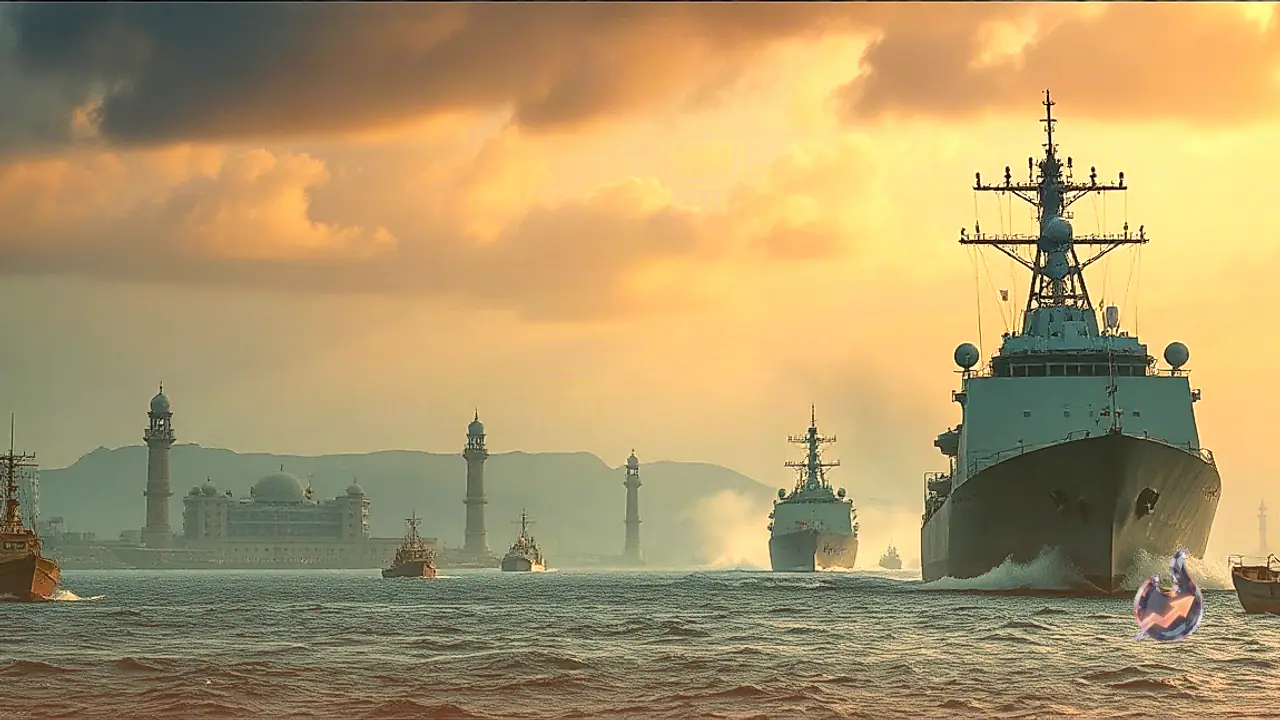
The core of the dispute lies in the actions of the Pakistani naval vessel during a routine patrol. The MEA clarified that the Indian Navy's warship, INS Kolkata, was deployed on a standard mission in the Western Arabian Sea when the incident occurred. During this deployment, a Pakistani naval ship, PNS Hunain, conducted itself in a highly unprofessional and unacceptable manner. This erratic behavior on the part of the Pakistani ship directly led to the close-quarter situation and subsequent collision, jeopardizing the safety of both vessels and their crews.
Violation of the 1991 Military Pact and Maritime Laws
According to the Indian government, the dangerous overtaking maneuver executed by PNS Hunain was a direct breach of bilateral understandings. Specifically, it violated Article 10 of the April 1991 agreement between India and Pakistan, which governs military exercises, maneuvers, and prior notification of troop movements. Under this specific article, naval units from both countries are strictly required to maintain a safe distance of at least 3 naval miles from one another. Furthermore, the Pakistani vessel violated the International Regulations for Preventing Collisions at Sea (COLREGs), which serve as the global standard for safe navigation.
Current Status of INS Kolkata and Future Warnings
Despite the dangerous encounter, India confirmed that INS Kolkata did not suffer any significant damage. The warship remains fully operational and continues its active security deployment in the region. However, New Delhi has issued a stern advisory to Islamabad, emphasizing the need for its military units to exercise utmost caution. India has urged Pakistan to ensure its naval forces strictly respect and adhere to the provisions of existing bilateral agreements to prevent such hazardous occurrences in the future.