





















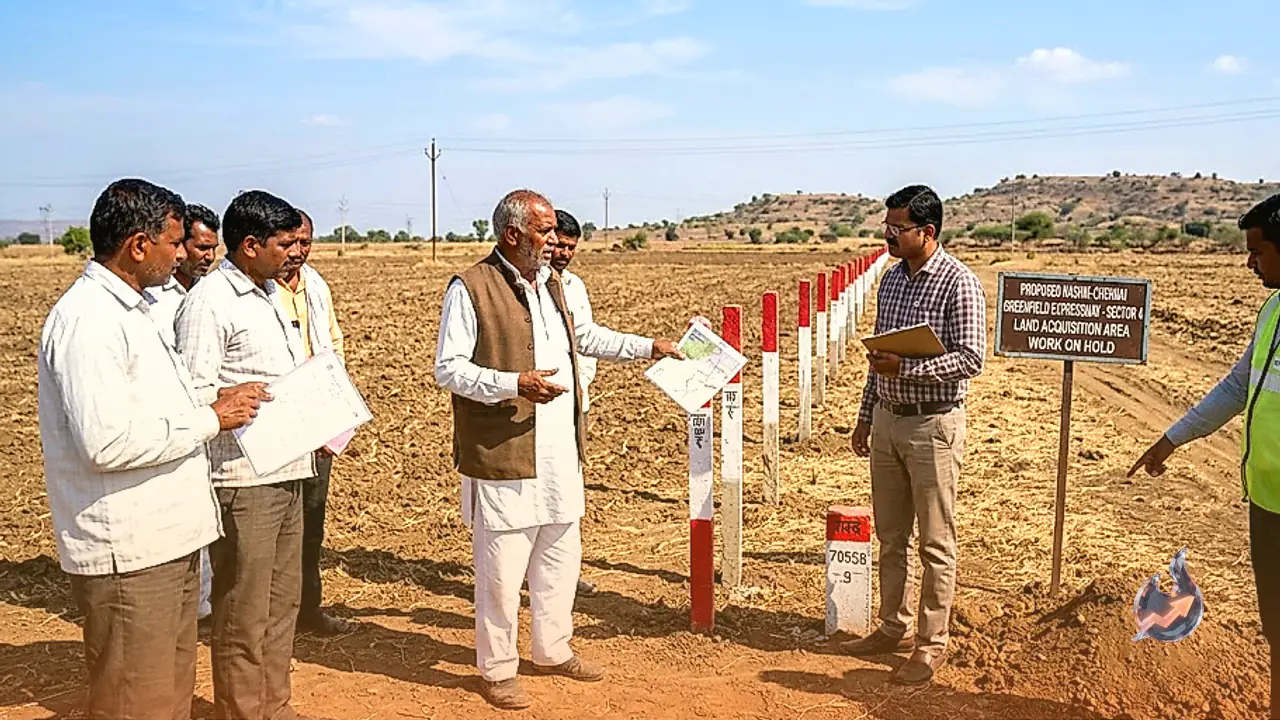

The construction timeline for the proposed high-speed corridor connecting Nashik with Chennai has encountered temporary administrative friction in Maharashtra. Authorities handling the project have pushed back the commercial bidding deadline for the crucial Nashik to Akkalkot stretch to October 30. While extensive parcels of land have already been secured across several districts along the alignment, critical gaps in property takeover within key sectors have caused planners to pause the tendering phase before contractors can be mobilized on the ground.
Land Status Across Key Maharashtra Districts
Securing the right of way remains the primary hurdle for the Maharashtra leg of the corridor. In the districts of Solapur and Dharashiv, administrative agencies have managed to wrap up 90 percent of the required land acquisition, ensuring that substantial contiguous parcels are ready for engineering work. However, the acquisition process is still incomplete in parts of Ahilyanagar and Nashik districts. To prevent legal disputes or logistical blockages once ground works begin, authorities opted to suspend the auctioning process temporarily and extend the tender date to October 30 until the remaining land transfers are finalized.
Dimensions and Impact of the Nashik-Akkalkot Corridor
The 374-kilometer-long Nashik to Akkalkot segment represents the largest individual package within the wider 900-kilometer expressway project. Commuters traveling between these two cities currently traverse an existing road network covering approximately 450 kilometers. Once the newly planned access-controlled expressway opens, this traveling distance will decrease by 75 kilometers. Even more dramatic is the reduction in transit time: motorists who currently spend over 10 hours navigating existing roads will be able to complete the journey in just 4 hours. The capital outlay for this 374 km section is projected at 19,142 crore rupees.
Alignment Revisions and Five-State Connectivity
The highway was originally mapped as a 1,271-kilometer arterial link stretching all the way from Surat to Chennai. Highway authorities later revised the master plan, stripping out the Surat to Nashik segment and repositioning the route to originate directly in Nashik, reducing the total project distance to 900 kilometers. Designed as a 6-lane greenfield expressway, the route cuts across five distinct states: Maharashtra, Karnataka, Telangana, Andhra Pradesh, and Tamil Nadu through Chennai. By providing modern, high-speed freight links across central and southern India, the highway is anticipated to significantly enhance regional industrial transport and supply chains.
Execution Deadlines and Overall Journey Gains
The National Highways Authority of India has established an official completion target of 2027 for the complete expressway. Physical execution has already gotten underway on a 177-kilometer stretch bridging Karnataka and Andhra Pradesh. At present, navigating the roughly 1,400-kilometer vehicular route between Nashik and Chennai demands around 24 hours behind the wheel. The finished expressway will permit vehicles to cover the full 900-kilometer span in merely 9 to 10 hours. Nevertheless, unresolved land acquisitions in western Maharashtra could threaten momentum unless the remaining plots are promptly transferred before the revised bidding timeline expires.