
















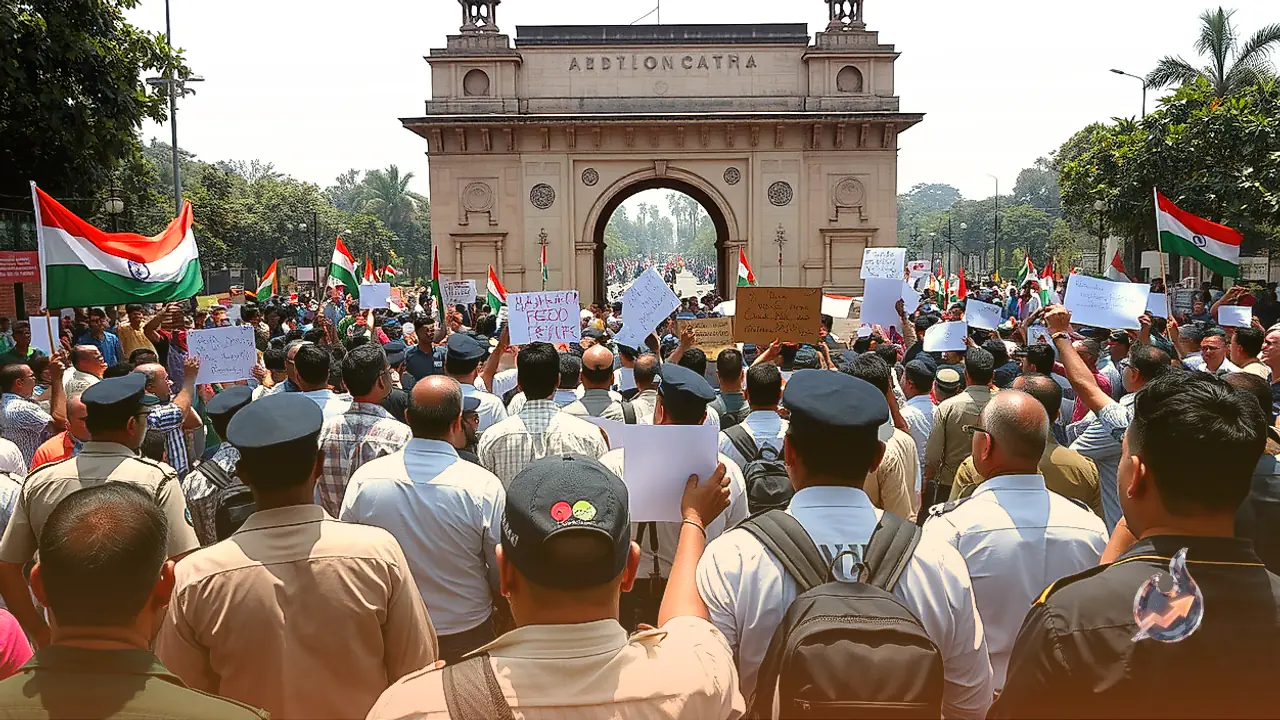

Public protests, sit-ins, and demonstrations will no longer be permitted at the landmark Jantar Mantar site in the national capital. Authorities have officially earmarked three alternative venues across the city to host future rallies and civic gatherings. An administrative order formalising this significant shift in public demonstration management has been officially issued by the police department.
Three Alternative Grounds Assigned for Gatherings
Under the newly issued directives, all upcoming political rallies, civic agitations, and organisational protests must take place at one of three designated locations. The approved venues are Ramlila Maidan, Burari Ground, and the CBD Ground located in East Delhi. Moving forward, groups seeking to assemble, voice grievances, or present public memorandums will be directed exclusively toward these designated grounds.
Ministry of Home Affairs Committee Recommendations
The decision to relocate demonstrations stems from an extensive review carried out by a dedicated panel established by the Union Ministry of Home Affairs. This committee was assigned the task of evaluating suitable alternative locations where citizens could exercise their right to protest while ensuring improved civic management. The panel examined ways to offer viable venues outside existing central spots, ultimately submitting recommendations that paved the way for selecting the three alternative locations over Jantar Mantar.
Upcoming Operational Protocols and Guidelines
The directive, issued under the authority of Police Commissioner Anurag Kumar, notes that separate procedural orders detailing the operational rules and security arrangements for these three sites will be released soon. These forthcoming regulations will govern crowd limits, permission procedures, and overall public order management to ensure seamless coordination during planned gatherings.
The Longstanding Significance of Jantar Mantar
For several decades, Jantar Mantar served as one of the primary focal points for grassroots activism, workers unions, student groups, and national political parties. Its strategic proximity to Parliament House and key central government secretariats made it an essential destination for delegations travelling from across the country to raise their concerns. With the latest administrative restrictions now in force, public assemblies will no longer be permitted along this iconic corridor.