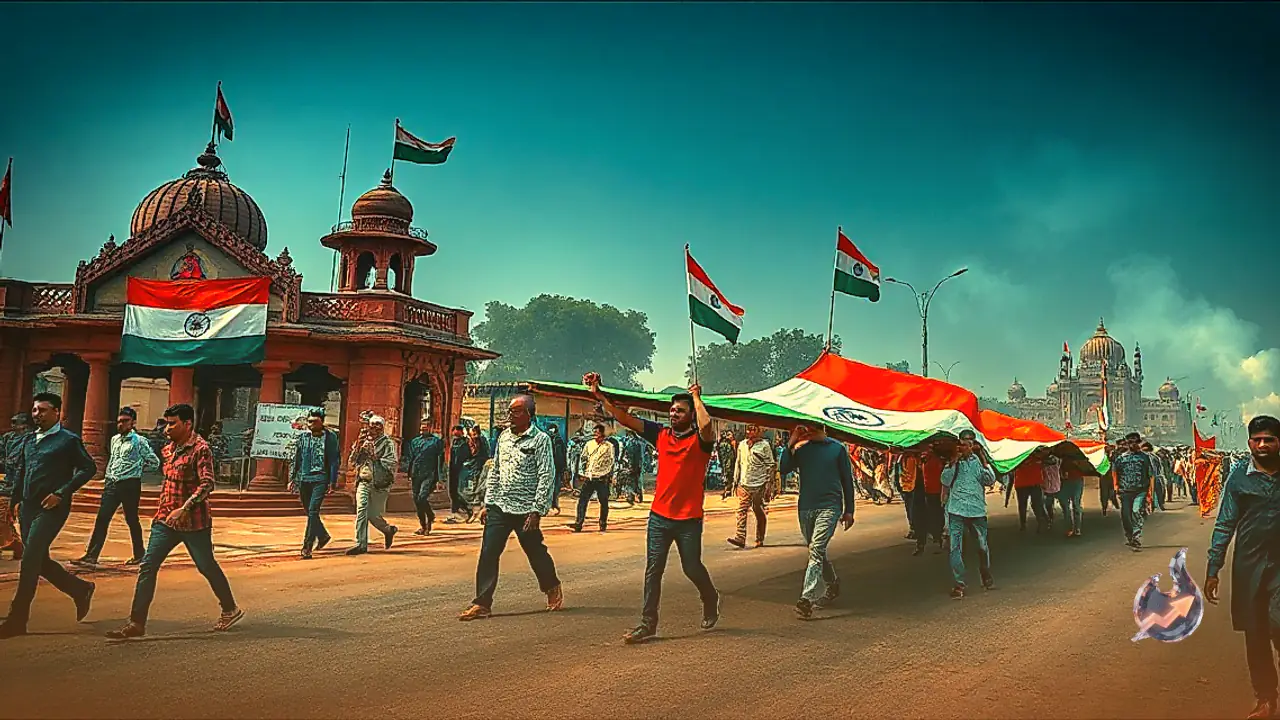


















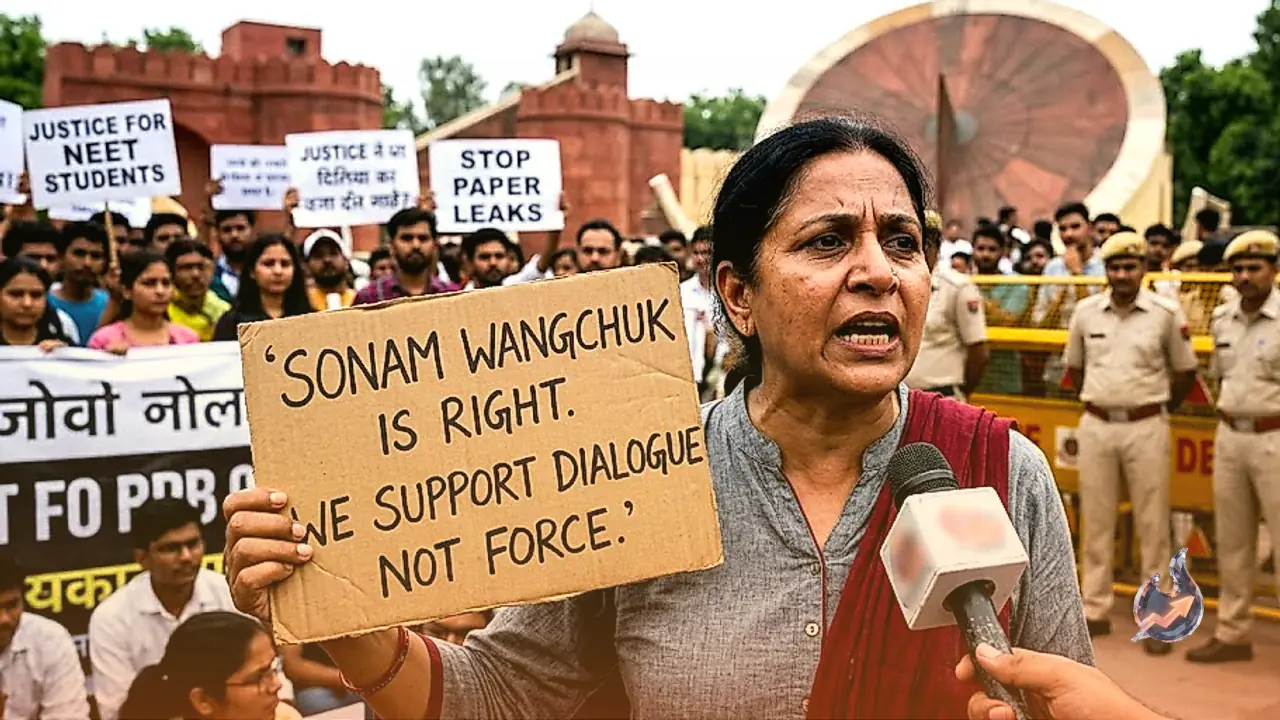

The police action against youth protesting at Jantar Mantar over the NEET examination paper leak scandal has sparked intense reactions in the national capital. Distressed by the administration's high-handed approach, an aggrieved citizen stepped forward to raise serious questions about the governance and police behavior. Expressing deep sorrow over the force used against the demonstrators, the individual stressed that treating students who are raising voices for their rights and reforms in the educational system with such harshness is extremely painful. While a democracy relies on mutual dialogue, suppressing opposition voices has become a concerning trend.
Dialogue Versus Authoritarianism: Historical Parallels Drawn
Criticizing the stance of the authorities, the citizen stated that arrogant behavior has no place in a functional democracy and communication channels must remain open from both sides. Drawing historical parallels, the citizen recalled how previous governments prioritized dialogue during public agitations. During the UPA rule, when Anna Hazare went on a hunger strike, the government resolved the issue peacefully by offering him coconut water to break his fast. Similar approaches of maintaining dialogue were observed during the tenures of former Prime Minister Indira Gandhi and even during Mahatma Gandhi's satyagraha under British rule.
Referring to the oath prescribed by the Indian Constitution, the individual emphasized that the Constitution promises to safeguard human dignity alongside national unity and integrity. When student protesters are subjected to baton charges and mistreatment, individual dignity is completely shattered. Instead of resorting to force, the government ought to demonstrate sensitivity and seek solutions through peaceful discussion.
Referencing Sonam Wangchuk and the State of Education
Elaborating further, the citizen highlighted the recent hunger strike conducted by renowned education reformer Sonam Wangchuk. It was pointed out that Wangchuk sat on a 20-day fast solely to address the crumbling state of the country's education system. His protest was entirely unselfish, as he did not request a 200-square-yard plot in Lutyens' Delhi, a seat in the Rajya Sabha, or a portfolio in the central cabinet. His singular demand was the rectification of the weak education infrastructure, accountability from those in power, and resignations over failures.
Expressing deep worry over educational standards, the citizen asserted that when young people take to the streets to secure their academic future, their demands are straightforward and legitimate. However, the administrative machinery frequently chooses suppression over addressing core grievances, which remains completely unjustified.
Criticism of Delhi Police Action and the Police Chief
Addressing the crackdown at Jantar Mantar, the citizen severely criticized the working style of the newly appointed Delhi Police Commissioner, Anurag Kumar. It was pointed out that using police batons and boots to crush a vibrant democracy is unacceptable. Sarcasm was directed at the administration, noting that oppressive measures like these would only make historical tyrants happy as if such actions deserved rewards in an ancient court.
Relating a personal incident from the protest site, the individual recalled hearing about a friend named Dipke who broke down after being beaten by the police. Driven by solidarity, the individual rushed to Jantar Mantar, ready to face the batons alongside fellow protesters. While the police possess immense power, funding, and resources, brute force can never be the legitimate path of a democracy.
Expressing Pain Through the Poetry of Gopaldas Neeraj
Overwhelmed by administrative apathy and despair, the citizen recited verses from the renowned poet Gopaldas Neeraj. It was noted that when a person feels utterly helpless and defeated, Neeraj's poetry accurately mirrors their internal agony. The lines describe how dreams wither like flowers, friends turn into painful thorns, and an individual is left helplessly watching the dust settle after a passing caravan as time slips away.
Explaining the deeper context of the poem, the individual remarked that Neeraj wrote those lines out of real-world heartbreak rather than a passing dream. The poet reflected on changing times where people came and went, leaving behind only dust and smoke. Today, protesting youth find themselves in a similar plight, where their genuine pleas go unheard.
Right to Dissent and the Path Forward for Democracy
In conclusion, the citizen highlighted the fundamental rights granted by the Constitution of India. Holding a dissenting view or disagreeing with government policies is not a crime. The Indian Constitution explicitly guarantees freedom of speech and expression as a fundamental right to every citizen, yet democratic space appears to be shrinking as dissenting voices are excluded from discussions.
An appeal was made to the authorities to abandon arrogance and come to the negotiating table. If there are misunderstandings or errors in the protesters' stance, they can easily be sorted out through constructive conversation. Violence and police crackdowns offer no permanent solutions; only mutual dialogue can strengthen the democratic framework.