




















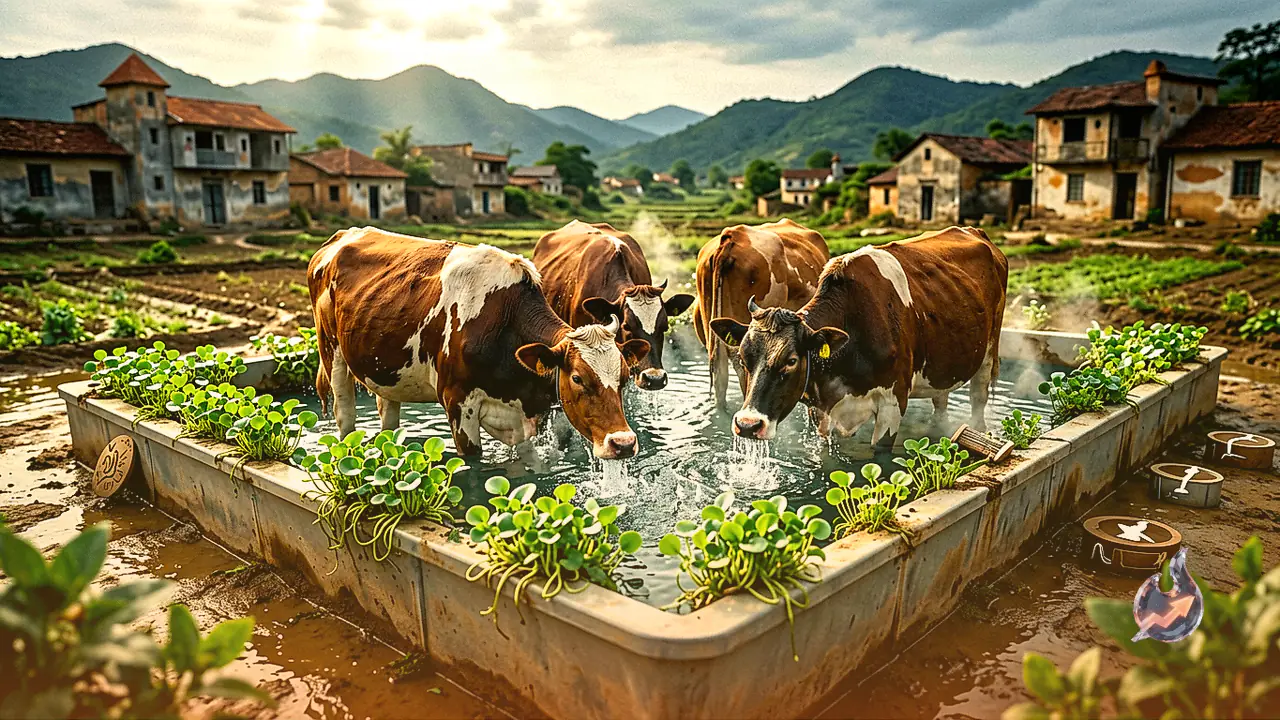

Maa Shakambhari Kanha Upvan Gaushala, operated under the Saharanpur Municipal Corporation, has demonstrated a sustainable model of environmental conservation and resource recovery. In a bid to enhance institutional self-reliance while caring for cattle, the shelter has commissioned an advanced biological water treatment facility. Substantial volumes of water are consumed daily across the premises for bathing cows and sanitizing livestock enclosures. Previously, this runoff was lost as wastewater, but the newly implemented system purifies the effluent through natural biological techniques, rendering it fully reusable within the complex. This initiative directly aligns with broader administrative drives aimed at preventing water wastage and optimizing local utility management.
Natural Water Purification Using Pistia Botanical Species
The standout feature of this water treatment setup is its reliance on natural vegetation rather than heavy chemical processing. The eco-friendly purification process utilizes an aquatic plant known as Pistia, commonly referred to as water lettuce or Pistia stratiotes. As a free-floating aquatic species, Pistia functions through phytoremediation, a natural mechanism wherein plant root systems extract contaminants from liquid mediums. The expansive root network of Pistia absorbs heavy metals, toxic elements, and surplus nutrients such as nitrogen and phosphorus from the runoff. By filtering out these organic and inorganic pollutants, the plant naturally clarifies the water and restores its utility for non-potable applications.
Operational Mechanism of the 11 Chamber Water Treatment Plant
The physical structure of the purification infrastructure comprises an 11-chamber sequential treatment network. Wastewater flowing from cow washing areas is initially channeled into primary receiving basins where Pistia beds undergo biological absorption. Following natural filtration, the water undergoes an ozonation stage complemented by external oxygenation to eliminate dissolved pathogens and odours. Once the multi-stage purification cycle is complete, the treated water is transferred via dedicated mobile tankers into secondary flushing tanks. This reclaimed water is currently deployed to power the toilet flushing infrastructure across the municipal facility, effectively closing the consumption loop.
Waste to Wealth Principle and the Self Reliant Gaushala Model
At present, Maa Shakambhari Kanha Upvan Gaushala provides shelter to 547 cattle. Explaining the operational philosophy, Veterinary and Welfare Officer Dr. Sandeep Kumar Mishra noted that the facility operates strictly on a waste-to-wealth framework designed to recycle every byproduct generated on-site. Dr. Sandeep Kumar Mishra stated, "Our goal is to recycle every resource from the shelter so that not a single drop of water is wasted." Under this broader sustainability plan, cow urine is processed on-site to manufacture household phenyl, while cow dung is converted into various eco-friendly products. The newly added 11-chamber water treatment plant substantially lowers freshwater demand, turning the gaushala into a self-sustaining blueprint for municipal waste management.