






















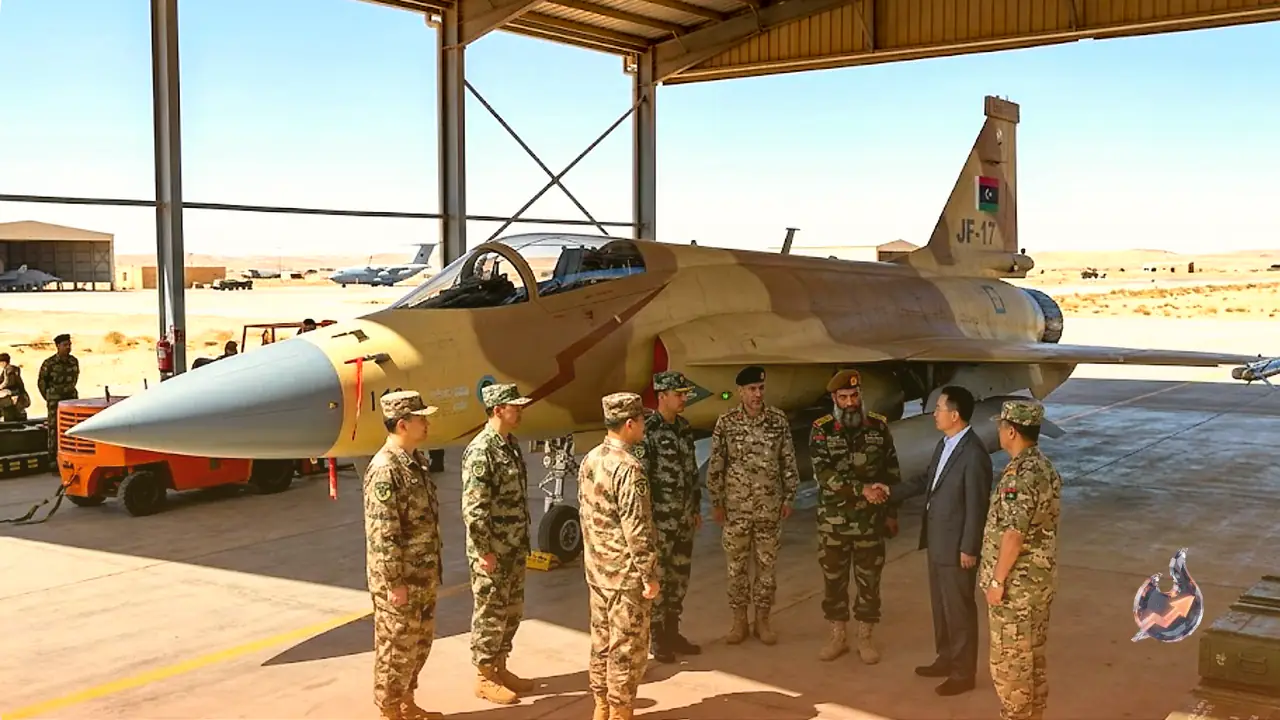

A report from the US based think tank Middle East Forum claims China is using Pakistan as a channel to push its own strategic interests forward, and the clearest example of that is a major defence deal between Pakistan and the Libyan National Army. The deal, worth more than 4 billion dollars, covers 16 JF-17 fighter jets, training aircraft and other military equipment.
Why the Libya deal raises alarms
The report warns that this deal could weaken the United Nations arms embargo on Libya, shift the military balance in the country's internal conflict, and raise geopolitical tension across the wider region. In other words, what looks like a straightforward arms purchase could end up destabilising an already fragile part of the world.
Pakistan's growing reliance on Chinese weapons
Citing data from the Stockholm International Peace Research Institute, known as SIPRI, the think tank notes that more than 80 percent of Pakistan's arms imports between 2021 and 2024 came from China alone. That figure shows just how quickly Pakistan's dependence on Chinese weaponry has grown, and how firmly China has embedded itself in Pakistan's defence sector. The report also points out that Pakistan still flies American origin F-16 Fighting Falcon jets and periodically receives US military assistance, but the bulk of its military capability now rests on Chinese origin hardware. Alongside the jointly built JF-17 fighter jet, Pakistan is actively marketing Chinese drones, the HQ-9 air defence system and other Chinese defence equipment in the international arms market.
Talks with a dozen countries
According to the report, recent months have seen a rise in defence talks and potential deals between Pakistan and countries including Iraq, Bangladesh, Indonesia, Saudi Arabia, Libya, Morocco, Nigeria, Sudan and Ethiopia. Chinese media has also claimed that Pakistan is working to finalise JF-17 deals with several of these nations.
A possible Saudi arrangement
The report adds that under a possible agreement with Saudi Arabia, Pakistan could arrange financing in exchange for supplying JF-17 jets, though no such deal has been finalised yet. The reasons cited include the quality of Chinese weapons systems, how well they mesh with existing American systems, and financial considerations.
Why this matters for the United States
Despite all these complications, the report states that China is using Pakistan as a gateway to enter the region. Every time Pakistan promotes these Chinese defence systems abroad, it strengthens China's broader defence industrial footprint and its strategic ambitions. The think tank concludes that China is trying to expand its presence in the West Asian defence market through Pakistan, and that Pakistan's promotion of Chinese weapons is helping advance Beijing's wider defence industrial and strategic goals.