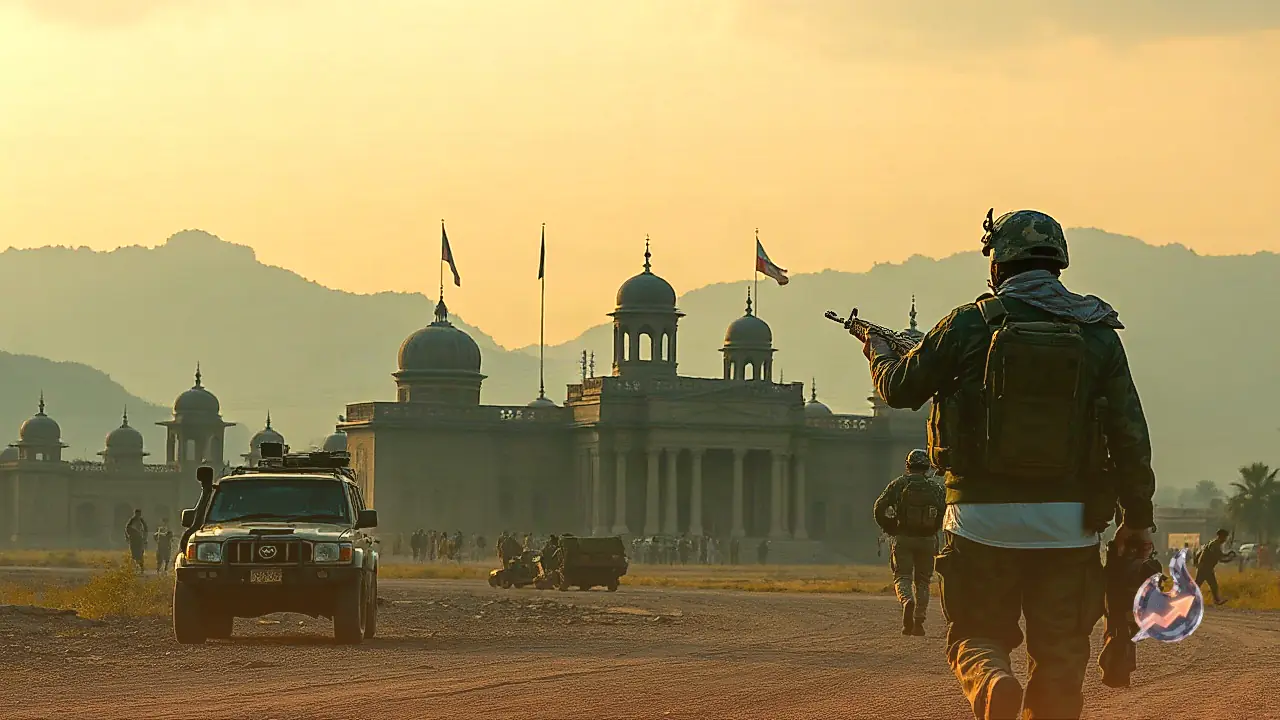

















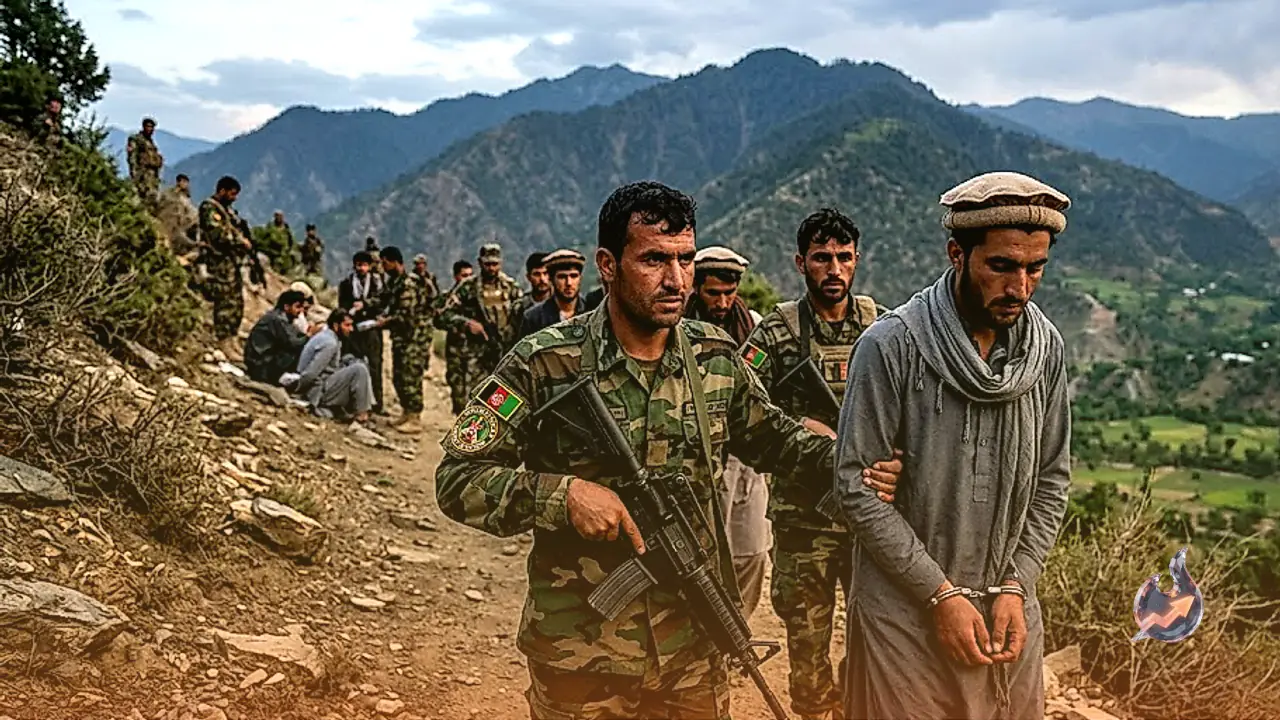

Afghan security and defense forces have dealt a decisive blow to an infiltration attempt along the rugged eastern frontier. Operating in the Kamdesh district of Nuristan province, Afghan units intercepted and neutralized an armed contingent that crossed the Durand Line. The high-stakes military operation concluded with 41 militants eliminated and 62 fighters captured alive. Following their detention, several captured fighters provided detailed accounts of their journey, exposing how vulnerable young men are systematically enticed with civilian job offers only to be handed automatic weapons and forced onto the frontlines. The Ministry of Defense of Afghanistan issued a stern warning after the operation, stating that any attempts to compromise national sovereignty will be met with decisive force, cautioning that further provocations across the border would carry severe consequences.
Exploiting Desperation, False Civilian Employment and Iran Pipeline
Interrogation accounts from the detained individuals shed light on a coordinated recruitment apparatus that targets destitute Afghan migrants residing in Iran. Desperate for financial stability, these individuals were promised steady desk jobs with monthly salaries of 300 dollars. Instead of legitimate employment, the recruits found themselves shuttled directly into covert facilities across Islamabad and Peshawar. Upon arrival, heavy military hardware, including AK-47 rifles and rocket launchers, replaced the promised office tools. The admissions illustrate a broader pattern in which extremist formations, such as ISIS and groups operating under the banner of Shar-o-Fasad, are organized and deployed across borders to fuel instability in Afghan territory.
Commander Aziz, Issued Wristwatches and Refusal to Engage
Among the detainees, one fighter recounted being placed in a contingent of approximately 50 personnel operating under Commander Aziz. When questioned by Afghan authorities regarding a specific wristwatch found in his possession, the detainee stated directly that it had been supplied by the Pakistani military. He explained that their handlers explicitly ordered them to cross into Afghanistan to engage local forces in combat. However, the fighter maintained that he and several peers refused to open fire on Afghan forces. Despite Commander Aziz attempting to force the unit into the skirmish, multiple members opted out of the conflict, declining to participate in the battle and actively seeking an opportunity to surrender peacefully.
Nasrullah's Testimony, From Kor Province to Unpaid Combat
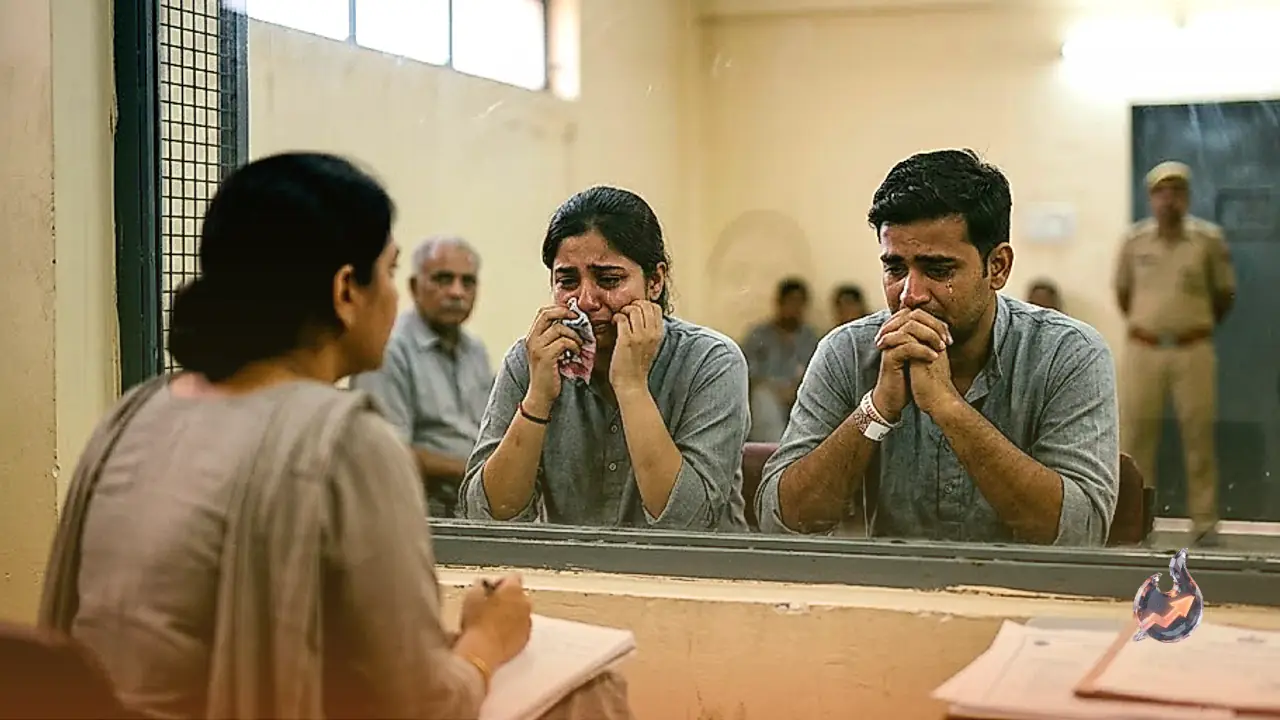
Another captive, identified as Nasrullah, a native of Kor province in Iran, broke down while recounting his path to the frontline. Nasrullah explained that the sole reason he accepted the offer was the promise of financial compensation to support himself. Recruiters convinced him to leave Iran for Pakistan, but once inside the camps, no money was ever delivered. Instead, after a brief period of weapons handling, he was pushed directly to the Pakistan-Afghanistan border. Nasrullah stated that despite carrying a weapon, he never discharged a single round at security personnel, choosing instead to be taken into custody by Islamic Emirate forces as soon as they approached.
Hiding Under Tree Cover, Saboor's Three-Hour Wait to Surrender
A third fighter, Saboor, also hailing from Iran's Kor province, followed a similar trajectory across borders until reaching Islamabad. Saboor stated that he initially arrived in Islamabad, where he rested for a day and offered prayers. Three days later, two acquaintances provided him with weapons and guided him toward the frontier. Attached to a 13-member squad stationed in Sarpol, Saboor found himself caught in heavy crossfire. He stated that he had no intention of fighting and avoided taking part in the combat. As Afghan forces engaged the group in an intense clash lasting roughly three hours, Saboor remained concealed beneath a tree, hoping to survive the firefight and surrender without injury, before ultimately being taken into custody.
Javed's Account, The Journey Through Zahid and Abdullah Camps
The most exhaustive operational detail was provided by Javed, son of Abdul Hakim and grandson of Mohammad Omar, from the village of Khajikanti in the Qaisar district of Faryab province. Javed explained that while residing in Iran, an individual named Musa contacted him with an offer of 300 dollars per month to work at the Jabha-e-Azadi office linked to Dr. Zia. Javed, along with his father Abdul Hamid and two other individuals, was transported in an Iranian vehicle to the coastal city of Chabahar. At the border river in Chabahar, they connected with a Pakistani handler named Mujeeb. Mujeeb facilitated their movement into Pakistan, where an assembly of around 100 recruits had gathered, before transferring them to the Zahid camp in Islamabad, where they stayed for approximately one and a half months.
Following their stay in Islamabad, a contingent of 40 to 45 recruits was sent to a facility in Peshawar, before moving to the Abdullah training camp for a 15-day period. During that span, the recruits underwent seven straight days of intensive combat instruction covering Kalashnikov rifles, rocket launchers, live ammunition drills, and PK machine guns. Javed pointedly stated that all the trainers assigned to the camp were Pakistani, Pashto-speaking, and Urdu-speaking personnel, with not a single Afghan instructor involved in the program.
Logistical Transit by Military Trucks and an 11-Hour Climax
After finishing their tactical drills, the recruits spent an additional 15 days at the Naveed camp adjacent to Zahid camp. They were subsequently boarded onto large military trucks operated by the Pakistani army and transported north to Chitral. From Chitral, the fighters proceeded on foot toward Sarkhaz. At Sarkhaz, provisions and field rations were distributed. Pakistani personnel then cut an opening through the perimeter border fence, pushing the fighters across into Afghan territory alongside promises of coordinated ground and aerial support that never materialized. Once across, heavy fighting erupted, spanning 11 continuous hours from 7:00 AM to 6:00 PM. A significant number of Javed's comrades were killed in the firefight, while the survivors surrendered. Javed also noted that his father had been a former Afghan soldier who relocated to Iran after the change of power, describing the tragedy of families separated by turmoil only to be ensnared in cross-border proxy operations.