




















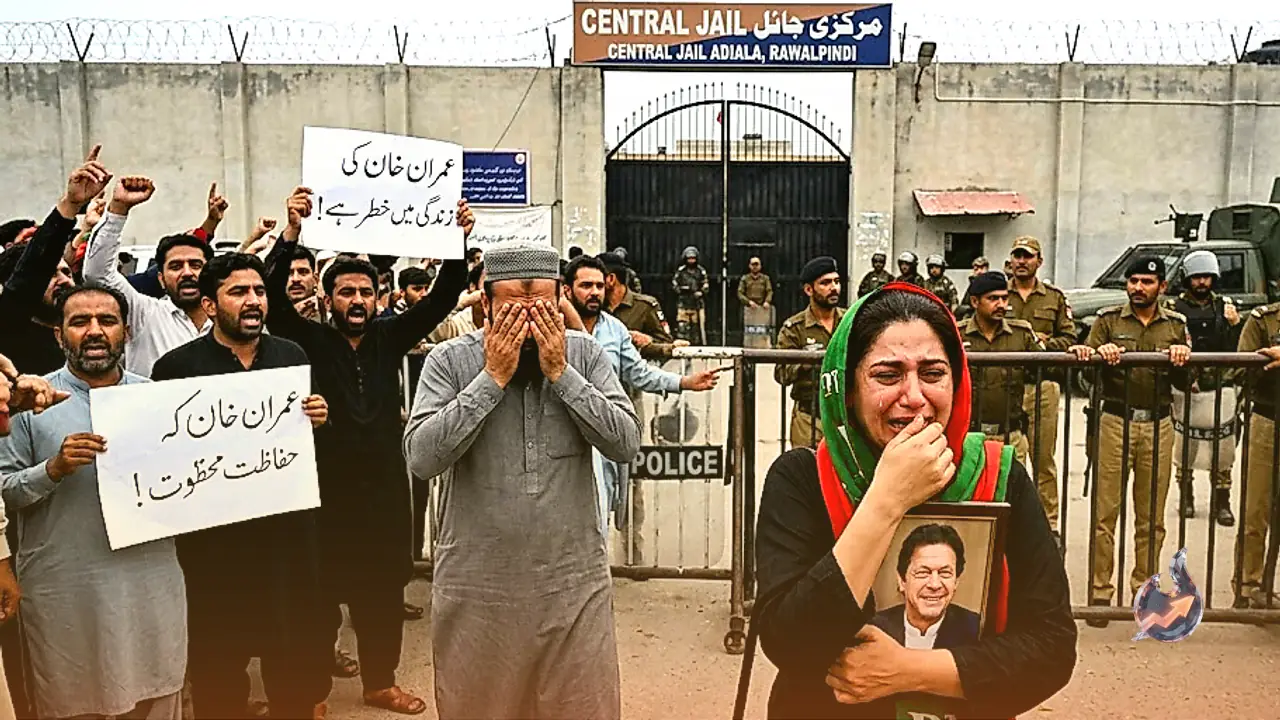

The history of Pakistani politics has long been written in the shadows of military coups, political conspiracies, and the damp walls of imprisonment. Once again, rumors emanating from the country's military and political corridors have sparked international concern and intense speculation. Concerns are mounting over the safety and well-being of former Prime Minister of Pakistan and Pakistan Tehreek-e-Insaf (PTI) chief Imran Khan, who has been held under strict security inside Rawalpindi's Adiala Jail. The complete secrecy maintained by jail authorities and the total ban on visitors have raised unsettling questions regarding whether an untoward incident has occurred behind closed doors. Shocking claims made by US-based Pakistani journalist Wajahat Saeed Khan have further escalated tensions, reflecting visible anxiety inside Pakistan's military headquarters.
Claims from Army Headquarters and Administrative Silence
Journalist Wajahat Saeed Khan claimed in a recent YouTube broadcast that at least three senior army officers stationed at the Army General Headquarters (GHQ) in Rawalpindi believe Imran Khan has passed away inside the prison facility. Although no official institution has confirmed these statements, the unusual flurry of high-level activity and emergency consultations within the GHQ suggest significant underlying turmoil.
Wajahat Saeed Khan stated in his video address that three senior GHQ officials independently indicated Imran Khan is no longer alive, which according to them explains why Army Chief General Asim Munir continues to keep him isolated from public view. This assertion has severely intensified anxiety and anger among PTI supporters across the country.
Imprisonment Since August 2023 and the 190 Million Pound Case
Imran Khan has been held in detention since August 2023, facing dozens of legal proceedings, including the high-profile 190 million pound Al-Qadir Trust corruption case. For several consecutive months, the Adiala Jail administration has consistently barred his sisters, defense lawyers, political colleagues, and personal physicians from meeting him. Whenever family members or medical teams attempt to visit the facility, they are turned back at the gates citing security restrictions.
This prolonged isolation and complete blockade of communication have reinforced fears among his family and PTI leadership that officials may be concealing his actual physical condition. The absence of independent medical evaluations has allowed rumors regarding his health to spread rapidly.
The Feud Between Imran Khan and General Asim Munir
The intense friction between Imran Khan and current Army Chief General Asim Munir dates back to when Imran Khan served as Prime Minister and Asim Munir headed the Inter-Services Intelligence (ISI). Having assumed charge of the ISI in October 2018, Asim Munir was abruptly removed from his position by Imran Khan after just 8 months in office.
According to military and administrative accounts, Asim Munir had brought certain corruption allegations involving the Prime Minister's wife, Bushra Bibi, to Imran Khan's attention. Displeased by this move, Imran Khan exercised executive power to dismiss him, marking the shortest tenure of any ISI chief in Pakistan's military history and establishing a deep personal rift between the two leaders.
Following Imran Khan's removal from office through a parliamentary no-confidence vote, the incoming government led by Shehbaz Sharif amended administrative rules to appoint Asim Munir as Army Chief. This development transformed their disagreement into an open confrontation. Imran Khan subsequently launched direct verbal attacks against the military commander, publicly asserting that the nation was being governed by the army chief rather than civilian authorities and alleging that the legal actions against him were driven purely by personal vengeance.
Mobilization Warning and the 27 September Long March
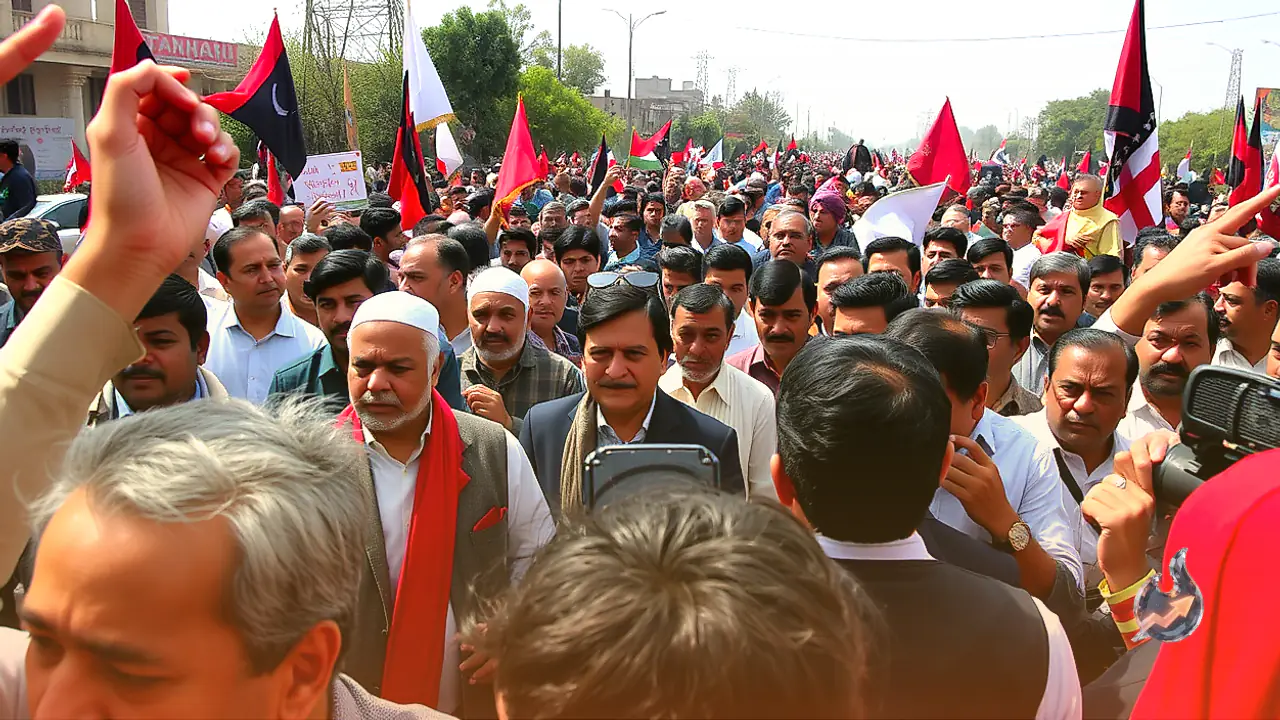
As uncertainty surrounds Imran Khan's condition, political resistance in the country is taking a volatile turn. Sohail Afridi, Chief Minister of Khyber Pakhtunkhwa and a prominent PTI leader, issued a direct warning to the Pakistani government and military establishment, asserting that public frustration among youth has reached boiling point due to the denial of medical and family access to Imran Khan.
Sohail Afridi declared that PTI supporters remain fully united and prepared, stating that over 20 lakh individuals are ready to march toward Islamabad and take to the streets upon receiving a single call from leadership. To formalize this protest, the PTI has officially announced a massive 'Long March' heading toward Islamabad on 27 September, setting the stage for a potential administrative crisis in the capital.
Signs of Factionalism and Internal Dissent in Rawalpindi
The influence of Imran Khan's political popularity is not confined to street protests; it has also created visible friction within the military headquarters in Rawalpindi. Reports indicate that senior officers remain divided over the military's aggressive posture toward Imran Khan and the broader political landscape. Following his arrest on 9 May 2023, when supporters stormed the Corps Commander's residence in Lahore, several military commanders reportedly voiced opposition against opening fire on civilian demonstrators.
Internal division was further highlighted by the removal of Lahore Corps Commander Lieutenant General Fayyaz Ghani, who was relieved of his post after expressing disagreement with General Asim Munir's policy of direct confrontation against Imran Khan. Furthermore, senior commanders including General Asif Ghafoor and General Sahibzada Sahir Shamshad Mirza reportedly advised General Munir to avoid direct clashes with the former Prime Minister and seek political resolution, giving rise to persistent rumors of internal dissent within the ranks.
Past Rumors and the Reality of Harsh Solitary Confinement
Unverified reports regarding Imran Khan's health and safety have surfaced previously. In November of last year, similar rumors circulated widely across social media and political circles. However, after his sister Uzma Khanum was eventually permitted to visit him in prison, it was confirmed that he was alive but being subjected to exceptionally harsh detention conditions.
Details emerging from that visit revealed that months of continuous isolation in a dark cell had severely impacted his eyesight, and he was struggling to receive basic medical treatment. The extreme solitary confinement without human contact created widespread alarm among his followers. With strict communication restrictions reimposed once again, the current situation has placed Pakistan's political landscape in a highly fragile and dangerous state.