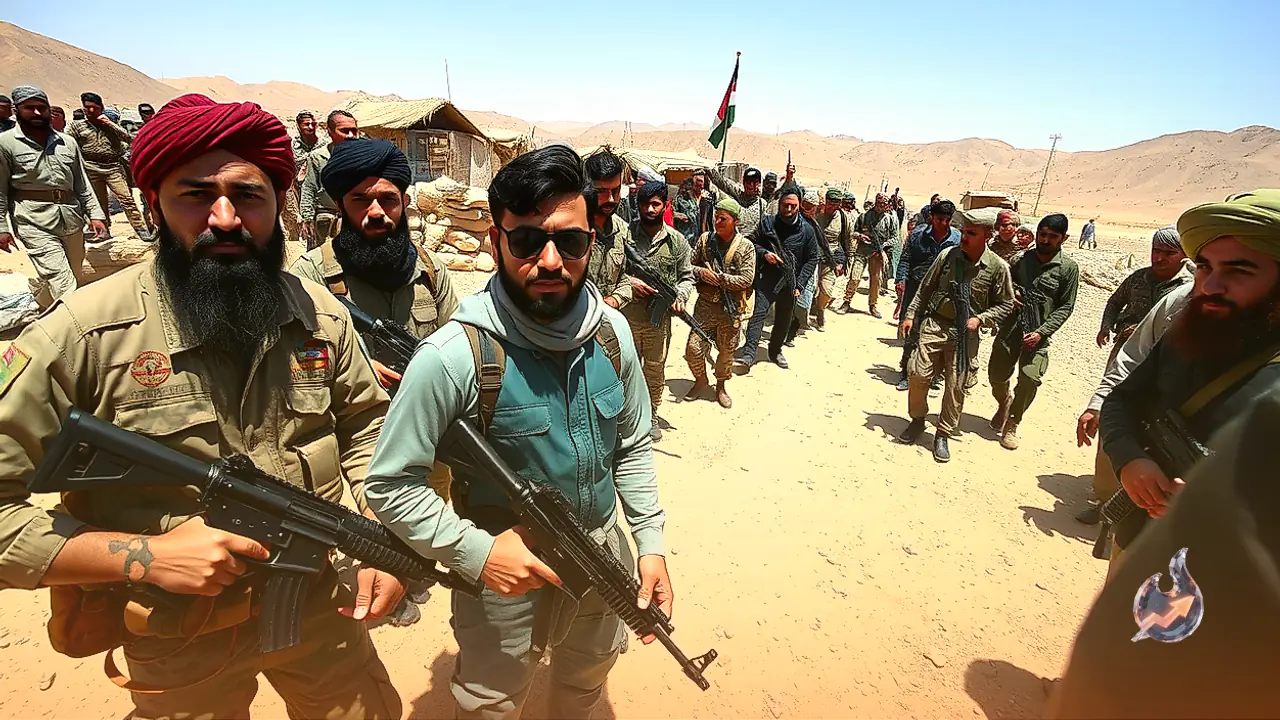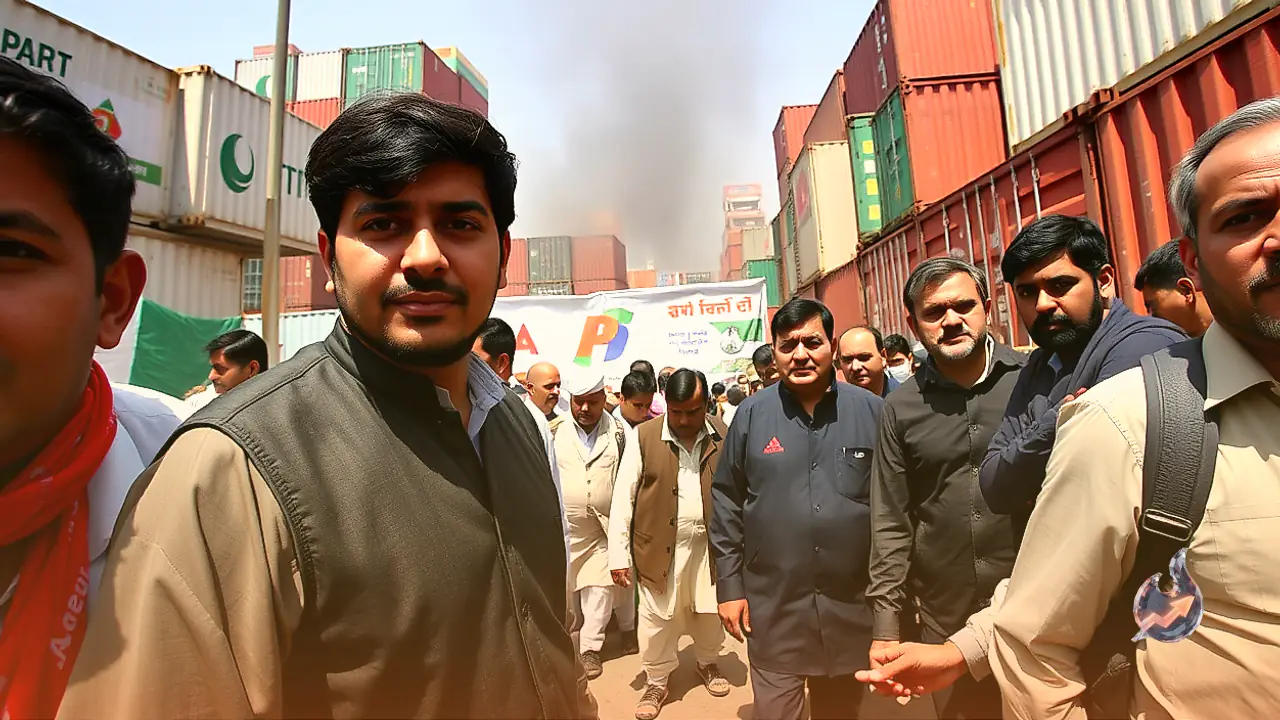




















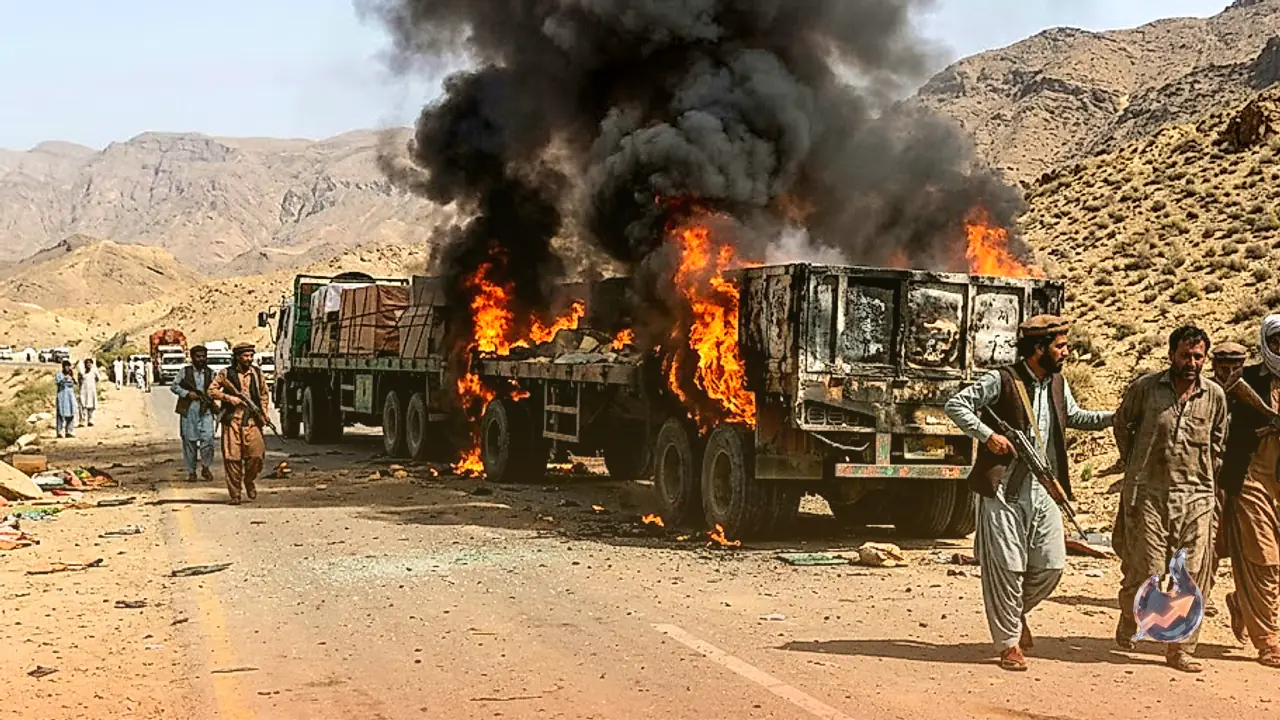

A severe security incident has taken place in the Nasirabad area near Turbat district in Balochistan, where armed Baloch militants intercepted a major freight convoy en route to the strategic Gwadar port. Opening heavy fire, the attackers forced the transport vehicles to a halt, ordered the operators out at gunpoint, and set two heavy trailers carrying valuable cargo ablaze. The inferno reduced both transport rigs and their entire freight to ashes, while the armed assailants abducted one commercial driver before vanishing into the surrounding rugged mountains.
Security Lapses and Military Search Operations
The assault laid bare persistent vulnerabilities in the region's security apparatus. Local accounts indicate that throughout the duration of the ambush, as gunfire echoed and the commercial cargo was being torched, no Pakistani military or police personnel were present on the scene. The attackers completed the sabotage, seized their captive, and withdrew into difficult terrain without meeting armed resistance.
Following a noticeable delay, personnel from the Pakistani military and Frontier Corps cordoned off the Nasirabad sector. Frontier Corps contingents and army units subsequently launched search and rescue operations across the surrounding hills in an effort to trace the kidnapped driver. While no militant outfit has formally issued a claim of responsibility for the raid, administrative authorities suspect the attack was carried out by the Baloch Liberation Army or affiliated separatist groups that regularly strike regional transport links.
Strategic Stature of Gwadar and CPEC Corridors
This highway attack strikes directly at the operational backbone of the China-Pakistan Economic Corridor, known as CPEC, which serves as a flagship component of the broader Belt and Road Initiative driven by Beijing. Situated along the Arabian Sea, the deep-water port of Gwadar occupies a critical geographical position outside the Persian Gulf and right next to the Strait of Hormuz, through which significant volumes of global maritime oil transit take place.
While legal ownership of the port installation remains with the government of Pakistan, operational oversight and commercial management are executed directly by China Overseas Port Holding Company. Separatist factions have consistently accused federal authorities in Islamabad and administrative bodies in Beijing of exploiting Balochistan's extensive natural gas, petroleum, and mineral reserves while depriving local communities of economic benefits. Militants allege that resource extraction has yielded only widespread joblessness, poverty, and security clampdowns for indigenous residents. These deep grievances have fueled repeated assaults targeting infrastructure routes, logistical convoys, and associated personnel connected to the Gwadar hub.
Targeting Supply Chains as an Evolving Militant Strategy
The ambush outside Turbat illustrates an evolving tactical calculation among regional separatist cells. Rather than focusing exclusively on military outposts and paramilitary garrisons, armed cadres are systematically disrupting the commercial corridors linking Gwadar to the wider national transit system. The public destruction of heavy freight trailers and the targeted abduction of drivers injects acute fear into private logistics operators.
If primary transit corridors become impassable due to recurring violence, private transport firms and logistics contractors will become increasingly reluctant to dispatch assets toward the coastal port. A prolonged transport disruption poses a direct operational threat to commercial activity at Gwadar port, threatening to stall multi-billion-dollar infrastructure ventures backed by Chinese funding.
Rising Friction with Beijing and Deepening National Crises
Recurring ambushes against development routes across Balochistan have caused sharp frustration within the Chinese leadership, including Chinese President Xi Jinping and ranking figures in the Chinese Communist Party. Officials in Beijing have pressed Pakistani authorities on multiple occasions to provide foolproof security umbrellas for personnel, commercial assets, and bilateral facilities. However, severe budget constraints and security shortcomings have hobbled efforts to stabilize the southwest region.
This disruption arrives as Pakistan contends with severe national economic challenges. Under such strained conditions, the physical destruction of logistical corridors, threats to cargo movements, and deteriorating foreign investor confidence represent critical setbacks for official economic recovery plans.