





















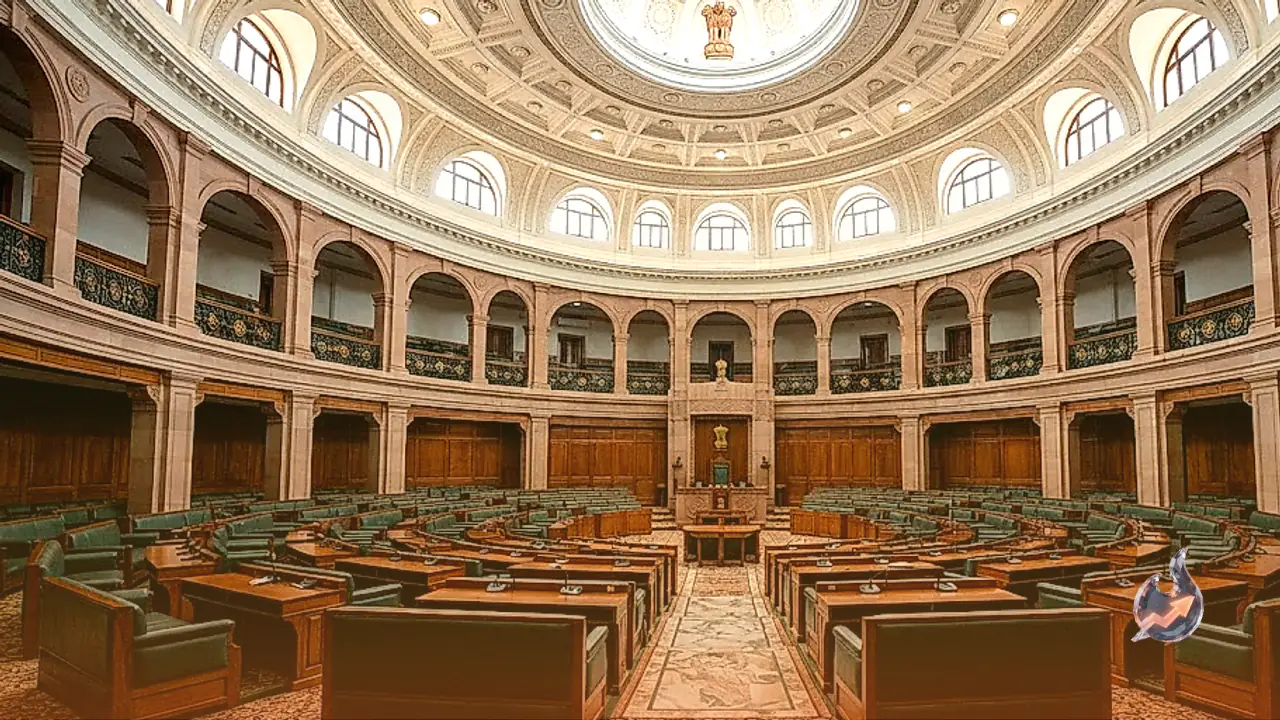

When the framers of the Indian Constitution drafted the governance framework for independent India, they carefully chose the Westminster parliamentary model to address the nation's profound social diversity and political complexity. Nevertheless, post-independence history reveals multiple instances where political leadership showed a distinct inclination toward the US presidential governance system. In the United States, midterm elections involving all 435 seats of the House of Representatives and 35 of the 100 Senate seats command global attention because they determine the operational authority of the president. Similarly in India, recurring periods of political instability led leading figures from various political eras to examine whether a presidential model could better guarantee executive efficiency.
The 1980 Push Under Indira Gandhi's Administration
The first major debate challenging the effectiveness of the parliamentary system emerged during the late months of 1980 under the ruling Congress (I) administration. In October 1980, legal experts close to the political establishment initiated a national debate on adopting a presidential governance model during the All India Lawyers Conference. Although Prime Minister Indira Gandhi maintained a calculated public silence on the topic, Law Minister Shiv Shankar clarified in Parliament that the government was not officially considering any proposal to replace the parliamentary structure with a presidential alternative.
Despite official disclaimers, contemporary political analysts maintained that the effort to question the Westminster model carried the tacit approval of the Prime Minister. Party leaders actively kept the dialogue alive, leading to open advocacy for the presidential model during the All India Congress Committee session held in Delhi in December 1980.
Then Chief Minister of Maharashtra A.R. Antulay became the most vocal political proponent of this proposed structural shift. The debate gained substantial intellectual momentum when renowned constitutional expert Nani Palkhivala backed the presidential system, elevating the matter from routine political strategy into a serious constitutional evaluation. Palkhivala was generally not viewed as an ally of Congress (I), making his support a significant turning point in the national discourse.
LK Advani and the BJP's 1998 Governance Debate
Interest in executive presidential power was not limited to the Congress party. The Bharatiya Janata Party, standing on a distinct ideological platform, also reviewed the merits of the alternative system. In April 1998, LK Advani, serving as Union Home Minister, suggested conducting a comprehensive review of the Constitution to weigh the pros and cons of a presidential system. At that time, Advani's statements were regarded as reflecting the core strategy of his party.
This initiative unfolded against the backdrop of short lived coalition governments and political opportunism, which had raised widespread doubts regarding the stability of the parliamentary model. Advani's remarks sparked national interest regarding whether a presidential framework could deliver stronger executive continuity. Advani later clarified during a private television interview that he was not unequivocally advocating for the adoption of a presidential system, but rather contending that both models had inherent strengths and weaknesses.
Reactions to Advani's comments aligned predictably with party positions. While BJP leaders found merit in his reasoning, opposition figures from the Congress party and the United Front condemned the suggestion, alleging it was a disguised attempt to usher in authoritarian rule.
Public Sentiment and Survey Findings
To measure public opinion on replacing the existing parliamentary structure, an extensive nationwide survey was conducted by IMRB during that period. The poll presented citizens with a direct question regarding whether they believed a presidential system would be more suitable for India.
The survey results demonstrated that public consensus remained firmly anchored in the existing parliamentary democracy. Only 27 percent of respondents felt that a presidential governance structure would be superior for the nation. In contrast, 49 percent of participants explicitly rejected the proposal by answering with a clear "no." Meanwhile, approximately 23 percent of respondents remained undecided or uncertain. These findings revealed that despite persistent political interest in the American executive model, the general electorate preferred retaining parliamentary accountability.