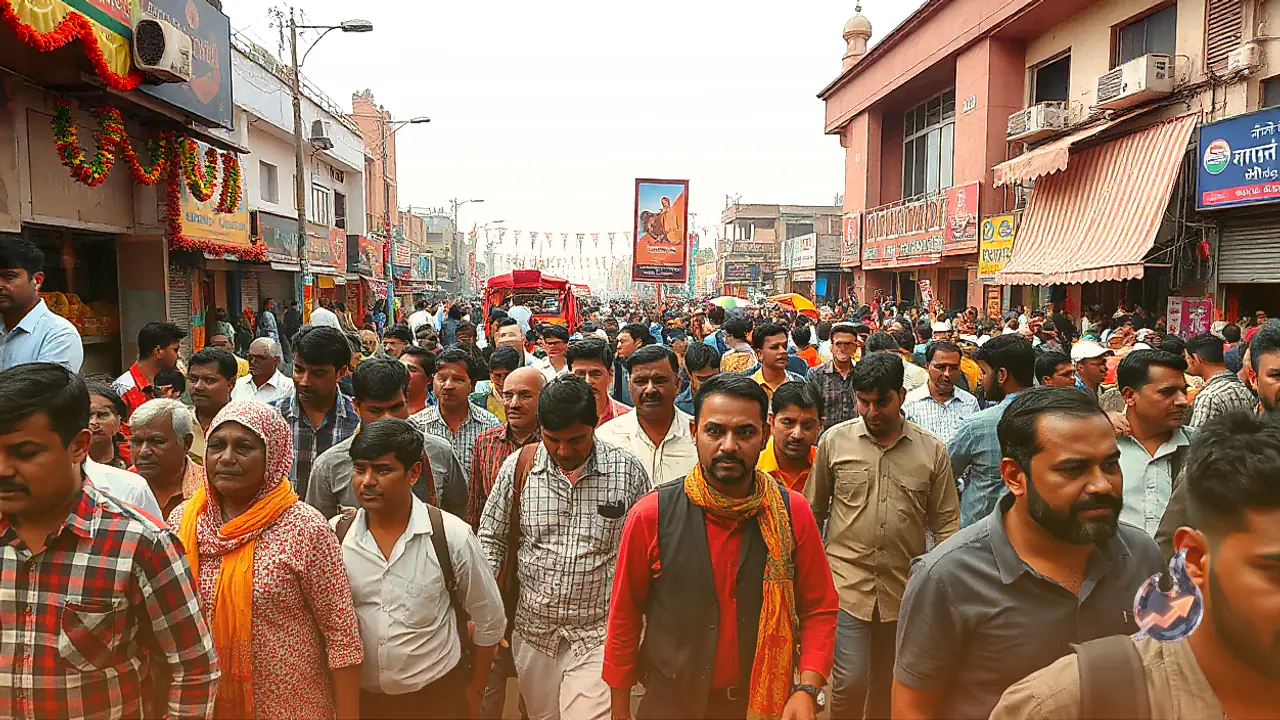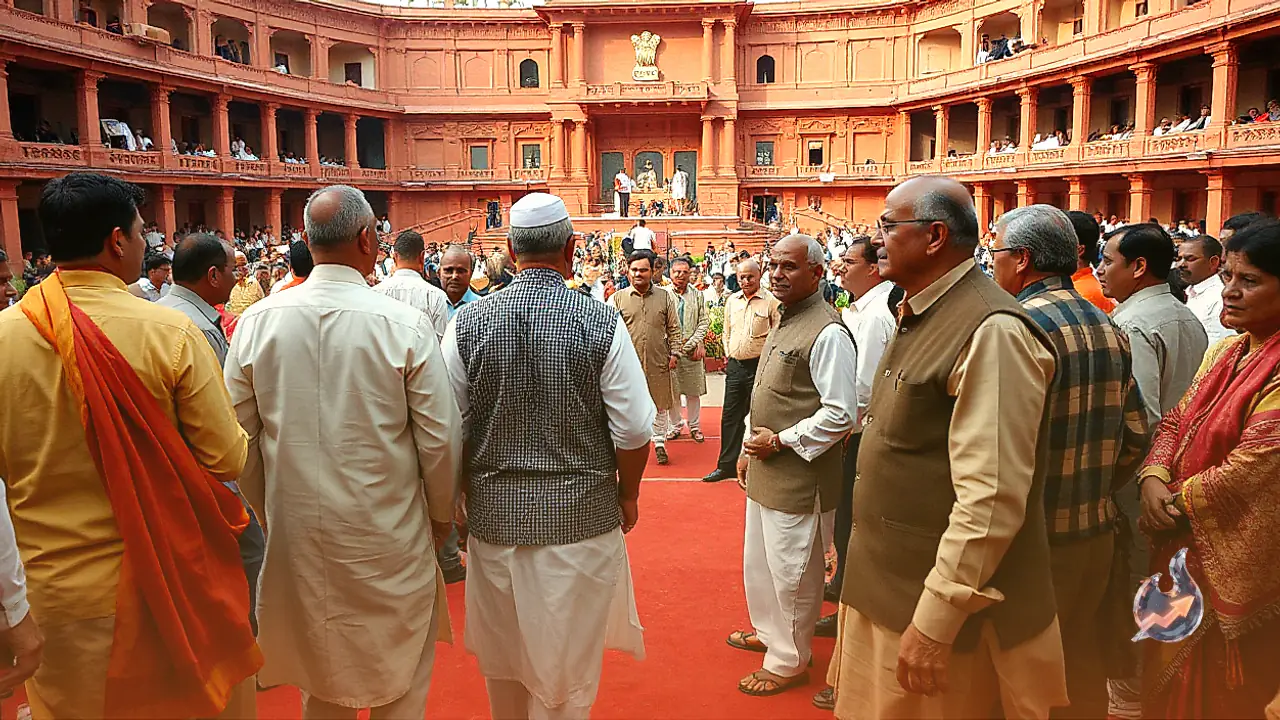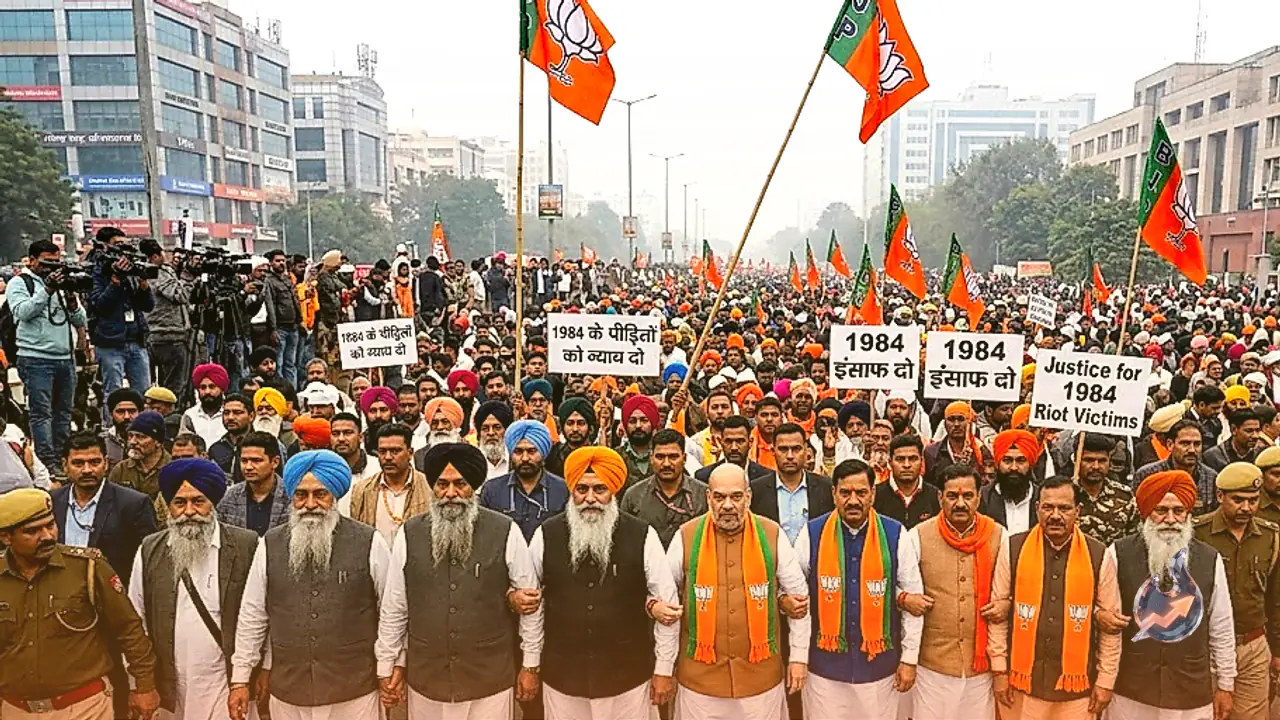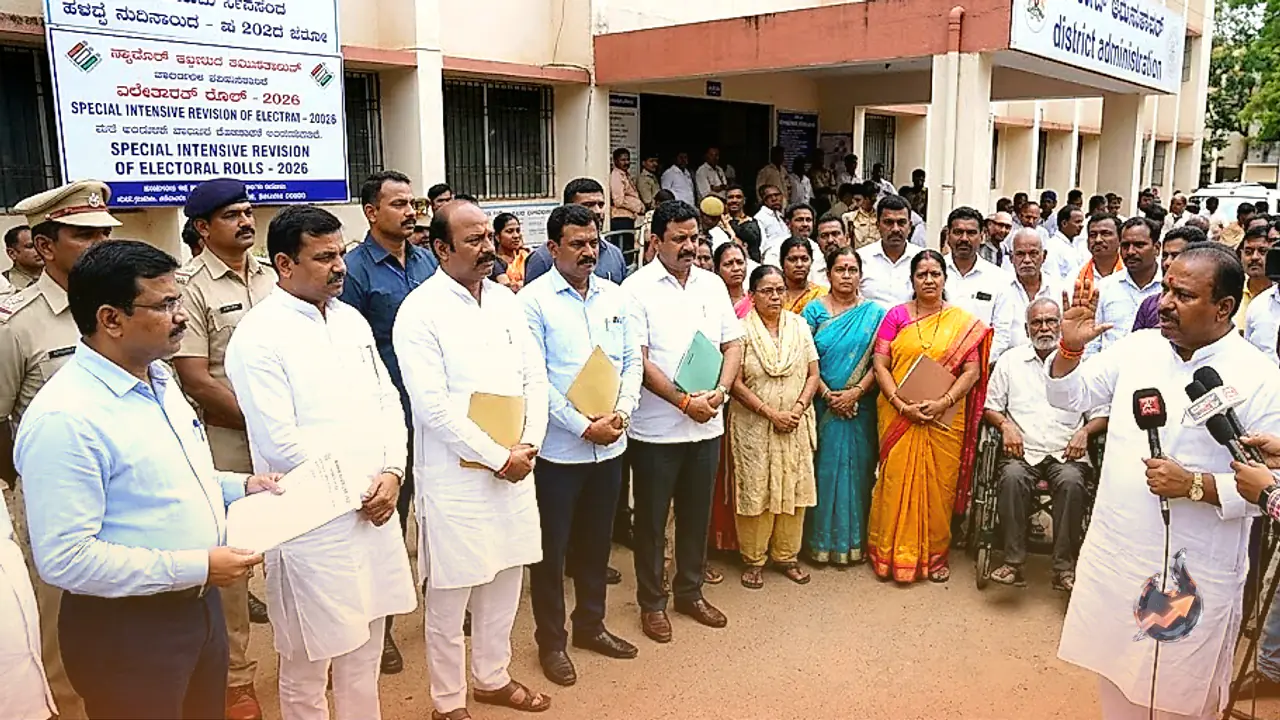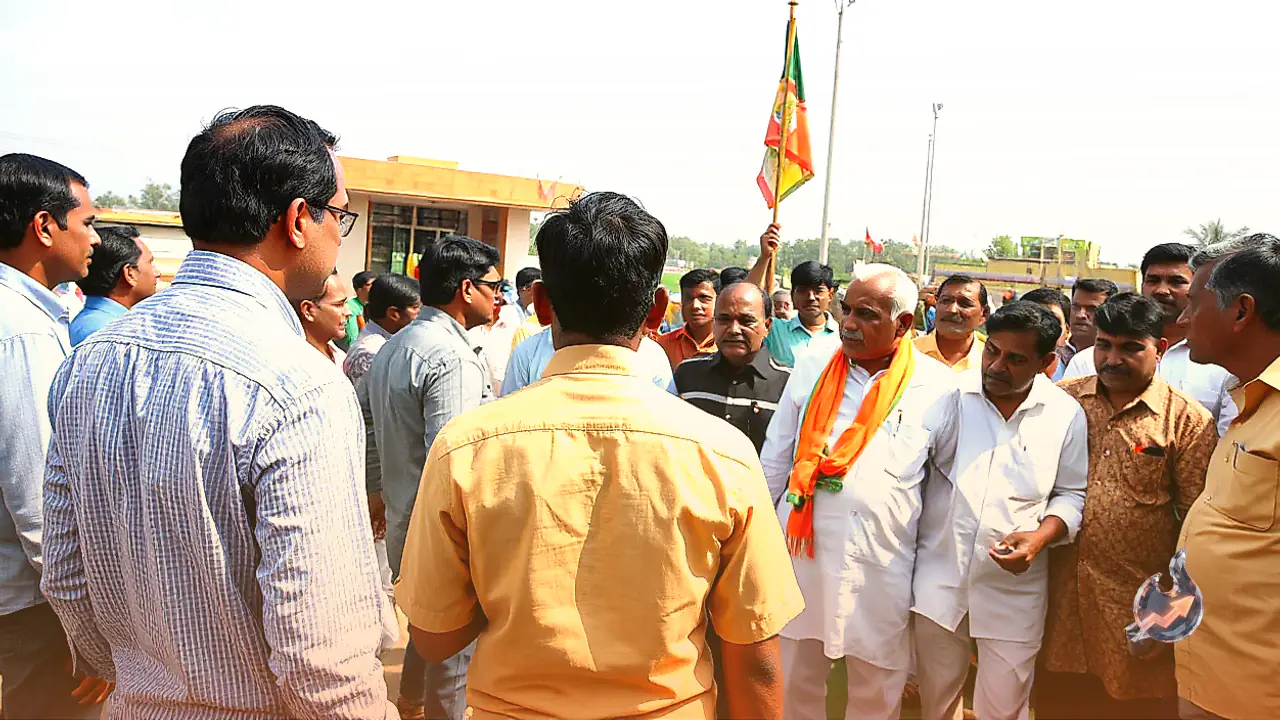



















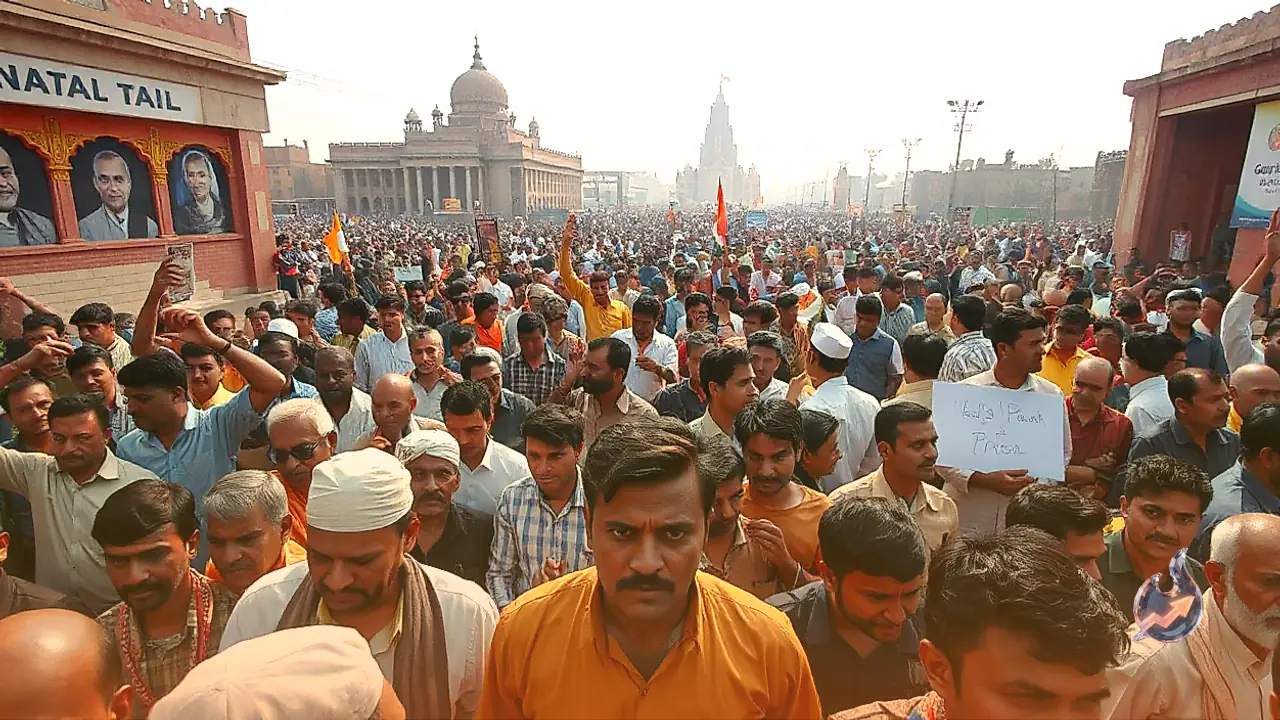

The national capital is witnessing heavy security preparations on Sunday as opposition parties prepare for a major show of strength, led by Leader of Opposition in the Lok Sabha Rahul Gandhi. The program entails a coordinated march toward Ramlila Maidan, with organizers calling upon an estimated 10 lakh workers and supporters from neighbouring regions to gather in Delhi. Underscoring the scale of the mobilization, Priyanka Gandhi personally arrived at the venue late at night to inspect the ground readiness. In response, law enforcement authorities across central parts of the city have set up extensive operational cordons to oversee traffic management and ensure public order throughout the day.
Mock Parliament Precedes March Amid Electoral Accusations
Ahead of Sunday's foot march, top figures of the opposition bloc convened for a mock parliament session hosted at the official residence of Congress President Kharge. The meeting drew approximately 215 members of parliament representing 19 distinct political outfits. Addressing the gathering, Rahul Gandhi along with senior alliance colleagues leveled pointed accusations against Chief Election Commissioner Gyanesh Kumar, alleging the deletion of more than 13 crore votes. The Bharatiya Janata Party sharply countered these claims, charging Rahul Gandhi with undermining the authority and integrity of constitutional bodies.
Opposition Leadership Mobilizing from Two Assembly Hubs
According to the logistical blueprint, leaders joining the rally are gathering across two designated staging locations in the capital. The primary assembly point has been set at Congress President Kharge's residence situated at 10 Rajaji Marg, while the secondary staging area is located at the Constitution Club. Multiple regional representatives arriving from outside Delhi were accommodated at Kharge's premises overnight. The operational details, finalized by Rahul Gandhi's organizing group, mandate that the second contingent will depart directly from the Constitution Club to synchronize with the broader convoy.
Ranthambore Jungle Safari Buses Brought in for Transit to Minto Road
Under the planned arrangement, leaders departing from the two gathering spots will travel to Minto Road aboard specialized open-top buses. Organizers transported open vehicles typically deployed for wildlife tourism in Rajasthan's Ranthambore tiger reserve to the national capital specifically for this demonstration. The 20-seater vehicles, normally used by tourists viewing tigers and lions, were rapidly fitted with campaign banners and signs ahead of the procession. Seating layouts place Rahul Gandhi and Priyanka Gandhi in the forward seats, accompanied by prominent party and alliance leadership seated directly behind them.
One-Kilometer Foot Procession Connecting Minto Road to Rally Grounds
To swell the crowd at the final venue, large delegations of workers have been summoned from adjacent states, including Haryana, Rajasthan, Uttar Pradesh, and Madhya Pradesh. Grassroots cadres were directed to head directly to Ramlila Maidan rather than converging on transit routes. To maintain smooth collective movement, Rahul Gandhi circulated an official route map on social media platforms. The central leg of the march begins at Minto Road, which sits roughly 1 kilometer away from Ramlila Maidan. From that drop-off junction, Rahul Gandhi plans to walk the final stretch flanked by hundreds of party representatives and thousands of cadres, forming the most critical crowd-control checkpoint for police units.
Ramlila Ground Divided into 14 Operational Security Zones
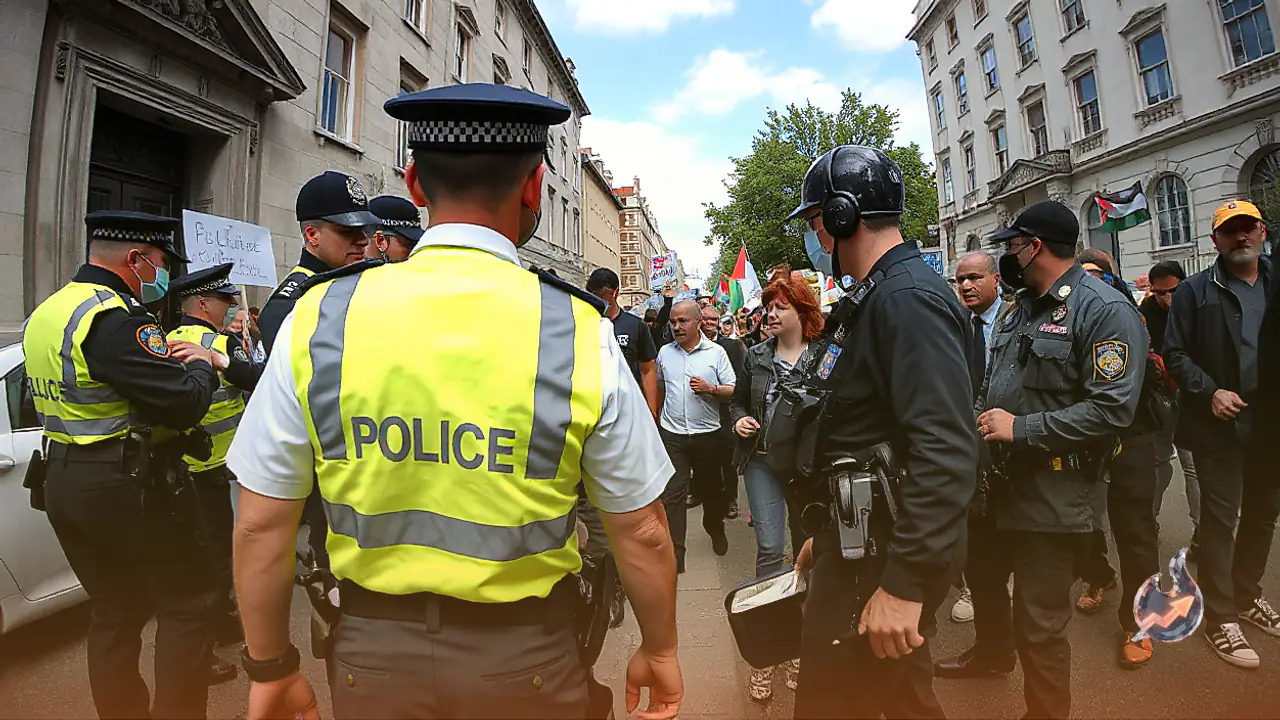
Anticipating the high volume of participants, Delhi Police organized the entire perimeter of Ramlila Maidan into 14 specialized management sectors. Operational command of each independent sector rests with an ACP-rank officer, with an assigned DCP overseeing every paired set of two sectors. A dedicated contingent of 3,500 police personnel remains stationed on active alert across the venue. Surveillance operations are reinforced by 200 closed-circuit cameras tracking all entry points, exit gates, and vehicular diversions, feeding real-time visual feeds into an on-site joint police control room.
Body-Worn Cameras and Paramilitary Platoons Positioned
To counter potential unrest, stone-throwing, or direct friction along the procession corridors, 10 companies of paramilitary forces have been mobilized into central sectors. On-duty ground officers and paramilitary staff have been issued personal body-worn cameras to record field interactions, while service vans and emergency vehicles feature installed surveillance units. Additionally, plainclothes intelligence operatives have been assigned to monitor gathering crowds discreetly, ensuring immediate response protocols remain active throughout the event.