





















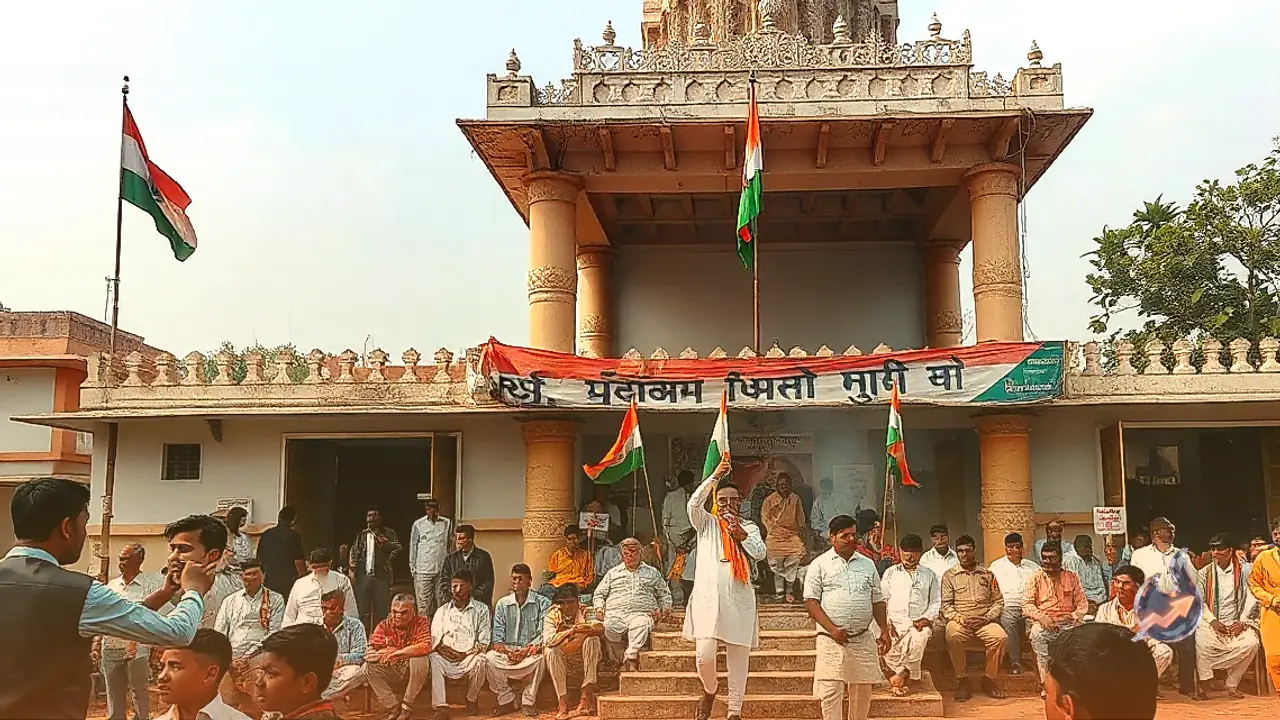

The political trajectory of Uttar Pradesh has witnessed numerous pivotal decisions that reshaped state administration and coalition governance. One of the most significant episodes unfolded in 1979, surrounding the then Chief Minister Ram Naresh Yadav. Following an official executive order restricting the conduct of Rashtriya Swayamsevak Sangh, commonly known as the RSS, events inside the ruling Janata Party escalated rapidly. Within just 24 hours of issuing the notification regarding public gatherings of the RSS, the Chief Minister lost majority support within his legislative party, leading directly to his resignation. This historic event highlighted the delicate political balances within multi-factional coalition governments of that era.
The 1977 Political Landscape and the Ascent of the Janata Party
To understand the dynamics of the 1979 crisis, it is essential to trace back to the landmark elections of 1977. Following the end of the national Emergency, general elections were held across India, resulting in a decisive defeat for the Indian National Congress. In response to the political climate, several opposition political streams merged to form the Janata Party. In Uttar Pradesh, the political shift was particularly pronounced. Out of the total 425 assembly constituencies in the state, the Janata Party secured a dominant majority by winning 351 seats.
Following this electoral triumph, intense internal deliberations took place regarding the leadership of the state government. The elected legislators eventually selected Ram Naresh Yadav as the leader of the legislative party. On June 23, 1977, Ram Naresh Yadav was officially sworn in as the Chief Minister of Uttar Pradesh. His cabinet represented a coalition of diverse political traditions, featuring prominent leaders from various backgrounds, including socialist figures such as Mulayam Singh Yadav.
Ideological Factions and the Dual Membership Question
The Janata Party was fundamentally a coalition formed by disparate political groups united primarily by their opposition to the Congress. The primary constituents included socialist groups, leaders who had separated from the Congress party, and representatives from the former Bharatiya Jana Sangh. A substantial number of leaders hailing from the Jana Sangh background maintained active ties with the RSS. This structure soon gave rise to a fundamental organizational question regarding dual membership.
The central debate revolved around whether an individual could hold primary membership in the Janata Party while simultaneously maintaining an active association with an external organization like the RSS. Over time, this issue evolved into a major point of friction within the organization nationwide. In Uttar Pradesh, the dual membership debate placed continuous strain on the stability of the Ram Naresh Yadav administration, creating undercurrents of mistrust between different factions in the state cabinet.
The Cabinet Crisis of February 1979
By early 1979, internal differences within the Janata Party reached a critical juncture. Relations between ministers with Bharatiya Jana Sangh backgrounds and those from non-Jana Sangh factions deteriorated significantly. On February 11, 1979, several cabinet members affiliated with the Jana Sangh background withdrew from the Ram Naresh Yadav administration. Their exit threw the government into an immediate political struggle regarding majority support in the state assembly.
The withdrawal of key cabinet members weakened the executive authority of the Chief Minister. Governance faced increasing challenges as internal negotiations failed to bridge the ideological divide. The government was left navigating a precarious position where its numerical stability depended heavily on restoring order among its deeply divided legislative members.
The Order of February 14 and the Loss of Majority
Amidst this heightened political volatility, the Ram Naresh Yadav administration issued a decisive order on February 14, 1979. The directive mandated that RSS shakhas and assemblies could not be held in public spaces without prior explicit official permission. This executive decision directly impacted the public activities of the RSS, moving the conflict from political debate to administrative action.
The notification provoked immediate opposition from legislators aligned with the Jana Sangh tradition. The very next day, on February 15, 1979, a crucial meeting of the Janata Party Legislature Party was convened to test the Chief Minister's standing among the elected representatives. During the meeting, Ram Naresh Yadav was unable to demonstrate majority support among the party's assembly members. Recognizing the loss of legislative confidence, he submitted his resignation as Chief Minister on February 15, 1979, remaining as caretaker until a successor was appointed.
Succession of Banarsi Das and Historical Context
Following the resignation of Ram Naresh Yadav, the Janata Party legislature group moved to elect a new leader to head the state government. Banarsi Das emerged as the consensus candidate and took the oath of office as Chief Minister of Uttar Pradesh on February 28, 1979. Official legislative records indicate that Ram Naresh Yadav served as Chief Minister from June 23, 1977, to February 28, 1979, marking a tenure of approximately one and three-quarter years.
Historical analysis indicates that the collapse of the government was not solely the outcome of a single administrative order issued on February 14. Rather, the order acted as the immediate trigger in a long-standing pattern of factional discord, ideological variance, and structural tensions surrounding the dual membership dispute within the Janata Party coalition.