





















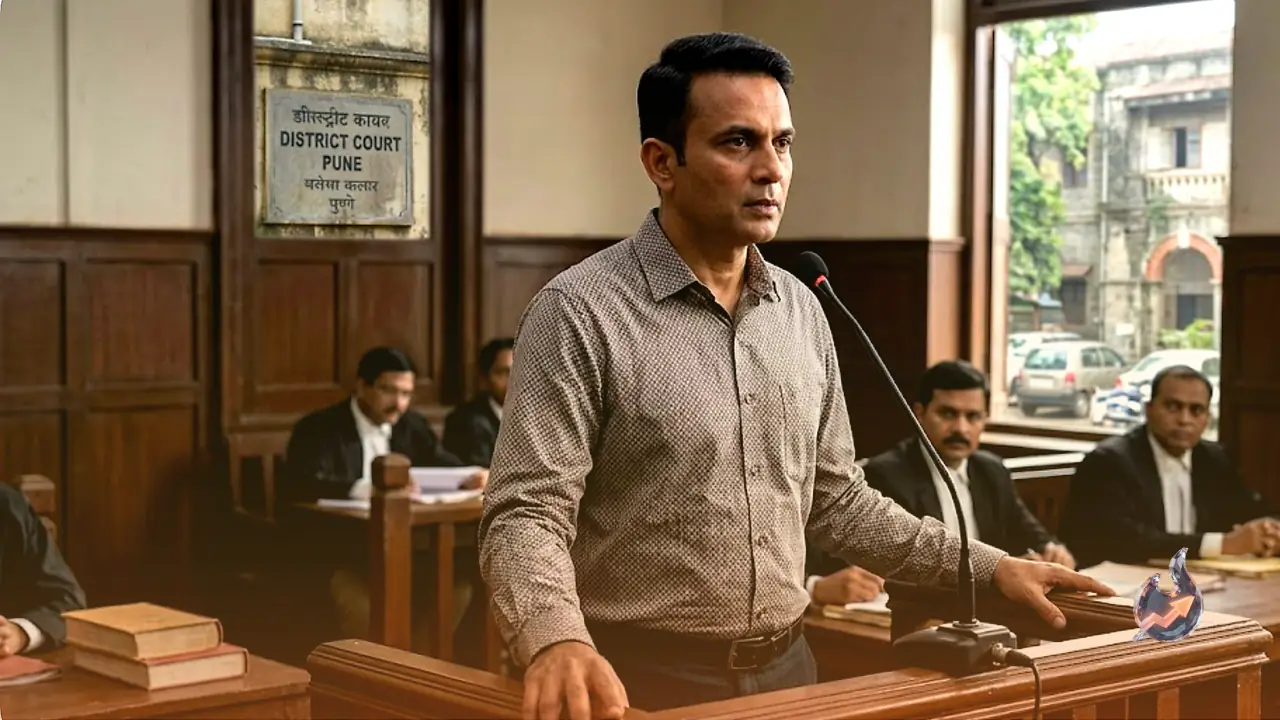

A key claim about how Vinayak Damodar Savarkar actually secured his release from British custody surfaced in a Pune court on Wednesday, inside a criminal defamation case that has nothing to do with history and everything to do with present day politics. Satyaki Savarkar, the great grand nephew of VD Savarkar through his brother's line, told the court that the Hindutva ideologue was released not because of his mercy petitions to the British government, but because of mounting public pressure on the colonial administration.
What Satyaki Savarkar told the court
Satyaki Savarkar said a resolution passed at the Congress's Kakinada session in 1923, demanding Savarkar's release, was also a major factor behind that release. Drawing a comparison, he added that had Congress passed a similar resolution before the hangings of Bhagat Singh, Rajguru and Sukhdev, their executions might have been postponed.
The cross-examination before Judge Amol Shinde
The case itself is a criminal defamation complaint filed against Leader of the Opposition Rahul Gandhi over remarks he made about VD Savarkar. Advocate Milind Pawar, appearing for Rahul Gandhi, cross-examined Satyaki Savarkar before Judge Amol Shinde of the MP/MLA special court. During the questioning, excerpts of mercy petitions allegedly submitted by Savarkar to the British government were placed before Satyaki Savarkar, the complainant in the case.
Responding to those excerpts, Satyaki said he could not confirm whether the content of the petition was actually written by Savarkar. He said he could not say that Savarkar had sought release on any specific condition in his mercy petition, nor could he say that Savarkar had asked the British government for release on the condition that he would stay away from any political or revolutionary movement. However, he voluntarily added that Savarkar's release was not the outcome of the mercy petitions.
A Congress resolution set to be produced in court
Satyaki Savarkar said he would submit a copy of the Indian National Congress resolution demanding Savarkar's release at the next hearing, a move meant to back his claim that public and political pressure, not the petitions, secured the release.
What the resolution text says
The resolution states that Mr Savarkar had been sentenced to life imprisonment by the administration, and that his brother had received the same sentence. It goes on to note that the person speaking in the resolution had, as a prisoner himself, stayed in the same room in Bijapur jail where Ganesh Savarkar, Vinayak Damodar Savarkar's brother, had been held, and that Ganesh Savarkar had since been released. The resolution then states that Vinayak Damodar Savarkar had not been released, and that this was why an exception was being made to condemn the government's action in the case of just one prisoner, because the man was being kept in jail out of sheer vindictiveness even though he deserved release. That testimony and this historical document have now become a central part of the ongoing defamation case hearing.