


















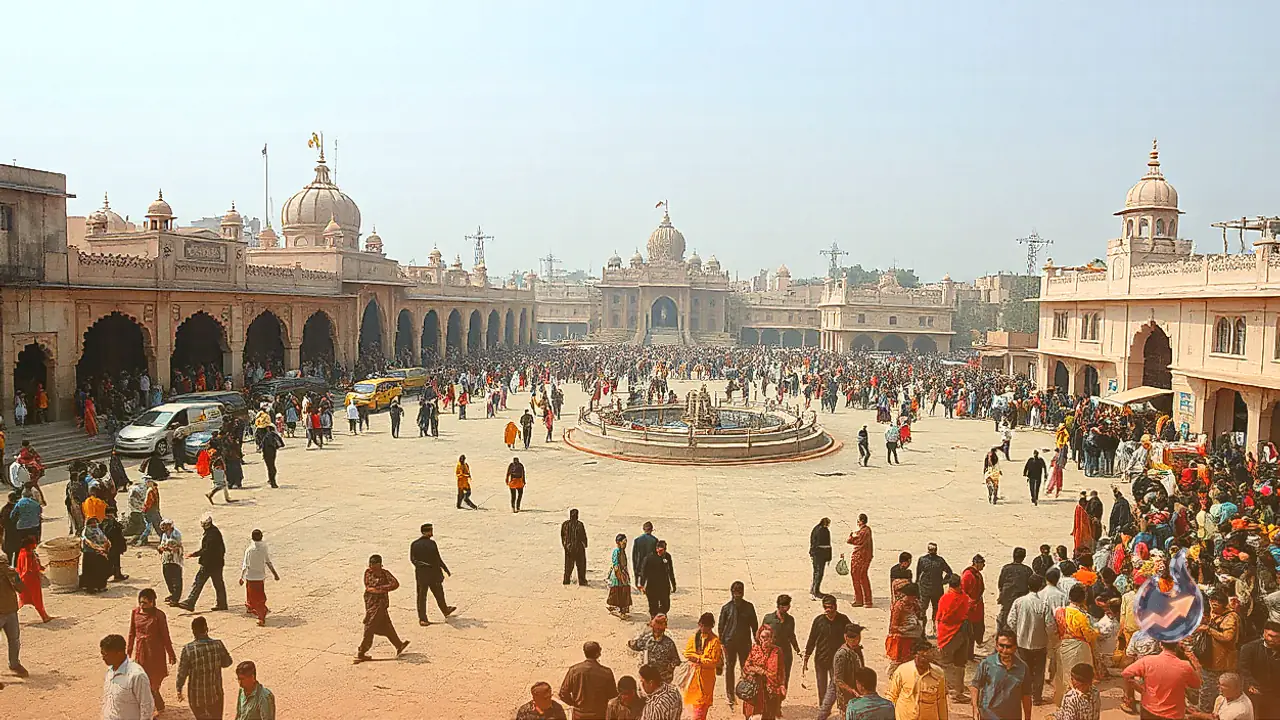

The sacred Lakh Chaurasi site located in Jalore, Rajasthan, has emerged as a significant center of devotion for pilgrims seeking spiritual peace and ultimate release. Ancient Hindu philosophical traditions frequently reference eighty-four lakh forms of life, through which an individual soul passes across continuous cycles of birth and death. Within this theological framework, human existence is regarded as a rare and precious opportunity to transcend these material bonds. Rooted in this profound belief, the Lakh Chaurasi spiritual circle established within Mukti Dham in Jalore draws people who circumambulate the installation to seek liberation from worldly entrapments.
Spiritual discipline and mental purity behind the circumambulation
Undertaking rounds of this symbolic circle is viewed not merely as a physical ritual, but as an exercise rooted in deep devotion and conscious resolve. According to local religious customs, anyone performing circumambulation around the circle is expected to cultivate absolute positivity of mind while consciously letting go of ill will, negativity, or grievances toward others. A pure heart and clean intentions during the process are considered essential for gaining spiritual virtue and inner tranquility. Consequently, undertaking the rounds of Lakh Chaurasi is seen as a sacred journey combining personal faith, merit accumulation, and a sincere quest for spiritual liberation.
Inspired by ancient traditions of Dwarika Dham
The concept of this sacred site traces its inspiration directly to the long-standing spiritual traditions observed at Dwarika Dham, where circumambulating Lakh Chaurasi has been practiced for generations. Drawing upon that venerable heritage, the Lakh Chaurasi circle was constructed in Jalore to offer regional worshippers a dedicated space for contemplation and spiritual freedom. Mukti Dham president Kaluram stated that pilgrims exhibit extraordinary devotion toward this circular installation, arriving with heartfelt prayers for domestic harmony, worldly peace, and ultimate transcendence. By mirroring the revered practices of Dwarika Dham, the site serves as a vital anchor for spiritual seekers across the region.
Surge of pilgrims during Purnima, Amavasya, and Diwali festivities
While devotees visit the shrine throughout the year, the footfall rises noticeably during auspicious dates on the traditional calendar. Observances such as Purnima (full moon) and Amavasya (new moon) regularly draw substantial gatherings of individuals eager to perform their ritual circuits. Similarly, the festival period around Diwali witnesses increased travel to pilgrimage hubs, prompting numerous families and individuals to visit Lakh Chaurasi for circumambulation. In Hindu spiritual thought, the concept of liberation signifies release from the endless cycle of birth and mortality to merge with the divine consciousness, and it is this enduring aspiration that continually brings pilgrims to Jalore.