




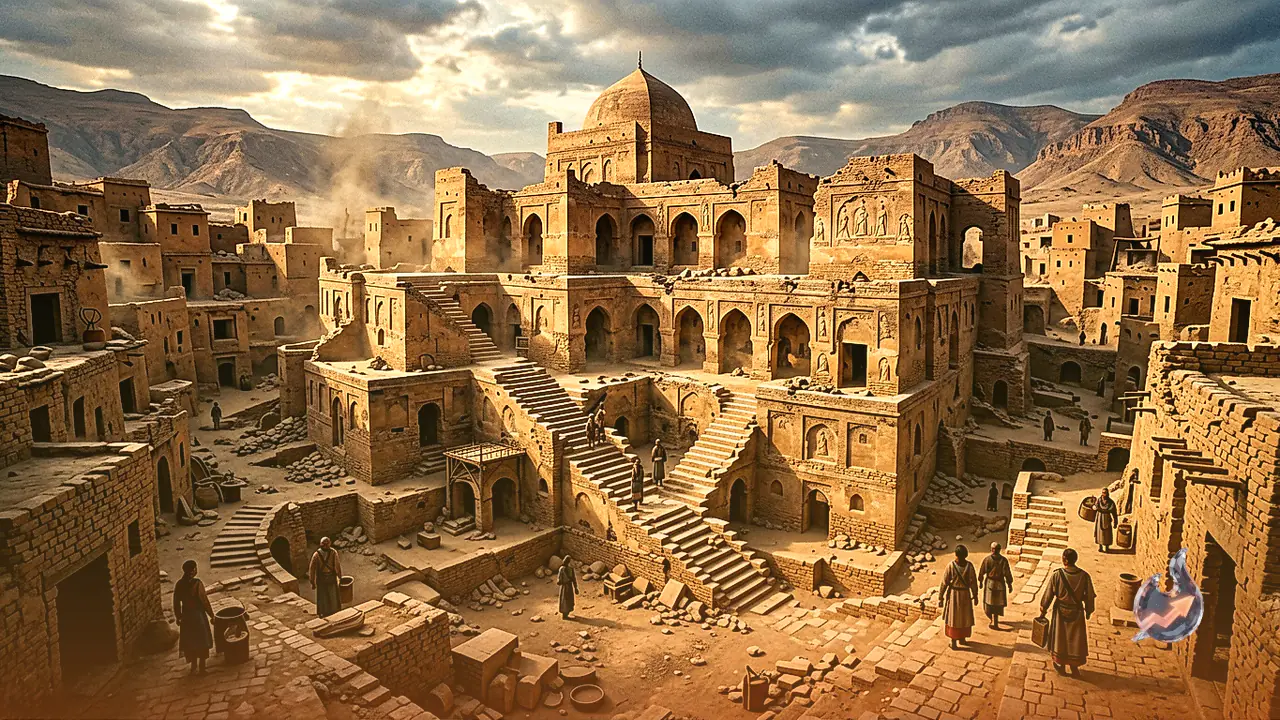















Nestled within the Aluda town of Dausa district in Rajasthan, an ancient architectural marvel stands as a silent witness to a glorious past. This historic stepwell served as a vital hub for water conservation in the region during earlier centuries, carrying immense cultural and historical significance.
Situated right near the main entrance of Aluda village, the stepwell boasts an architectural design that is both distinct and fascinating. According to local records, the structure features seven distinct tiers along with a massive dome-shaped roof built on top. Additionally, the adjacent Kubania pond holds considerable historic value. Even today, the grandeur and vast scale of this monument manage to catch the eye of passing travelers and history enthusiasts alike.
The History of Kumbania Rajputs and Local Legends
Historians and traditional accounts suggest that the name and origin of this stepwell are closely tied to the ancient rulers who once governed the surrounding territory.
According to historian Sualal Tiwari, the Aluda and Bhandarej regions were once ruled by the Kumbania Rajputs during bygone eras. The stepwell derived its name from the Kumbania Rajputs, combined with the specific geometric shape of the water reservoir.
Several folk tales are also deeply associated with this monument across the region. Local belief holds that the famous Chand Baori of Dausa, the stepwell at Bhandarej, and the Kubania stepwell in Aluda were all constructed within a single night.
Popular lore often claims that these three stepwells were interconnected through a network of secret underground tunnels, though historians generally view this claim as local folklore rather than verified historical fact.
Urgent Need for Restoration and Tourism Potential
Due to a continuous lack of proper maintenance, this irreplaceable heritage site is steadily deteriorating over time. The absence of a protective boundary wall around the stepwell and the weakening of several structural segments pose a constant risk of accidents for visitors.
In the past, local authorities took steps to clear debris and clean the premises, prompting villagers to demand protective railings and a comprehensive permanent restoration. Residents believe that if the administration and the archaeology department step in to preserve, renovate, and beautify the site, the Kubania stepwell could emerge as a prominent tourist destination in Dausa. Such preservation efforts would serve as an exemplary reminder of traditional Rajasthani water conservation systems for future generations.