





















In the rural regions of Dholpur district, the wild grass known locally as Sarpat or Sarpatta, which grows abundantly along the edges of agricultural fields, roadsides, and near rivers and streams, is often dismissed by many as an unwanted weed. However, for the local villagers, this resilient plant remains an invaluable natural asset. Far from being useless, this grass serves multiple essential purposes in daily rural life, ranging from livestock fodder to the raw material for making durable ropes, cleaning brooms, and constructing traditional shelters. In the local dialect of Dholpur, the grass is referred to as Sarpatta or Sarpatto. Local resident Vishambhar Dayal Sharma explains that Sarpatta is a remarkably sturdy green grass that thrives effortlessly in areas with high water content.
Physical Attributes of Sarpatta and Its Role as Fodder
One of the most notable features of this vegetation is its strength and rapid growth rate. Sarpatta grass can easily reach a height of about seven to eight feet. It possesses exceptionally strong roots that anchor deep into the soil. Once it takes root, the grass spreads rapidly across the surrounding area within a short span of time. When the grass is fresh and green, farmers harvest it and mix it with traditional livestock fodder such as Chari, Kasni, and Barsee. This blend provides a nutritious and abundant green feed for cattle. Many livestock owners in the villages continue to rely on this naturally occurring fodder to sustain their animals, making it a cost-effective alternative to expensive commercial feeds.
Traditional Housing and Historical Applications
The historical significance of this grass in rural architecture spans several generations. Vishambhar Dayal Sharma notes that approximately seventy years ago, when concrete houses were rare in villages, the roofs of mud houses were primarily constructed using Sarpat or Sarpatta grass. The cottages and thatched roofs built from this material offered excellent thermal insulation, protecting residents from the scorching summer heat and heavy monsoon rains. Although modern brick-and-mortar houses have largely replaced traditional dwellings today, the practice of using this grass for building temporary sheds, animal shelters, and thatched roofs still persists in several remote countryside pockets.
Handicrafts, Broom Making, and Rural Livelihoods
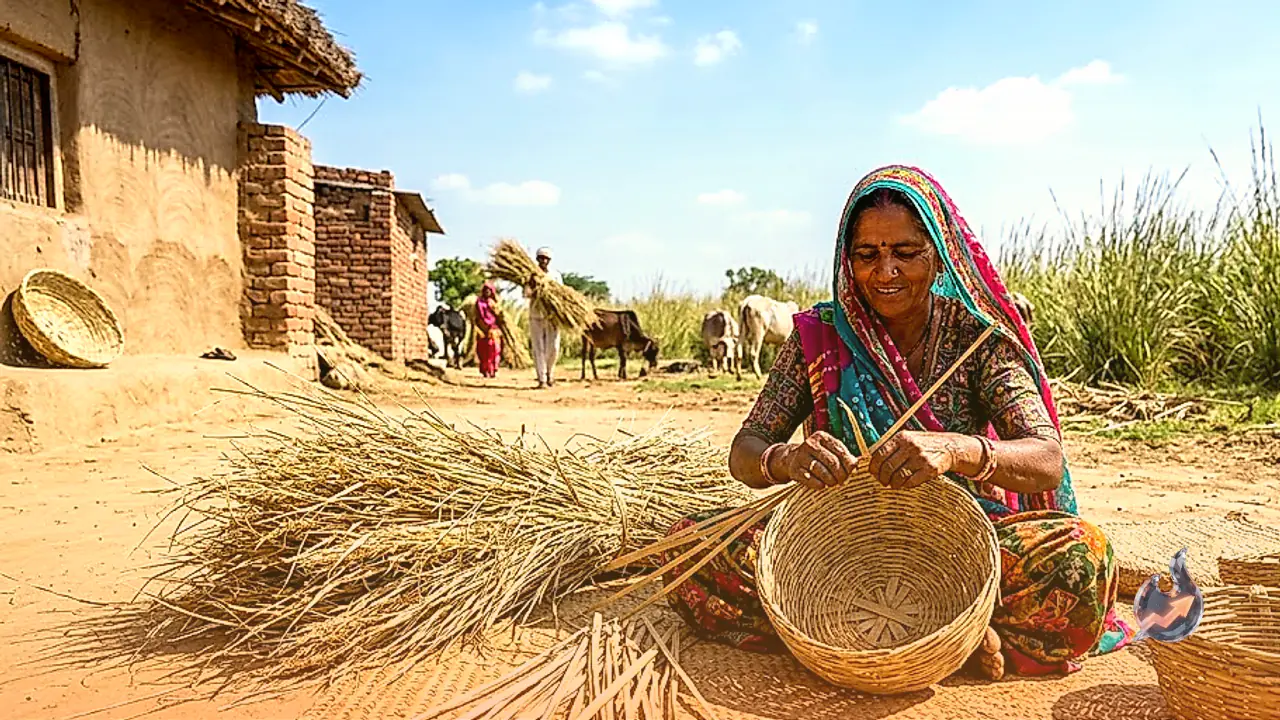
Beyond construction, Sarpatta grass is highly valued for creating essential household items. Once the harvested grass dries completely, village women collect and process it to make highly durable brooms. These handmade brooms are not only used for daily household cleaning in rural areas but also serve as a source of supplementary income. Several women manufacture these brooms in bulk and sell them in local markets, generating a steady stream of extra revenue that helps support their families and fosters economic independence.
Rope Weaving, Market Economics, and Ecological Benefits
The utility of Sarpatta extends to the production of robust ropes as well. These ropes, woven from the dried fibers of the grass, are widely used for securing cattle, performing agricultural tasks in fields, and weaving traditional cots or charpois. From an economic perspective, once the Sarpatta is dried and bundled, a single bundle can fetch anywhere between fifteen to twenty rupees in the market. This economic return makes the grass a key component of the rural household budget. Proper conservation and systematic utilization of this grass could significantly boost the micro-economy of rural areas. Furthermore, Sarpatta plays a vital environmental role, its deep and tenacious root system binds the soil along water bodies, effectively preventing soil erosion. Therefore, rather than being treated as a useless weed, this low-cost natural resource is increasingly recognized as a vital ecological and economic treasure for rural communities.