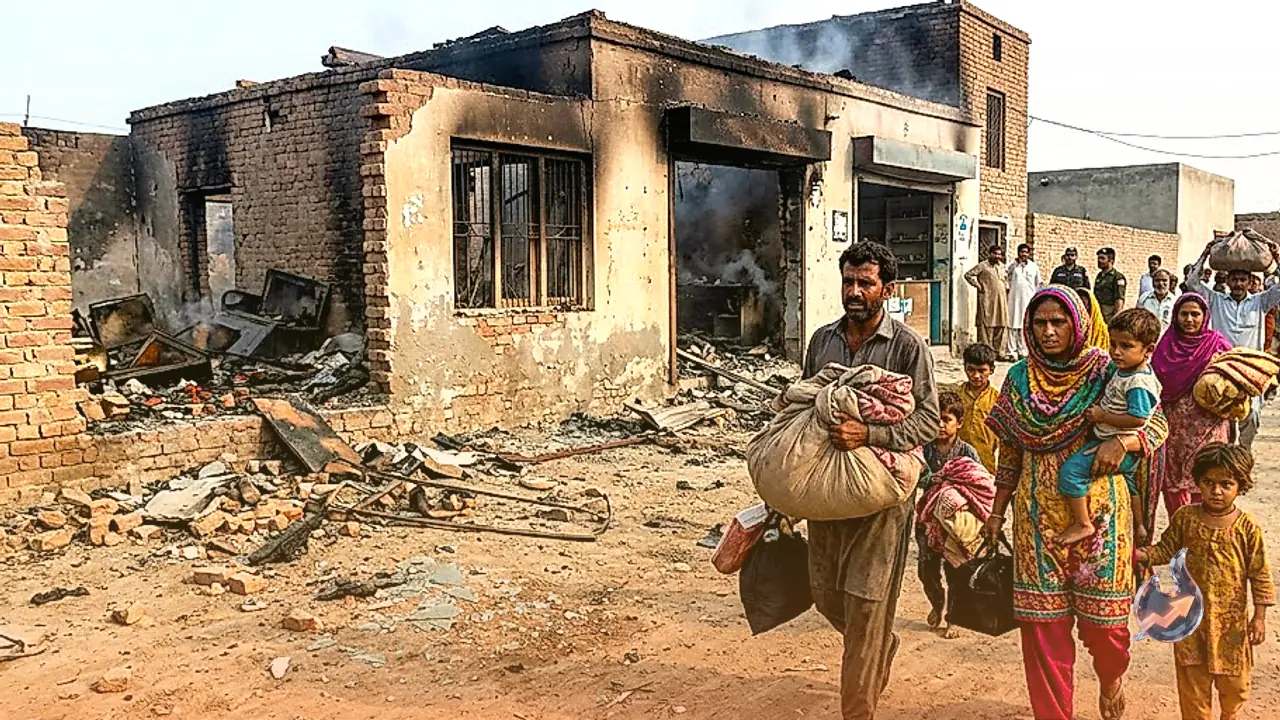

























The repercussions of the conflict in Iran are no longer confined merely to the immediate battlefields, as surging fuel prices, escalating transport costs, rampant inflation, and mounting pressures on government budgets begin to cripple children's education in developing nations. The harshest blow is being absorbed by households that were already teetering on the edge of extreme poverty, struggling each day just to survive.
The Strains on Children in Cambodia and Vietnam
Thirteen-year-old Sou Sreynich, living near the Tonle Sap lake region in Cambodia, serves as a poignant example of this unfolding crisis. Although she aspires to become a teacher, her academic journey has already fallen severely behind schedule. She first set foot inside a classroom when she was ten years old, as her mother had initially delayed her schooling out of a constant fear of boating accidents during the water commute. Now, expensive fuel has magnified her family's struggles. Dependent entirely on fishing for their livelihood, the family can no longer afford to venture into the deep-water zones where fish are abundant due to the exorbitant price of fuel. During these episodes of severe financial distress, Sreynich is frequently forced to drop out of school to work alongside her parents.
A similar plight befell the family of 16-year-old Le and her 13-year-old sister Nhi in Vietnam. Their father worked as a fisherman, but once diesel prices skyrocketed, boat owners found it financially unviable to head out to sea. Left without adequate money to feed and educate their nine children, the family faced insurmountable odds. Both sisters dropped out of school and took up jobs at a restaurant in Hanoi, where they were exposed to severe occupational hazards such as hot surfaces, sharp tools, and heavy lifting. Furthermore, 13-year-old Nhi's employment constituted illegal child labor. The two sisters were eventually able to return to school only after the active intervention of the Blue Dragon Children's Foundation.
Deepening Global Poverty and Out-of-School Risks
According to a report by the United Nations Children's Fund, if the multifaceted impacts of the conflict persist, up to 23.4 million additional children could be pushed into extreme poverty by the end of the year. Nearly 80 percent of these affected children are projected to reside in the developing regions of Africa and Asia. When household poverty intensifies, the immediate casualty is invariably the education of the children.
Low-income families now face the formidable challenge of sustaining children's schooling alongside soaring expenditures on food, fuel, rent, and electricity. Experts warn that as the economic downturn deepens, households may be compelled to make harrowing choices, such as keeping only select children in school while sending the rest off to work to supplement meager household incomes.
Mounting Costs Across Educational Systems
The burden of expensive fuel extends far beyond the daily commute of students to their classrooms. The logistical expenses required for teachers and support personnel to reach remote areas, transport educational supplies to schools, and procure essential classroom materials have all escalated sharply. In isolated regions like Tonle Sap, the situation is exceptionally challenging because the vast majority of goods must be transported by boats.
According to local education advocates, the costs associated with electricity and other foundational public services have also multiplied several times over. Conversely, governments are saddled with rising expenditures on fuel, food commodities, and public subsidies, which inevitably exerts immense fiscal pressure on public budgets allocated for vital sectors like education and healthcare.
Heightened Vulnerability for Girls
In South Asia, the fallout from this economic contraction could prove particularly devastating for the educational futures of young girls. Experts point out that under intense financial duress, many impoverished households tend to prioritize the schooling of boys over girls. Consequently, there is an alarming risk of rising dropout rates among female students and a concurrent surge in child marriage rates. According to UNICEF, roughly 45 percent of all child brides globally live in South Asia.
School Feeding Programs Under Threat
Globally, more than 466 million children receive at least one nutritious meal during the school day. These school feeding programs play a vital role in keeping children enrolled in classrooms while actively supporting their physical nutrition, cognitive learning capacity, and classroom concentration. However, fertilizer and transport costs driven higher by ongoing geopolitical conflicts are placing immense strain on these vital feeding initiatives.
Countries across West and Central Africa that rely heavily on imported foodstuffs are expected to be disproportionately impacted. Local health and aid workers in northern Nigeria have already reported a worrisome resurgence in malnutrition rates among young children.