

















In Rajasthan's Nagaur district, an old legend still binds a saint's spiritual legacy to the fortunes of a Rajput dynasty. Guru Jambheshwar Maharaj is already associated with places like Pipasar, Samrathal and Mukam, but the villages of Rotu and Gular in Nagaur hold an equally deep connection to him. That is why devotees refer to these two villages as Rotu Dham and Gular Dham.
A chance meeting between an exiled king and a young saint
According to the legend, Rao Dooda of Medta was forced into exile from his own kingdom. While travelling towards Bikaner, he stopped to camp for the night near Pipasar. The next morning, he came across Guru Jambheshwar, who at the time appeared in the form of a young boy. Rao Dooda shared his grief over losing his kingdom, and the boy handed him a piece of wood from a Ker tree, assuring him that his kingdom would eventually be restored. That single encounter would go on to change the entire course of Rao Dooda's life.
How an ordinary stick turned into a divine sword
Rao Dooda was initially doubtful, unable to see how a plain piece of Ker wood could hold any significance. Sensing his doubt, Guru Jambheshwar used his spiritual power to transform the same wood into a khanda, a sword forged from seven metals known as saptadhatu, while its handle remained made of wood. The moment the khanda was in his hands, Rao Dooda's doubt turned into unshakable faith. The Guru then instructed him to set up camp near the Lakholav pond in Mundwa and dig into the ground there. Folk tradition holds that Rao Dooda regained his lost kingdom soon after.
A goat, an insult, and a sword that broke in two
The story's most dramatic turn involves Rao Jagannath, Rao Dooda's third-generation descendant. In the 17th century, Rao Jagannath attended a wedding procession in Gular village, where someone taunted him, claiming that the Medta rulers' power rested entirely on the khanda gifted by Guru Jambheshwar rather than on their own strength. Provoked by the crowd, Rao Jagannath struck a goat with the very same khanda. The strike on the innocent animal had consequences: the handle stayed in Rao Jagannath's hand, while the blade flew off and landed on a hill known as Asoja ki Dungri, far away.
Sant Kesoji Godara brings the sword to Rotu
Folk belief says the blade of the khanda came to rest on Asoja ki Dungri near Degana, while its handle stayed behind in Gular. Sant Kesoji Godara, remembered within the Bishnoi community as both a saint and a literary figure, is said to have received a command from Guru Jambheshwar in a dream, asking him to retrieve the khanda from Asoja ki Dungri and keep it safe in Rotu. Following that instruction, Sant Kesoji brought the khanda to Rotu, where devotees are shown the sword to this day.
The Akshaya Tritiya legend and the footprints on stone
Rotu's significance is not limited to the story of the khanda alone. According to tradition, Guru Jambheshwar visited Rotu in Vikram Samvat 1572, on Baisakh Sudi Teej, also known as Akshaya Tritiya, to fulfil the mayra ritual for his devotee Bhaktini Uma Bai. Devotees believe he stepped down from his chariot in front of Uma Bai's home, and the moment his foot touched a stone slab, the stone melted beneath him, leaving his footprints permanently etched into it. Those footprints remain the focal point of devotion at the temple that stands there today.
Faith that still lives on in Rotu and Gular
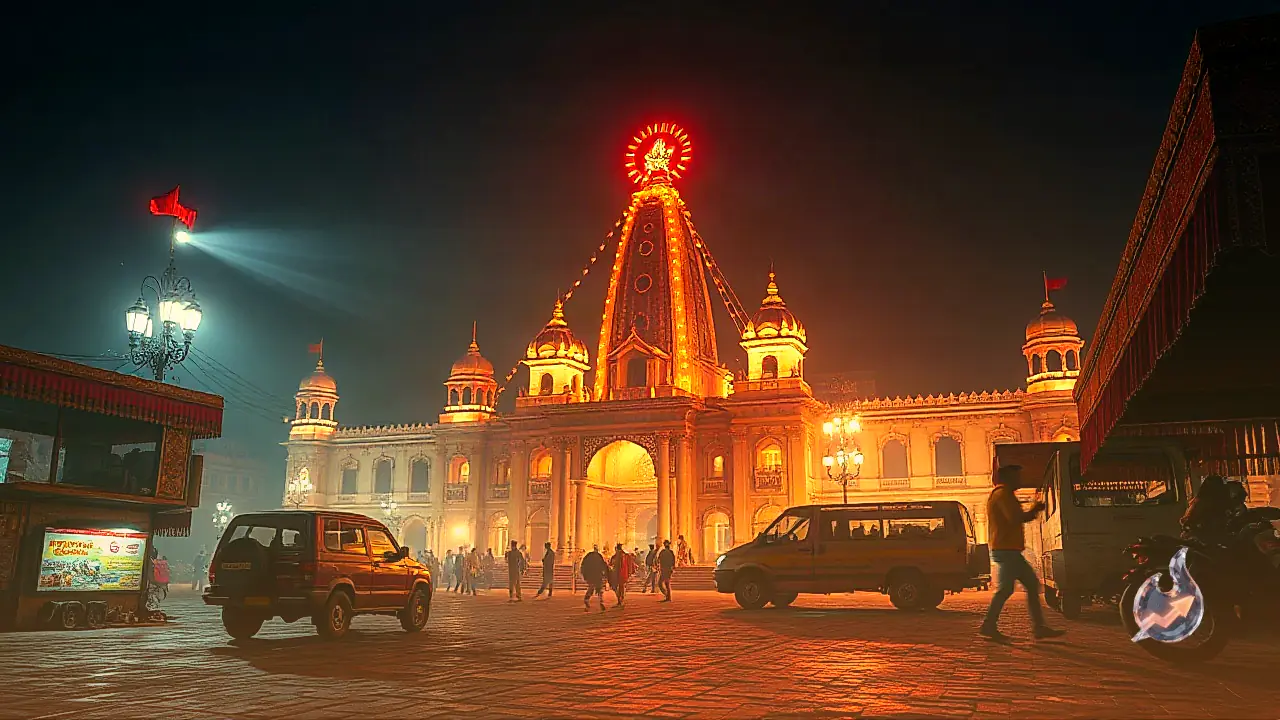
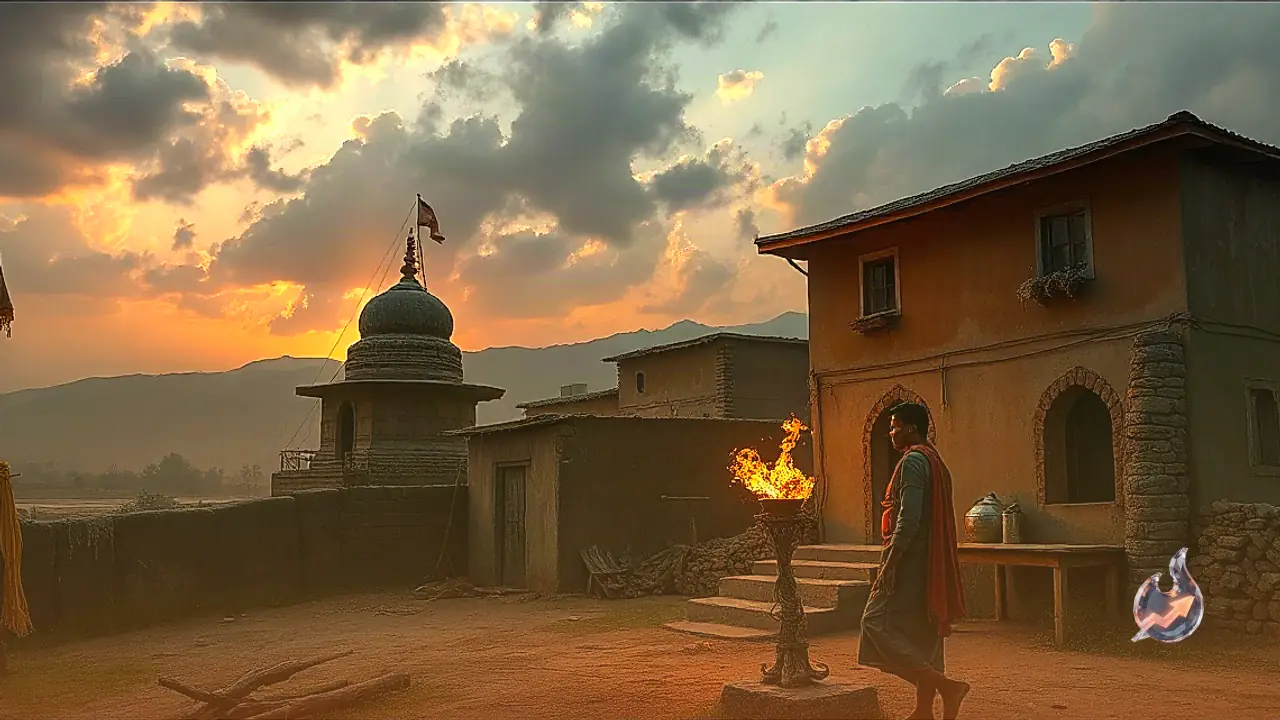
Rotu and Gular are no longer seen as just two villages in Nagaur district; they now stand as major centres tied to the memory of Guru Jambheshwar and the deep faith of the Bishnoi community. The tradition of worshipping and viewing the khanda continues uninterrupted in Rotu, while the handle of the khanda is said to remain safely preserved in a temple in Gular. A story that began with an ordinary piece of Ker wood still ties together history, folk belief and devotion to Guru Jambheshwar, centuries later.