



















Continuous overnight rain in Rajasthan's Dhaulpur district has pushed local authorities into high alert mode, with waterlogging disrupting movement across several areas since Saturday night. The biggest worry for officials is the Chambal river, whose level jumped by nearly 8 metres in just one day, prompting both the water resources department and the district administration to step up monitoring.
Chambal now just 19 centimetres short of the warning mark
According to a reading taken at 8 am on Sunday, the Chambal's gauge stood at 129.60 metres, up from 121.80 metres recorded a day earlier, a rise of 7.80 metres within 24 hours. The river's official warning level is set at 129.79 metres, meaning the current level is only 19 centimetres below it, while the actual danger mark lies further ahead at 130.79 metres. Such a sharp overnight climb has forced officials to keep a tighter watch on low-lying settlements, since even modest additional rainfall could push the river past the warning threshold.
Four gates of the Parvati dam opened, thousands of cusecs released
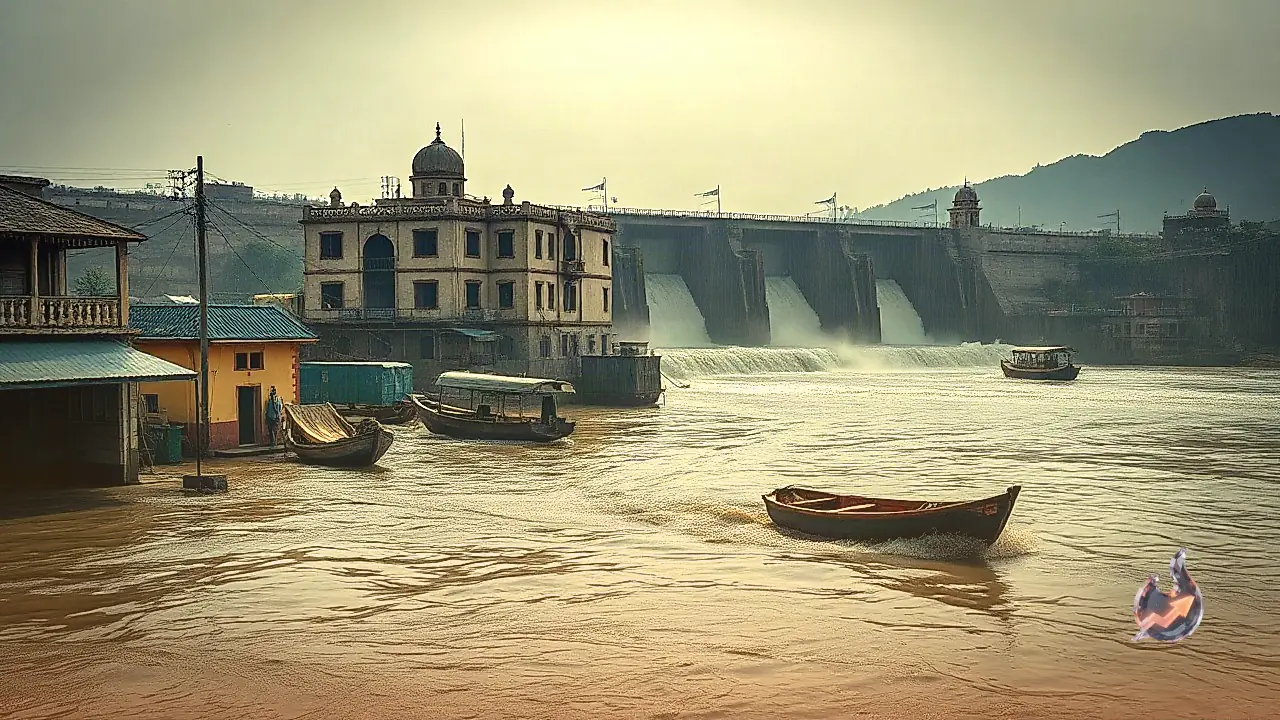
Part of the reason behind the Chambal's rise is the water being let out of the Parvati dam. Persistent rain across the catchment area increased inflow into the dam so much that the water resources department had to open two additional gates at 7 am on Sunday, taking the total number of open gates to four. Each gate has been raised by two feet, and together they are currently releasing 4401.52 cusecs of water. The dam's Full Reservoir Level, or FRL, is fixed at 223.41 metres, while the gauge presently reads 223.05 metres. With rain still falling in the catchment area, engineers are continuously tracking how much more water is flowing in.
Eight locations recorded rain, district headquarters tops list at 65 mm
Rainfall was recorded at eight different spots across Dhaulpur district over the past 24 hours. The heaviest showers fell at the district headquarters itself, which logged 65 mm. Sampau followed with 61 mm, the Urmila Sagar area received 49 mm, and the town of Baadi recorded 35 mm. Talabshahi saw 33 mm, Rajakhera 23 mm, and Aangai 15 mm, while Basedi received the least at just 11 mm. This widespread and sustained rain is precisely what has caused both the Chambal and the Parvati to swell, with smaller streams and drains around villages also running high.
Traffic halted on three Parvati river causeways
Rising water on three causeways along the Parvati river has forced authorities to shut them down completely. At the old causeway in Sampau, the water level climbed so much that crossing it has been ruled out entirely. The causeways at Malauni and Sakhwara are similarly under roughly two to three feet of water. The continuous release from the Parvati dam is directly responsible for the rising levels at these crossings. Officials have barricaded all three points, halting both vehicles and pedestrians, and are urging residents not to attempt crossing them.
27 sensitive spots flagged, legal action threatened for violators
With water levels still climbing and rain showing no sign of easing, the district administration has identified 27 locations across Dhaulpur that are currently considered sensitive. Movement of any kind has been fully barred on damaged causeways, culverts and roads that are already submerged. Collector Srinidhi B.T. has issued strict instructions to officers, given the risk of accidents, to ensure that people are kept away from these sensitive crossings under all circumstances. At points with strong currents, bamboo poles and boulders are being used to physically block the way, while the Public Works Department has been asked to put up warning signs and chains. Police personnel and revenue department staff have been posted at the riskiest causeways, culverts and submerged bridges to stop anyone attempting to cross despite the restrictions. The administration has made clear that legal action will follow against anyone caught defying the ban. For now, the entire machinery is keeping watch on three things at once, the rising Chambal, the inflow into the Parvati dam, and the situation in low-lying areas.