























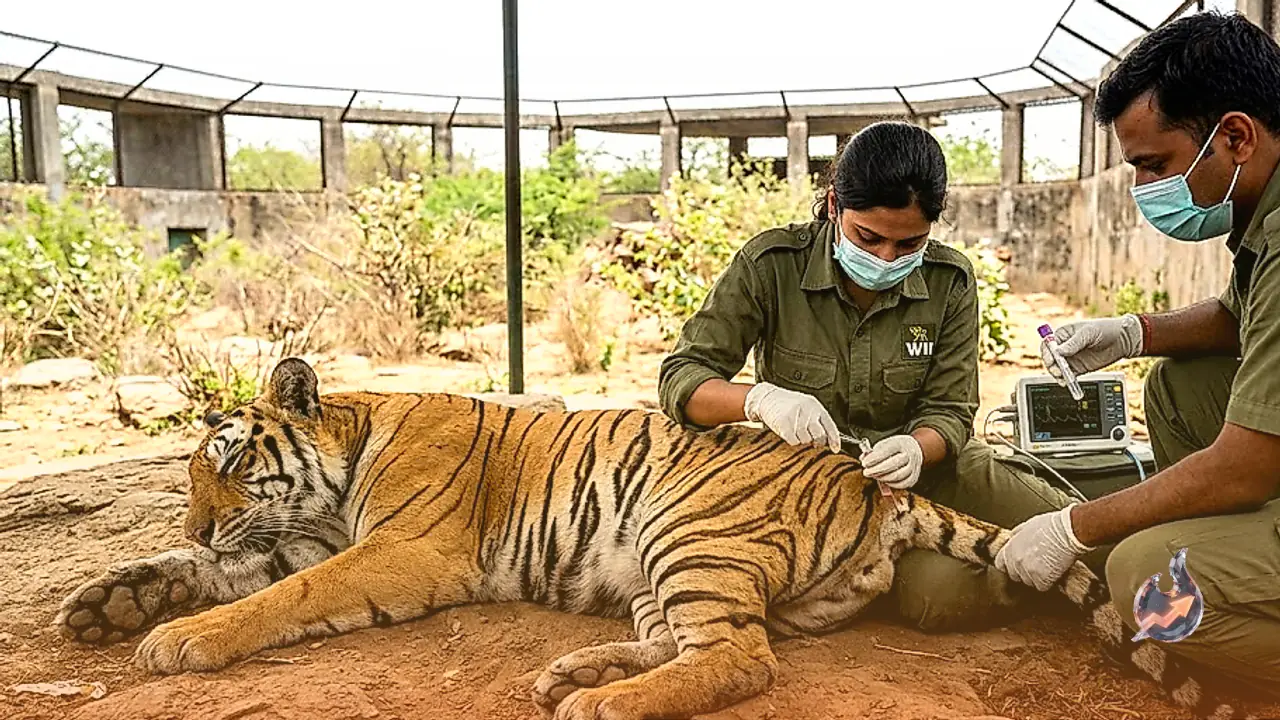

While reaching an advanced age is common in human populations, witnessing a wild feline cross extraordinary age milestones in captivity remains a remarkable anomaly. Stationed within the confines of the Abhera Biological Park in Kota, a tigress named Mahak has shattered conventional expectations by surviving well past the typical boundaries of her species. While most tigers living in enclosures or managed parks generally complete their lifecycle within sixteen to eighteen years, Mahak has successfully crossed the age of twenty-three while maintaining an active presence. This unprecedented longevity has baffled wildlife experts and researchers alike, prompting specialized scientific institutions to step in and investigate the biological mechanisms at play.
Comprehensive Investigation by Wildlife Experts
The responsibility of decoding the biological mysteries behind Mahak's exceptional health and longevity now rests with researchers from the Wildlife Institute of India. Scientific teams are preparing to conduct thorough examinations covering her genetic makeup, lifestyle patterns, vaccination records, and historical medical documents. Investigators aim to determine whether specific genetic traits have protected her from age-related degeneration and common feline ailments. This multidisciplinary assessment looks beyond standard observations to understand how her cellular structure manages the aging process so effectively.
Journey From Jaipur to Kota
Tracing her background, Mahak was born on August 28, 2004, at the Nahargarh Biological Park in Jaipur, spending her entire existence under structured captive environments. She was initially transferred to Kota in 2012 before being sent back to Jaipur for a period. Following the opening of the Abhera Biological Park in March 2023, she returned to Kota alongside another tiger named Nahar. Her twin sister, Ramba, passed away approximately six months prior. Mahak has comfortably surpassed the age record set by Swati, a well-known tigress from the Guwahati zoo who lived to about twenty years, continuing to display surprising physical vitality.
Detailed Medical and Anatomical Analysis
The ongoing scientific inquiry extends beyond basic observation, involving physical checks of her dental structure, paw condition, and internal organ functionality. The primary objective of this research is to understand how her physiological systems continue to cope with advanced age despite natural cellular decline. If the underlying factors contributing to her remarkable lifespan are successfully identified, the findings could fundamentally transform veterinary management protocols for elderly tigers, leopards, and lions across zoological facilities nationwide and globally.
Stress-Free Environment and Public Documentation
Specialists suggest that her impressive lifespan is likely the result of a combination of favorable genetic markers, a tranquil habitat, and carefully managed nutritional intake. This case serves as a notable benchmark demonstrating how optimal medical attention and tailored captive management can extend the longevity of wildlife. Kota DFO Pramod Dhakad confirmed that discussions regarding DNA sampling procedures and research coordination are actively underway with wildlife scientists and veterinarians. The forestry department also plans to produce a documentary chronicling her journey, which will be broadcast on large LED screens inside the park to educate visitors about the historic tigress.