




















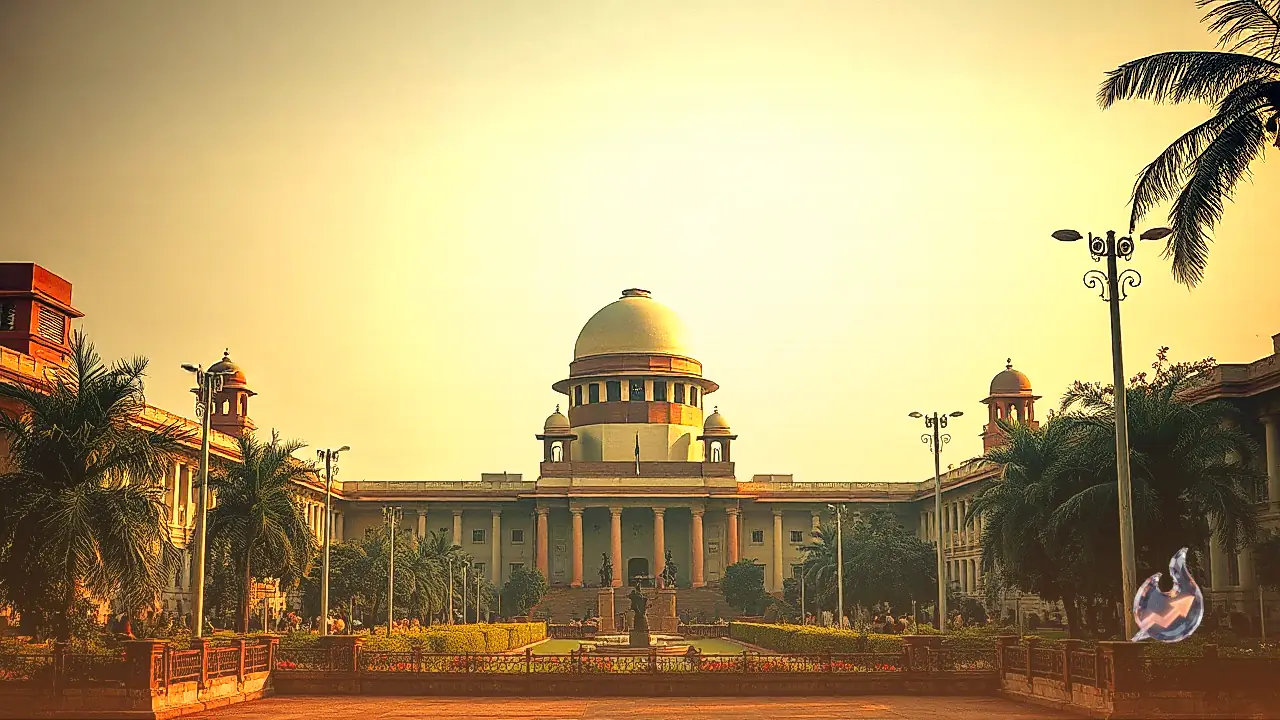

There's an old assumption every Indian carries: when nobody else will listen, a court will. But what happens when the dispute is between two judges themselves, and no one is quite sure who gets to referee? That question is now playing out inside the country's judiciary, and the task of answering it has landed squarely on Chief Justice of India Surya Kant.
The Chief Justice's Job and a Basic Rule of Law
For CJI Surya Kant, this is not just another file crossing his desk. As the head of the judiciary, it falls on him to resolve this internal dispute as quickly as possible. In doing so, he must stick to a basic legal principle, that no decision can be reached before both sides have been fully heard. Any delay or ambiguity here risks deepening the rift further, so the sooner a clear and fair process begins, the sooner this tension within the judiciary can be settled.
Four Letters, A Set of Serious Allegations
Supreme Court judge Sandeep Mehta has written four consecutive letters to Chief Justice Surya Kant concerning Rajasthan High Court judge Sanjeev Prakash Sharma. The letters accuse Justice Sharma of maladministration, misconduct, favouritism and nepotism. They also allege abuse of administrative powers and interference in an internal judicial inquiry. The language and seriousness of these charges have turned what should have been an internal matter into a subject of public discussion. But one basic principle must not be forgotten here, however serious an allegation may be, an allegation by itself does not establish guilt. There is a whole process of inquiry and hearing that separates an accusation from a verdict, and skipping that process to reach a conclusion would be premature.
The Chief Justice Draws a Clear Line
What CJI Surya Kant said on 26 August may turn out to be the most important benchmark in this entire episode. He said the allegations against Justice Sharma cannot be decided publicly, and that the judge concerned must be given a fair opportunity before any conclusion is reached, and that this approach must continue going forward. That statement is really a reminder of a principle courts themselves have repeated for years, every side must be heard. If a complaint against a judge is serious, it must be investigated. If there is a claim that an internal committee's independence was compromised, that too must be examined. If there are allegations of abuse of administrative power, those need scrutiny as well. But just as the complainant's version is going on record, the judge who has been accused deserves to have his side placed on record with equal seriousness. The principle of justice does not say the complainant's word should be taken as true first, leaving the accused to prove innocence afterward.
The Other Side Pushes Back
This is no ordinary administrative disagreement, it involves two sitting judges of the higher judiciary. On one side is a Supreme Court judge who has raised serious allegations through multiple letters. On the other is a Rajasthan High Court judge who has already dismissed those allegations as baseless. When claims from both sides are this starkly opposed, following institutional process is the safest and most credible path forward. Accepting one side's account while brushing aside the other risks undermining the fairness of the entire system.
A New and Delicate Charge in the Fourth Letter
The allegations added in Justice Mehta's fourth letter make the matter more complicated still. It claims there was interference in an internal judicial inquiry and that the confidentiality of sensitive proceedings was breached. If proven true, this would make the whole affair far more serious, because the credibility of any internal inquiry rests entirely on how independent the investigating committee is and how confidential and impartial its proceedings remain. But the flip side is equally true, these allegations too can only be confirmed through due process. That is exactly why rushing to a judgment in this matter would serve neither the judiciary's interest nor the principle of justice.
A Collegium Recommendation, A Separate Question
Amid all this, the Supreme Court collegium recommended on 31 August that Justice Sanjay K Agrawal be appointed Chief Justice of the Rajasthan High Court. That is a significant administrative decision in its own right, but it would be wrong to treat it as any kind of verdict on the truth of the allegations against Justice Sharma. An administrative appointment is one thing, and an inquiry into allegations against a judge is another, the two must be examined separately, through their own distinct processes. Conflating them would amount to speculation rather than fact-based reasoning.
Hearing Both Sides Is Not Favouritism
For CJI Surya Kant, hearing out both judges is not about taking anyone's side, it is about reinforcing a judicial principle that courts themselves have repeated for years, no decision should be made before both parties are heard. There is another important dimension here too. The moment allegations against a judge become public, his reputation takes an immediate hit. In the case of judges, that damage runs deeper, because public trust in the judiciary rests not only on its institutions but on the personal credibility of every judge sitting within them. That is why the inquiry process needs to be structured so that the complaining judge feels his concerns were heard seriously, and the judge who has been accused feels he received justice too.
The Credibility of the Entire Judicial System Is at Stake
The biggest casualty of this dispute may not be any one individual, but the collective image of the judiciary itself. For ordinary citizens, the Supreme Court and the High Courts are not separate clusters of individuals, they are two pillars of the same system of justice. When senior judges within that very system are seen publicly levelling serious accusations at each other, it is only natural for people to start wondering who they can turn to for justice if judges themselves are at odds. That is precisely why CJI Surya Kant now has an opportunity, to steer this dispute through a transparent, impartial and swift process that delivers fairness to both judges while keeping the ordinary citizen's trust in the courts intact.