






















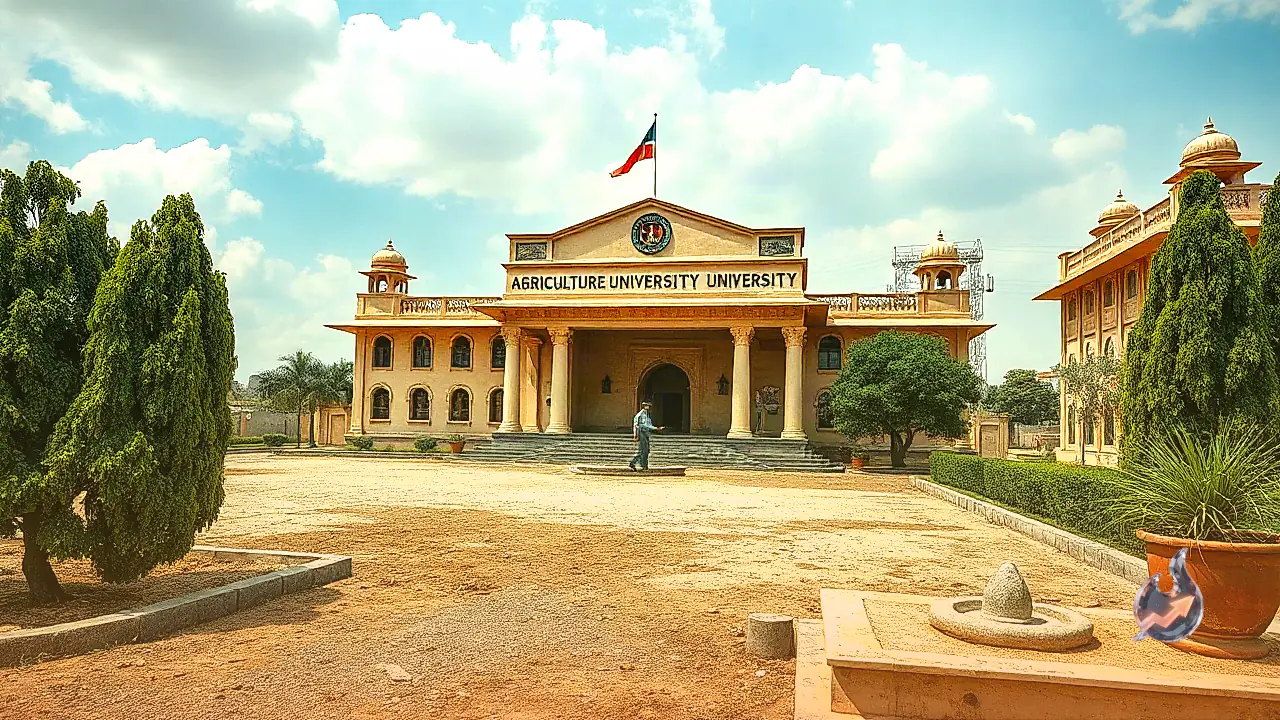

Agricultural productivity across several districts of Western Rajasthan has been facing severe strain due to high groundwater salinity and progressive soil degradation. The accumulation of salts in arable fields not only compromises natural soil fertility but also leads to a steady decline in crop yields. To counter this critical farming challenge, Agriculture University Jodhpur has taken a major scientific initiative. The university has signed a Memorandum of Understanding (MoU) with the Central Salt and Marine Chemicals Research Institute (CSIR-CSMCRI), a premier laboratory based in Bhavnagar, Gujarat. Executed on Saturday, this strategic partnership aims to drive targeted research and deploy innovative technological solutions to rehabilitate salt-affected farmlands across the arid region.
Key Objectives and Strategic Framework of the MoU
The formal agreement was signed at the university campus by Professor Virendra Singh Jaitawat, Vice Chancellor of Agriculture University Jodhpur, and Dr. Dungarram Chaudhary, Principal Scientist representing CSIR-CSMCRI, Bhavnagar. Highlighting the gravity of the situation, Vice Chancellor Professor Virendra Singh Jaitawat noted that land degradation due to salinity poses a tough challenge to regional agriculture, with pulse crops being the worst affected. He expressed confidence that the synergy between the two organizations will yield practical solutions for local farmers. Under the terms of the collaboration, scientists at Agriculture University Jodhpur will gain access to specialized technical expertise and essential research infrastructure from the Bhavnagar institute to boost their field investigation efforts.
Desalination, Bio-fertilizers, and Environmental Management
Outlining the specialized capabilities of CSIR-CSMCRI, Principal Scientist Dr. Dungarram Chaudhary explained that the institute engages in cutting-edge research covering salt and marine chemical extraction, water desalination technologies, biodiesel production, wastewater treatment, and the formulation of natural fertilizers from marine organisms. Additionally, the institute develops eco-friendly bio-products and environmental management protocols. By integrating CSIR-CSMCRI's technological breakthroughs with the agricultural research program at Agriculture University Jodhpur, researchers hope to adapt marine chemistry and water treatment innovations to solve groundwater salinity issues in dryland farming.
Academic Exposure for PhD Scholars and Rural Extension
Beyond field-level agricultural interventions, the MoU opens up valuable academic pathways for postgraduate scholars and researchers. Doctoral students enrolled at Agriculture University Jodhpur will now have the opportunity to work under the direct mentorship of CSIR-CSMCRI scientists as co-guides. This collaborative academic framework will enable PhD candidates to combine high-end laboratory experimentation with hands-on technical application in rural areas. The initiative is anticipated to accelerate technology transfer, enhance rural skill development, and promote scientific extension services. The MoU signing event was attended by Dr. M. Sundariya, Director of Research at Agriculture University Jodhpur, alongside several deans, directors, administrative officers, and agricultural scientists.