























In an effort to bridge the gap between traditional agricultural education and modern entrepreneurship, two new experiential learning units have been inaugurated at the agricultural college in Sri Ganganagar. These facilities, dedicated to food processing and mushroom cultivation technology, are designed to give students hands-on training alongside their regular coursework to help them prepare for self-employment.
Dr. Rajendra Babu Dube, Vice-Chancellor of Swami Keshwanand Rajasthan Agricultural University, officially opened the newly established units. During his visit, he inspected the campus laboratories, reviewed educational resources, and interacted with faculty members regarding ongoing academic programs.
Practical Training in Food Processing and Value Addition
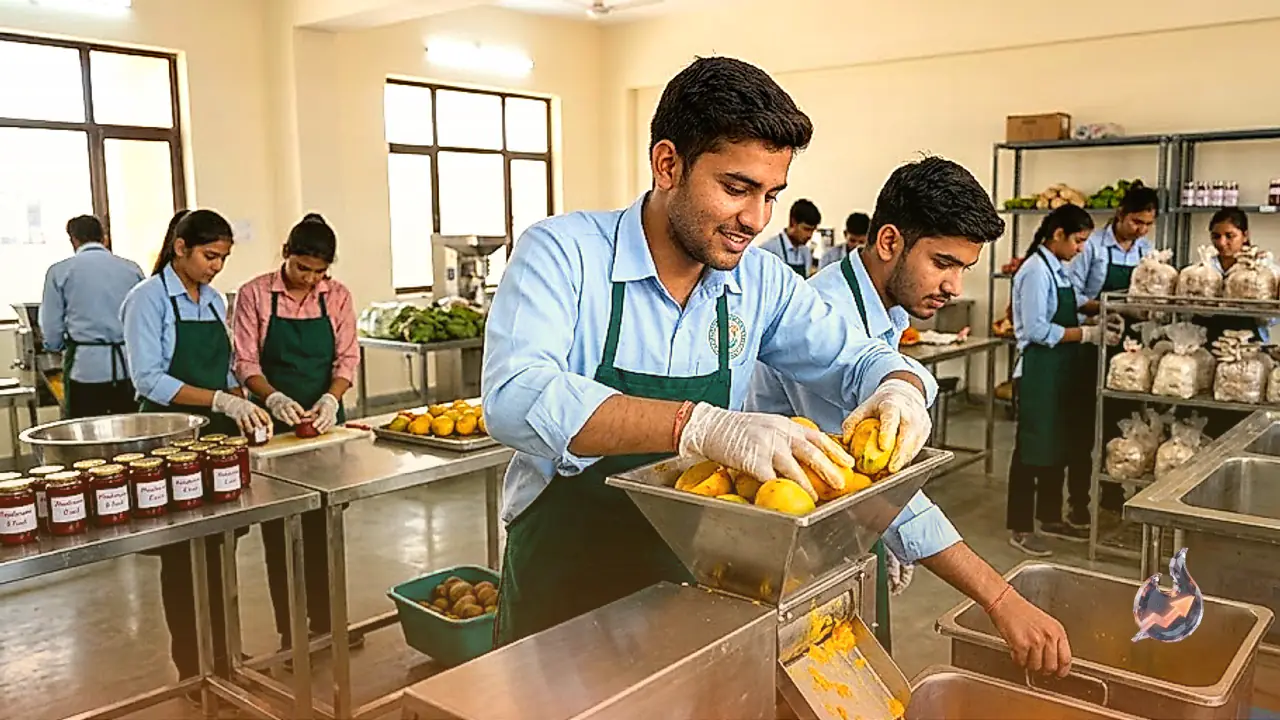
The newly launched food processing unit will train students in various aspects of agricultural produce handling, including processing, value addition, preservation, packaging, and marketing. Undergraduates will learn how to convert fruits, vegetables, grains, and other raw farm yields into finished food items. This training aims to teach students how to extend the shelf life of crops and secure better market returns.
Scientific Techniques for Mushroom Production
Through the mushroom cultivation technology unit, students will learn scientific methods for growing different varieties of mushrooms. The curriculum covers essential production steps such as composting, spawn management, climate control, disease management, harvesting, packaging, and commercial distribution. Because mushroom farming requires minimal space and initial investment, this unit serves as a viable pathway for student startups.
Fostering Startups and Job Creation
The primary objective of these learning units is to move beyond theoretical instruction and provide real-world production experience. Once trained, graduates will have the option to establish their own food processing ventures or mushroom farming businesses rather than solely relying on job hunting. The Vice-Chancellor praised the college's academic framework, noting that practical training is vital to prepare graduates for evolving market demands and agricultural industries.
Student Interaction and Faculty Attendance
During his visit, the Vice-Chancellor engaged with third-year agriculture undergraduates, encouraging them to pursue innovation and entrepreneurial ventures. He also reviewed the academic and professional achievements of the institution's alumni. The inauguration was attended by University Examination Controller Dr. BS आचार्य, College Dean Dr. BS Meena, faculty member Dr. Roop Singh Meena, guest lecturer Dr. Komal, Ram Verma, and several students.