




















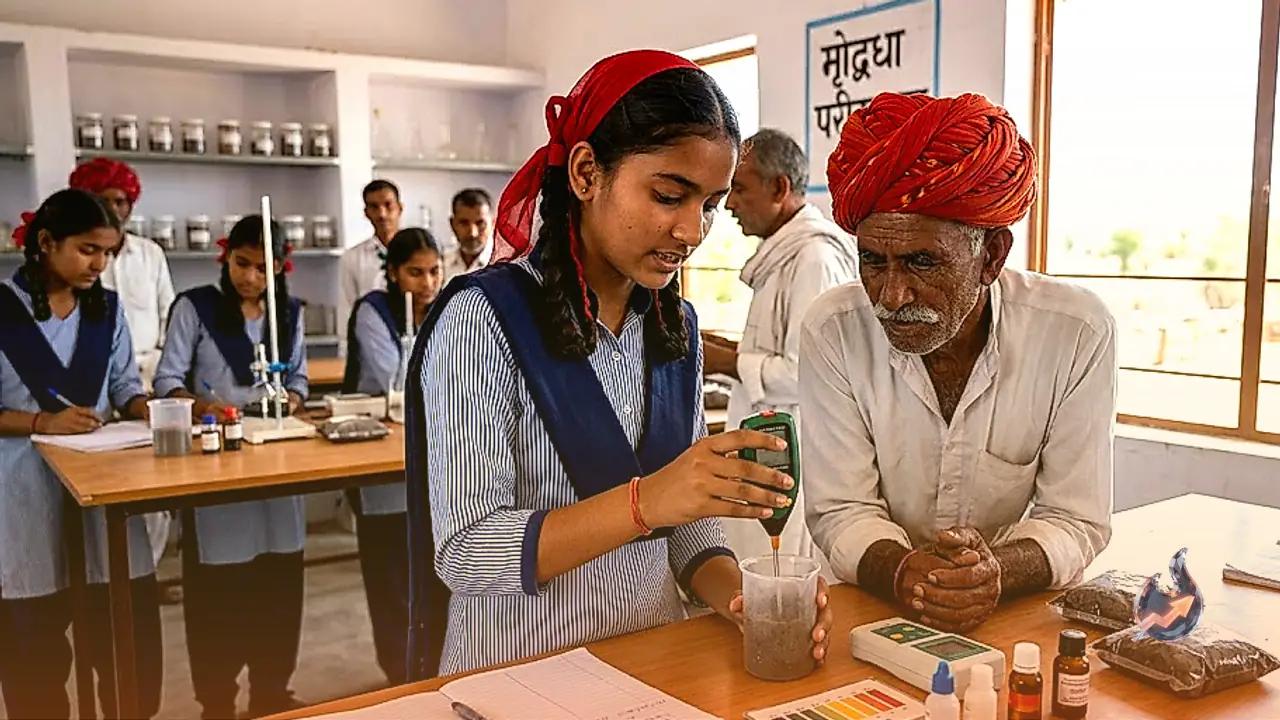

Farmers will no longer need to make frequent trips to district headquarters just to get their farm soil and water tested. Essential soil and water testing facilities are being established in close proximity to villages within PM Shri schools. The agriculture department is rolling out soil testing laboratories across 549 PM Shri government senior secondary schools in the state. This rollout includes 26 schools located in the Sikar district, ensuring that farmers receive timely updates about their land health and encouragement toward balanced fertilizer application.
Target to launch testing services by December
The agriculture department has set a firm target to set up these labs and commence testing operations in the chosen PM Shri schools by December of this year. A budget of approximately one lakh rupees has been sanctioned for each participating school. This allocated funding will directly procure essential laboratory equipment, chemical kits, and testing reagents. Selected schools will initially integrate with the official Soil Health Card portal, after which the formal process of testing soil and water samples will begin.
Students to gain practical agricultural science knowledge
A unique feature of this administrative scheme is that the school laboratories will double as educational hubs for government school students alongside serving farmers. Students from classes 7, 8, 9, and 11 will receive hands-on training on collecting soil and water samples and conducting tests. School teachers and agriculture department experts will jointly train the children. This approach will equip students with practical agricultural science and modern technology alongside their conventional textbook education.
Complete digitization of the testing workflow
To ensure total transparency within the soil and water testing mechanism, the entire workflow will connect to a digital platform. While collecting samples from the fields, operators will record the farmer details and exact GPS location using a mobile app. This tracking will verify the precise origin field of each sample and monitor its testing progress at every stage. Once testing concludes, results will be uploaded online, and a digital Soil Health Card will be issued to the farmer.
Expanding testing capacity in Sikar
The necessity for soil testing in Sikar becomes apparent considering that over 30,000 farmers arrive with soil samples every year seeking analysis. In contrast, existing setups manage to test only about 12,000 of those samples. Traveling to district headquarters, submitting samples, and collecting reports proves time-consuming for farmers residing far away. Opening laboratories directly inside local schools will expand testing capacity and deliver localized convenience to growers.
Improving soil health through balanced nutrient management
Without timely soil analysis, farmers frequently apply chemical fertilizers and inputs without understanding the actual nutritional requirements of their soil. Such practices increase cultivation expenses while degrading soil quality over time. Soil Health Cards will provide farmers with precise data on existing soil nutrients and tailored fertilizer management according to crop demands. This guidance aims to foster balanced nutrient management and drive better agricultural yields.