

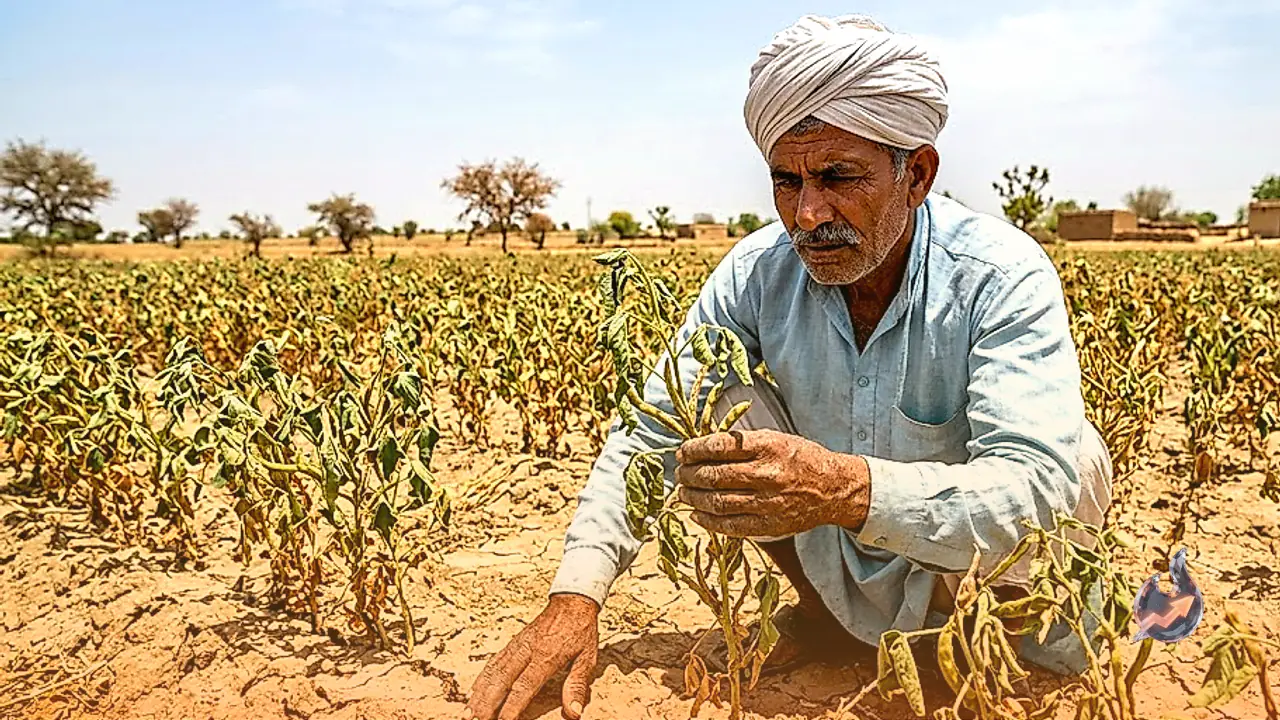




















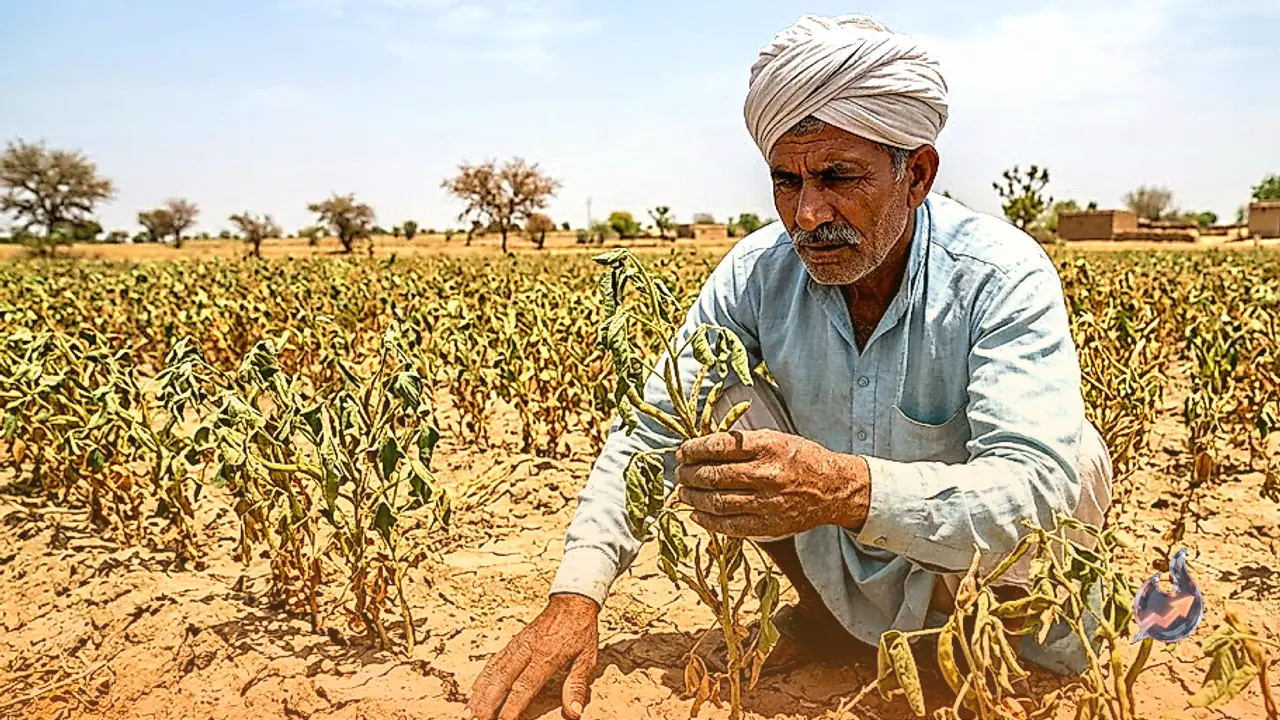

Kharif crops sown across vast tracts of rainfed land following healthy early monsoon showers are now confronting severe stress due to an unexpected shift in weather patterns. Following the end of August, rainfall ceased over the opening fortnight of September, causing a steep drop in soil moisture levels. This prolonged dry interval is directly hampering vegetative growth, flowering, and seed development through October, with standing guar fields registering the most pronounced damage across the district.
Favorable Sowing Succeeded by an Extended Dry Phase
Abundant rainfall during the initial monsoon phase had encouraged farmers across the region to undertake extensive Kharif sowings on rainfed lands. Bolstered by early moisture, fields turned vibrant green, and crops such as guar, bajra, moong, moth, and cotton recorded robust early vegetative development. Agricultural households anticipated bumper yields, but the prolonged absence of follow-up precipitation has replaced initial optimism with severe distress.
Lack of Soil Moisture Impairs Guar Pod Filling
Standing guar crops are currently transitioning into the critical phase of pod formation and grain filling. Agriculture expert Dinesh Jakhar explained that maintaining adequate root-zone soil moisture remains imperative throughout this specific biological stage. When moisture levels drop, overall plant development stalls, leading to a noticeable drop in the number of flowers and pods produced. Furthermore, grains fail to plump properly inside developing pods, explaining why guar crops are experiencing the sharpest brunt of the prevailing dry spell.
Stress Signals Across Moong and Moth Fields
The deficiency of timely precipitation has likewise spilled over to pulse varieties like moong and moth. These standing crops are approaching their pod development cycle, yet depleting soil moisture has caused plants to weaken across numerous farms. Standing at roughly two months of growth, these Kharif plantings urgently require moisture. Agricultural observers note that without timely showers, final output numbers could drop sharply, undermining months of farmer investments and field labor.
District Sowing Acreage and Production Estimates
Agricultural records show that Kharif acreage across the district reached a total of 4,25,464 hectares this season. Sowing figures across key crop varieties stand as follows
- Bajra: Sown across 2,25,733 hectares.
- Guar: Cultivated over 1,14,845 hectares.
- Groundnut: Planted on 36,342 hectares.
- Moong: Occupying 31,009 hectares.
- Chawla (Cowpea): Sown across 16,810 hectares.
- Moth: Cultivated on 1,000 hectares.
Total Kharif production across the district was projected at roughly 5,95,610 metric tonnes. Whether this output projection is met will depend entirely on how weather conditions evolve over the remainder of the season.
Market Prices Offer Partial Cushion Amid Weather Dilemma
Amid worries over crop shrinkage, an uptick in market prices for guar has offered partial psychological relief to farming families. Farmer Shishupal Singh Beri explained that timely rains right after sowing had fostered exceptional early growth for guar, but the complete dry spell that followed is inflicting compounding losses on both guar and bajra. He pointed out that torrential downpours now could flatten delicate guar stalks, meaning fields strictly require gentle, balanced precipitation.
Joint Director of Agriculture Shivjiram Kataria stated that adverse weather has compromised overall Kharif crop quality. The lack of precipitation right at grain development has impaired yields across multiple farming belts. Specialists maintain that light showers would prove highly beneficial right now, whereas heavy, unrelenting downpours would trigger waterlogging, root oxygen deprivation, and fungal rot on developing pods.