





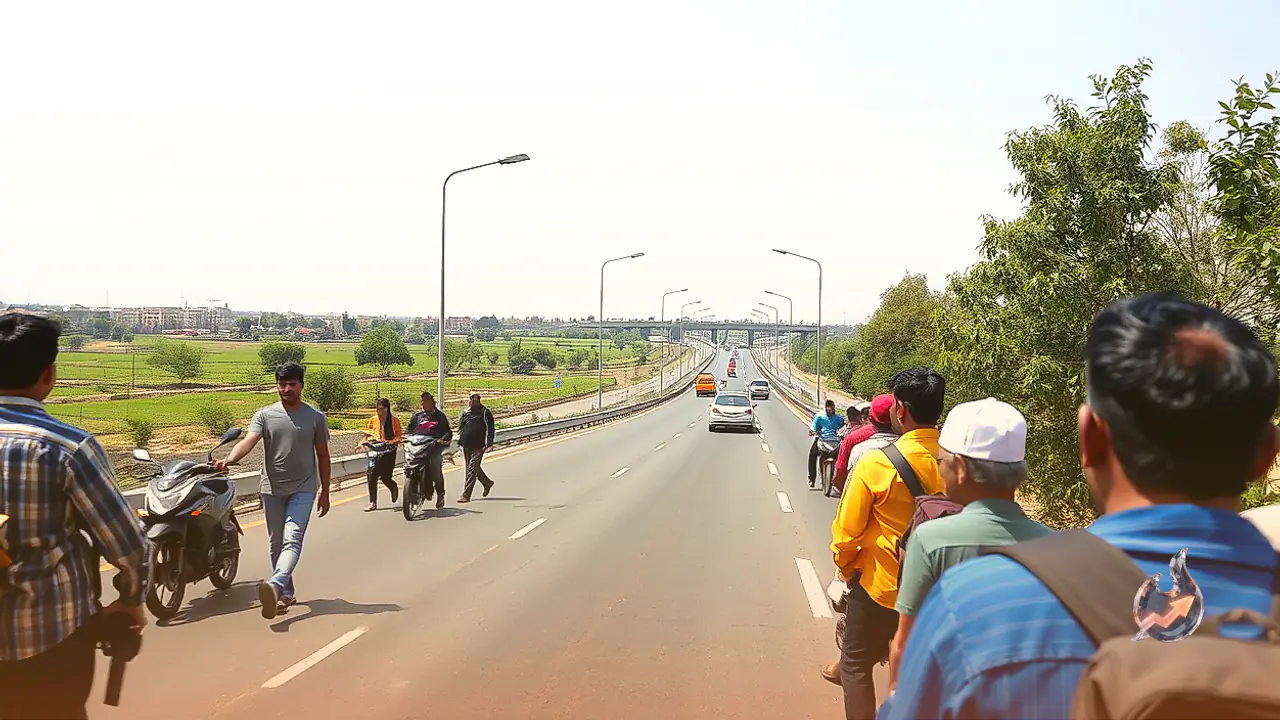















Road connectivity across western Rajasthan is set for a major overhaul with the planning of a modern 6-lane greenfield expressway connecting Jaipur, Jodhpur, and Pachpadra. Designed with an estimated outlay of Rs 11,492 crore, this 390 to 400-kilometer corridor aims to integrate the Marwar region directly with the country's prime commercial destinations. Once fully commissioned, commute times between Jaipur and Jodhpur are expected to drop from the current 6 to 7 hours down to roughly 4 hours.
Integration With the Delhi-Mumbai Expressway Corridor
The strategic scope of this greenfield infrastructure extends well beyond interlinking two prominent cities. The expressway is planned to merge directly with the Delhi-Mumbai Expressway network, establishing an uninterrupted transit channel for western Rajasthan toward Mumbai, Gujarat, and the national capital in Delhi. For the Pachpadra refinery and its emerging downstream industrial hubs, this direct connectivity will play a crucial role in the movement of raw materials and access to broader consumer markets.
At present, traveling by road from Jodhpur to Mumbai can take anywhere between 17 and 18 hours due to highway bottlenecks, mixed local traffic, and routes cutting through multiple urban centers. By routing vehicles onto the high-speed access-controlled Delhi-Mumbai corridor, the overall road journey between Jodhpur and Mumbai is anticipated to shrink to approximately 11 hours. Under favorable driving conditions, this translates into a practical time saving of 7 to 8 hours for passenger cars and commercial freight carriers alike.
Route Alignment via Dausa and Lalsot Toward Mumbai
Under the proposed alignment, the expressway corridor originating from the Jodhpur region will route eastward toward Dausa and Lalsot, where it will link directly with the interchange of the Delhi-Mumbai Expressway. From that junction, commercial and passenger traffic can proceed along the existing corridor through Kota, Ratlam, Vadodara, and Surat to arrive in Mumbai. This seamless link is poised to bolster inter-state commerce, supply chain reliability, and logistical efficiency between industrial centers in Rajasthan and Maharashtra.
The corridor will also deliver an immediate operational upgrade to travel within Rajasthan itself. Motorists driving between Jaipur and Jodhpur currently spend 6 to 7 hours navigating state highways. The dedicated expressway alignment is estimated to reduce this transit duration to around 4 hours, shaving off 2 to 3 hours per trip. Besides personal travelers, commercial operators ferrying agricultural yields, textiles, stone, and heavy machinery between the state capital and the western districts stand to benefit from reduced transit overheads.
Spanning Over 6 Districts and 208 Villages
The planned corridor is charted to originate in the vicinity of the Ring Road near the Bagru-Sanganer belt outside Jaipur. Traversing across more than six districts, the right-of-way will incorporate approximately 208 villages into its wider connectivity network. Notable intermediary regions along the outlined corridor include Mozamabad, Kishangarh, Vijayanagar, Pali, Bhadrajun, Samdari, and Pachpadra.
Reaching Pachpadra ensures that the petrochemical refinery and associated industrial complexes receive direct expressway-grade arterial access. By bridging Pachpadra with Jaipur and routing directly onward to key markets in Delhi, Mumbai, and the ports of Gujarat, regional freight transit throughput will witness a marked leap. Consequently, the highway serves as an economic spine rather than a simple commuter bypass, integrating western Rajasthan directly into national trade arteries.
NHAI Execution Under the Hybrid Annuity Model
Execution responsibilities for the project are being advanced under the National Highways Authority of India, known as NHAI. The highway will be constructed utilizing the Hybrid Annuity Model (HAM), a procurement structure designed to balance financial risk, maintain construction momentum, and ensure rigorous build quality across defined schedules.
The detailed route alignment of the corridor is in its finalization stage, with administrative efforts underway to expedite the land acquisition process across the identified 208 rural habitations. Upon completion, the project will permanently slash intercity transit hours while unlocking new economic throughput across western Rajasthan's industrial corridors.