




















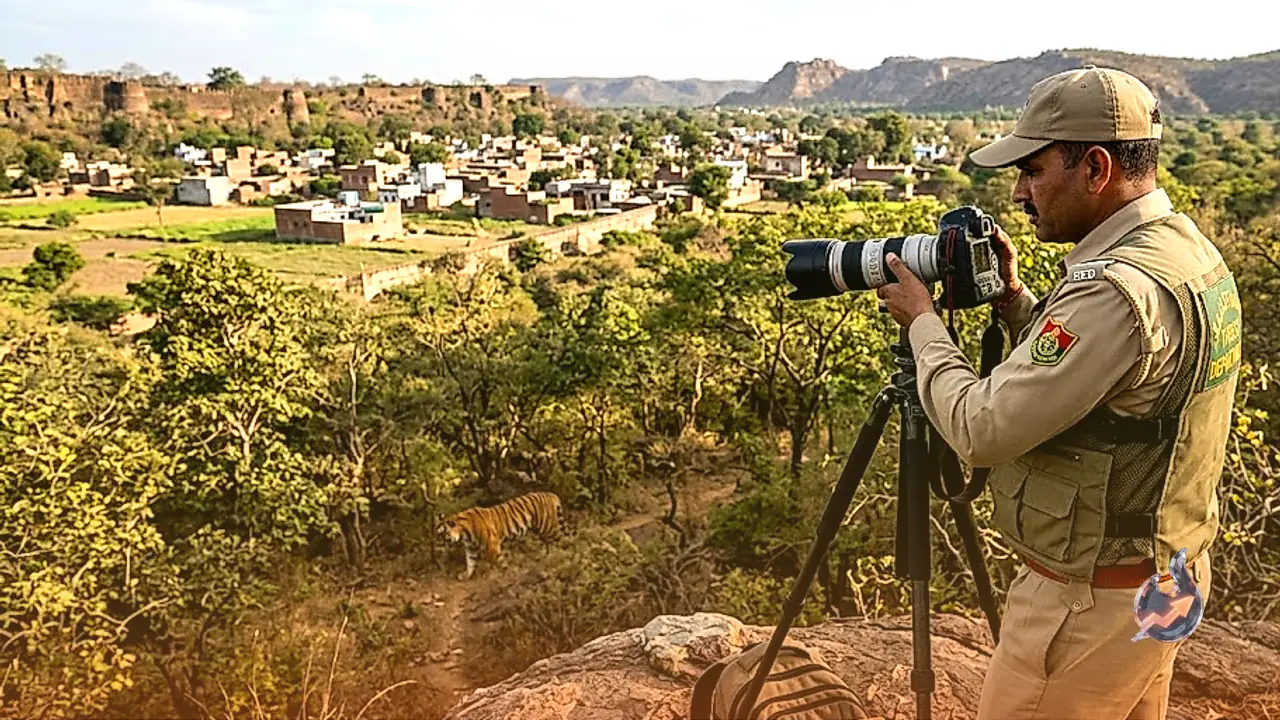

Just ahead of International Tiger Day, Rajasthan has some genuinely encouraging news to share. The total tiger count across the state's five tiger reserves has climbed to 149, well above last year's tally. In forests where the tiger's roar had almost fallen silent, the big cat is now firmly back, pushing Rajasthan into the ranks of India's key tiger states. But the success comes with a catch: with so many tigers now sharing the same forests, space is running short, and forest officials are having to rethink how they manage the growing population.
From 135 to 149: How the Numbers Climbed
Across the five reserves, Ranthambore, Sariska, Dholpur-Karauli, Mukundra Hills and Ramgarh Vishdhari, the combined count of tigers, tigresses and cubs stands at 149 this year, up from 135 last year. According to Chief Wildlife Warden K.C. Arun Prasad, 54 tigresses across these five reserves gave birth to a total of 53 cubs this year. In 2025, 52 tigresses had produced 43 cubs. So while the number of breeding tigresses rose only marginally, the number of cubs born jumped noticeably, a sign that breeding conditions across the reserves have kept improving. The largest share of new cubs, 28 in all, was born in Sariska Tiger Reserve, suggesting Sariska has emerged as the state's most active breeding ground this year.
Ranthambore Leads, Sariska Not Far Behind
Ranthambore remains home to the largest number of tigers in the state, with its count rising from 66 last year to 72 now. Sariska has also made strong gains, its tiger numbers climbing from 50 to 56. Wildlife experts say this growth is more than just a statistic, it is evidence that conservation efforts in Rajasthan's forests are genuinely paying off. Tigers sit at the very top of the forest food chain, so a rising tiger population is widely read as a sign that the broader forest ecosystem, including prey numbers and grassland health, is in good shape.
When Only 18 to 20 Tigers Were Left
Looking at today's numbers, it is hard to picture just how close Rajasthan came to losing its tigers altogether roughly two decades ago. At that time, only 18 to 20 tigers survived in the entire state, and there were real fears that tigers could vanish from Rajasthan for good. The distance travelled since then has placed Rajasthan among India's major tiger habitats. Currently, the adult tiger and tigress population across the five reserves stands at around 96, and once cubs are added in, the total reaches 149. Ranthambore alone accounts for roughly 50 adult tigers and tigresses along with 22 cubs. Forest department officials note that in terms of births and survival, Ranthambore ranks among the most successful tiger reserves in the country, and it also draws more tourists hoping to spot a tiger than any other reserve in the state, a boost that feeds directly into the local tourism economy.
Dry Terrain, Rich Prey: Ranthambore's Winning Formula
Spread across roughly 1,500 square kilometres, Ranthambore currently sees tigers actively ranging across only about 700 square kilometres of that area. Deputy Conservator of Forests Manas Singh says the reserve's biggest strength is its abundant prey base. Sambar, chital and other herbivores exist here in large numbers, and well-developed grasslands create ideal conditions for tigers to thrive. That combination is why Ranthambore's tiger survival rate stands at around 80 percent, among the best recorded at any major tiger reserve in the country. Unlike dense forests elsewhere, Ranthambore's terrain is dry and relatively open, making it far easier to spot tigers here, which is exactly why it remains the top choice for tourists from India and abroad alike.
Machli's Legacy: The Tigress Who Repopulated Forests
No account of tiger conservation in Ranthambore is complete without mentioning the legendary tigress Machli, known as T-16. Ruling over Ranthambore for close to two decades, Machli gave birth to 18 cubs in her lifetime. Her descendants went on to play a major role in repopulating reserves like Sariska, Mukundra Hills and Ramgarh Vishdhari. When Sariska lost all its tigers in 2008, tigers from Ranthambore were relocated there, and the reserve saw tigers return once again, an episode still cited as a successful relocation model in wildlife management. In her memory, the Government of India issued a postage stamp in 2013. A memorial to Machli stands at Ranthambore's Jogi Mahal, and the forest department instituted the 'Machli Award' in her name, still given out to honour work in tiger conservation.
Running Out of Room
But this very success is now creating a headache for the forest department. Space in Ranthambore is growing scarce. Experts estimate the reserve's habitat capacity at only 40 to 50 tigers, while the actual count has already reached 72, well beyond what the land can comfortably support. A forest department official explained that an adult male tiger needs 40 to 50 square kilometres of territory to roam and hunt, while a tigress needs around 20 square kilometres. That is why, once young tigers cross roughly three years of age, they start venturing out of the forest in search of new territory, raising the odds of tiger sightings near human settlements.
Ranthambore's Tigers Are Turning Up in Madhya Pradesh
According to wildlife expert Dharmendra Khandal of Tiger Watch, tigers from Ranthambore searching for new territory often end up in Mukundra Hills, Ramgarh Vishdhari, and in some cases even in forests across Madhya Pradesh. He points out that the relocation of villages settled inside other tiger reserves is still far from complete, making planned village rehabilitation and better forest management essential to secure adequate, safe habitat for tigers. Khandal also says Kailadevi Sanctuary, alongside Ranthambore, urgently needs work to make it more tiger friendly, so the forest department has more room to accommodate the growing population and keep this conservation success going in the years ahead.