

















The journey of the Chambal River is a fascinating saga of engineering and geography that directly impacts millions of lives. Rising from the pristine heights of the Janapav region in the Vindhyachal mountain range of Madhya Pradesh, this mighty river carries vast volumes of water across multiple districts. During the monsoon, when the river swells to its peak, many wonder about the intricate pathway that directs this massive flow toward the Kota Barrage. The answer lies in a series of four magnificent dams that systematically harness, store, and distribute its waters.
The Starting Point and the Grand Reservoir of Gandhi Sagar
The journey begins in Madhya Pradesh, where the river gathers strength from its upper catchment area, the Vindhya hills, and various seasonal streams and small tributaries. The first major stop on this route is the Gandhi Sagar Dam, which stands as the inaugural and largest structure of the Chambal Valley Project. This massive reservoir acts as a primary storage facility. Here, the sheer force of the stored water is first utilized for hydroelectric power generation. Once the electricity is generated, the water is released in a highly regulated manner to continue its onward journey toward Rajasthan.
The Downstream Flow to Rana Pratap Sagar
From the gates of Gandhi Sagar, the released water travels approximately 52 kilometers downstream to reach the Rana Pratap Sagar Dam. As the river traverses this distance, it collects additional rainwater draining from the surrounding catchment areas, further boosting its volume. Much like the upstream reservoir, Rana Pratap Sagar serves the dual purpose of water conservation and electricity generation. The flow remains carefully monitored and controlled before being channeled toward the next milestone in the valley.
Jawahar Sagar: The Third Step in the Chain
The third major checkpoint is the Jawahar Sagar Dam. As another vital pillar of the Chambal Valley Project, this dam is heavily focused on producing hydroelectricity. During the monsoon season, local catchment inflows merge with the main river, causing the water levels here to rise dramatically. The controlled release from Jawahar Sagar sends the water surging directly toward the city of Kota.
The Final Gateway: Kota Barrage and Beyond
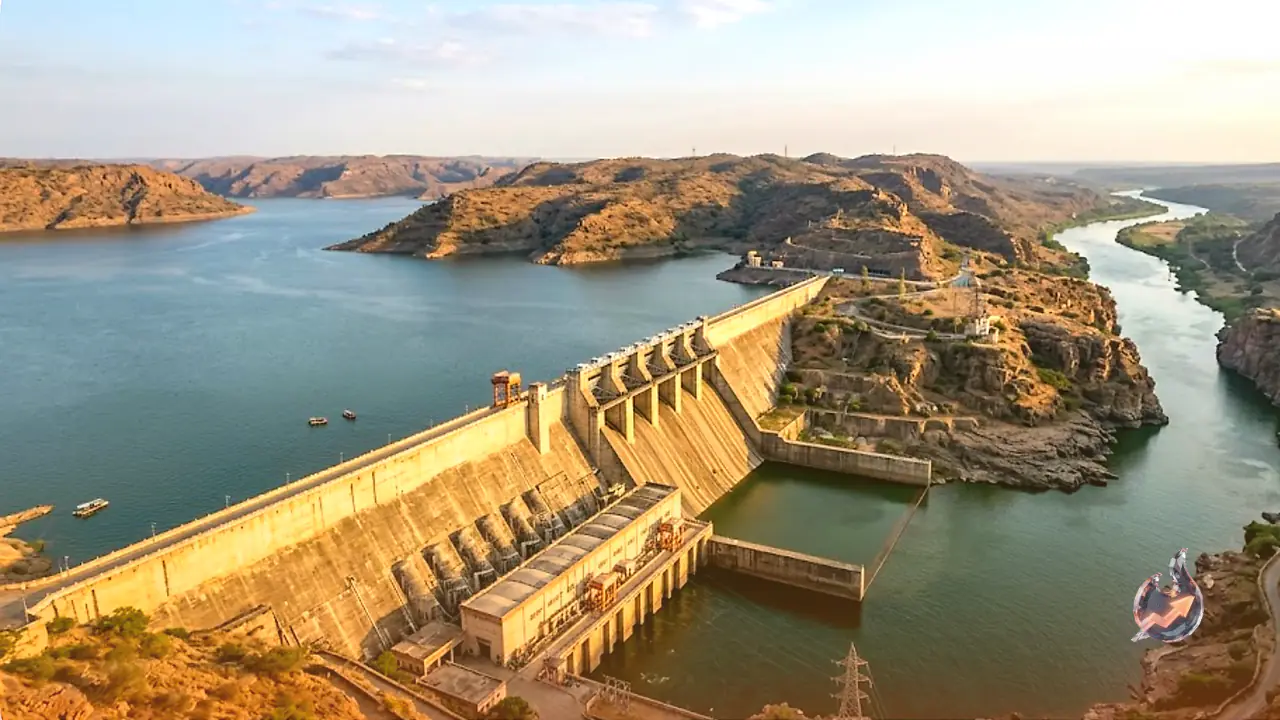
The fourth and final major structure of this cascading system is the Kota Barrage. Unlike the previous three dams, the primary function of the barrage is water distribution rather than power generation. It receives the cumulative flow released from Gandhi Sagar, Rana Pratap Sagar, and Jawahar Sagar. From here, a highly sophisticated network of left and right main canals redirects the water to irrigate lakhs of hectares of agricultural land spread across Rajasthan and Madhya Pradesh.
During the rainy season, the Kota Barrage offers a breathtaking sight as its massive gates are opened to release excess water. Apart from agriculture, this reservoir serves as the lifeline for drinking water supplies in Kota city and its neighboring areas. Any water that is not diverted for irrigation or drinking purposes continues along the natural path of the Chambal River, eventually winding its way to Uttar Pradesh, where it finally merges with the Yamuna River.