























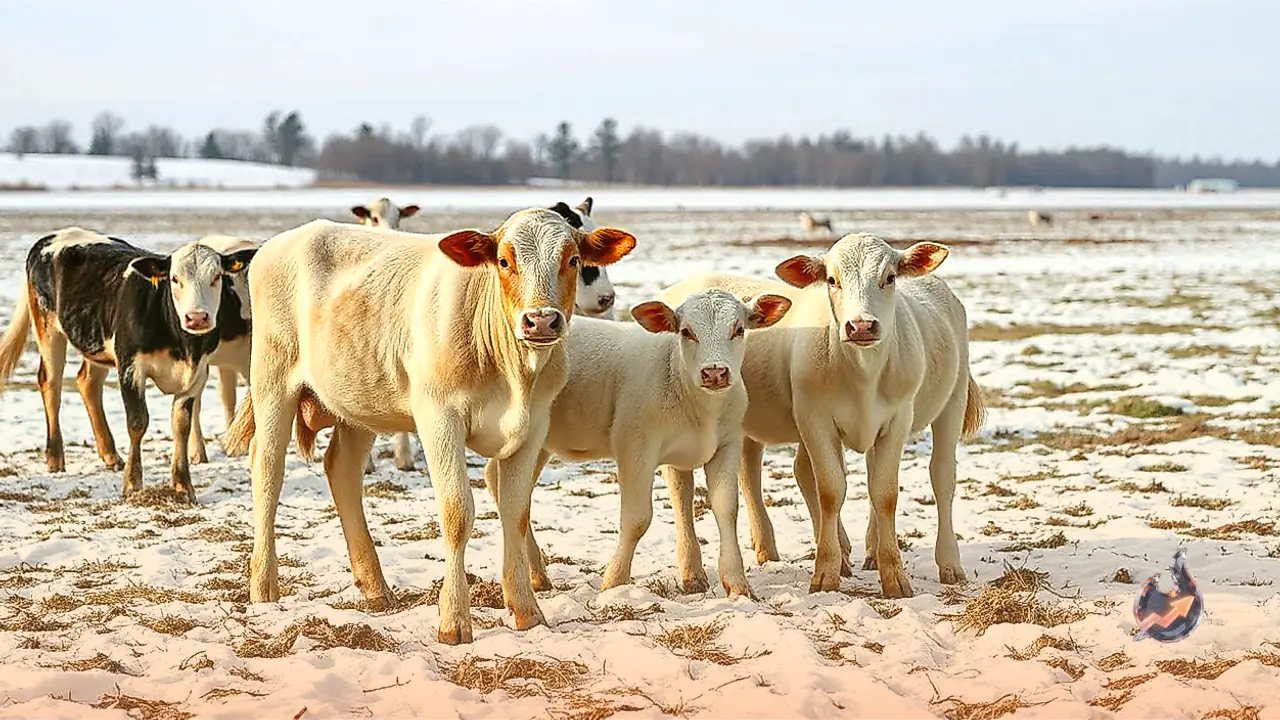

Taking proper care of livestock becomes extremely crucial as winter arrives. Even a slight negligence during this season can make animals vulnerable to serious ailments. In particular, guarding young calves and heifers against the chill is essential, because dropping temperatures can expose them to life-threatening conditions such as pneumonia and white scours. If appropriate care and medical treatment are not provided in a timely manner, it can even lead to their mortality. Therefore, livestock owners must pay close attention to the housing, dietary habits, and overall health of their animals.
Guarding Against Cold Winds and Dampness
Shielding animals from frigid winds is vital during winter months. For this purpose, owners should cover the enclosures of the livestock from all sides so that cold drafts do not hit their bodies directly, thereby lowering disease risks. Extra precautions must be taken to safeguard young calves. Furthermore, their resting areas must be kept clean and dry, which helps prevent ailments caused by dampness and cold conditions.
Risks and Symptoms of Pneumonia and White Scours
The threat of calves contracting pneumonia rises significantly during the winter season. When afflicted with this condition, the calf begins to experience a runny nose and finds it difficult to breathe properly. Pneumonia causes an infection in the lungs, which can turn the animal's condition critical. Additionally, the issue of white scours can prove equally dangerous for young calves, causing their health to deteriorate rapidly. Whenever disease symptoms appear in an animal, no delays should be made, and a veterinarian must be consulted immediately.
Precautions with Clothing and Liquid Feeds
To keep young calves warm from the biting cold, many owners tie cloth garments around their bodies. However, calves frequently start chewing on these fabrics, creating a dangerous risk of pieces getting stuck in their throats or windpipes. Such a scenario can even cost the calf its life. Consequently, owners must adopt safe methods to keep calves warm and ensure they cannot chew on any clothing.
Dangers While Feeding Milk or Tea
In a bid to protect animals from the cold, some owners feed them tea or milk during winter, but extreme caution is required while doing so. Improper feeding techniques can cause the liquid to enter the windpipe instead of the food pipe. This dramatically increases the risk of a severe lung infection. This condition is known as drenching pneumonia, and in severe cases, it can prove fatal for the animal.
Conclusion and Veterinary Advice
Livestock owners should avoid feeding tea or milk to animals unless absolutely necessary. If administering liquids becomes unavoidable for any reason, advice from a veterinary doctor must be sought beforehand. By focusing intently on cleanliness, protection against cold winds, and proper upkeep during winter, animals can be kept safe from a variety of severe illnesses.