























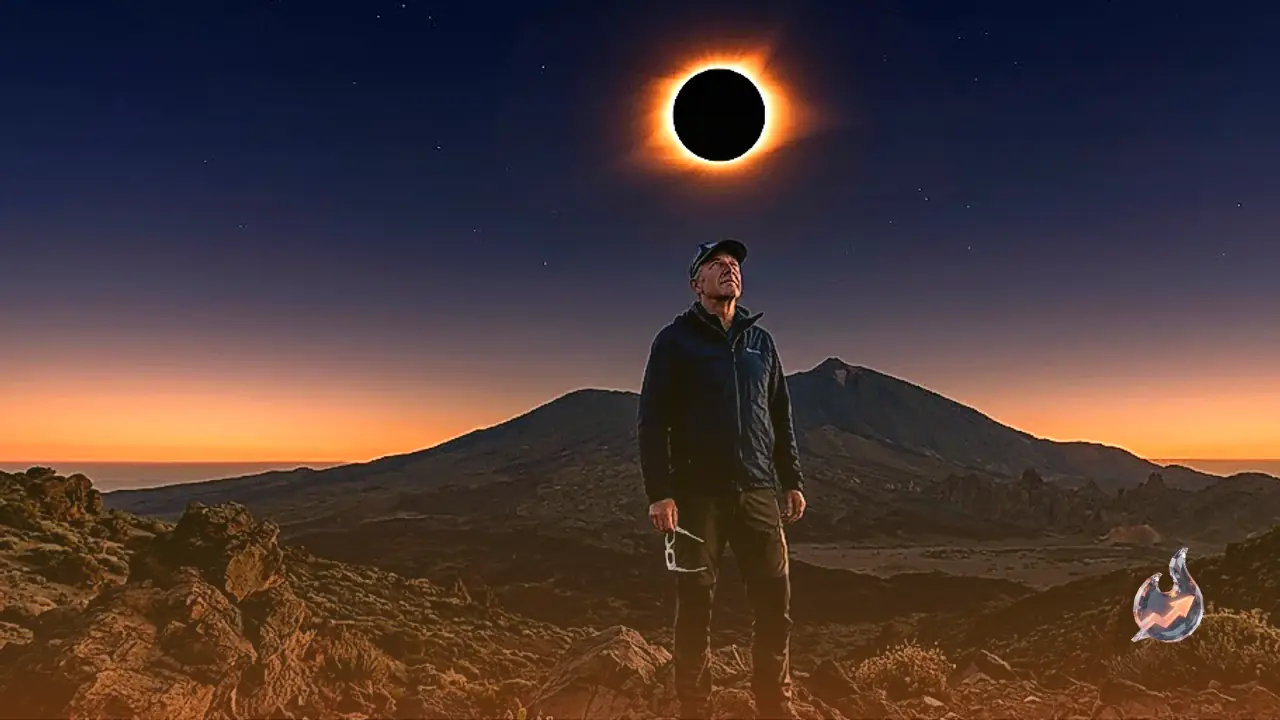

August 12, 2026 is shaping up to be an extraordinary date for astronomy enthusiasts around the globe as a rare total solar eclipse transforms daytime into sudden darkness. During the afternoon hours, sunlight across several parts of the planet will briefly vanish, creating an eerie nighttime atmosphere for a few memorable minutes. This event is being highlighted as the most significant total solar eclipse visible from mainland Europe since 1999. Beyond the eclipse itself, skywatchers are in for a triple celestial spectacle on the very same day. Early that morning, six planets will align in a rare planetary alignment across the sky. Later that night, the Perseid meteor shower will reach its peak intensity, with reduced moonlight offering ideal viewing conditions for observing shooting stars across the dark night sky.
Path of Totality Across Siberia, Iceland, and Spain
Astronomical projections indicate that the eclipse path will originate in Siberia and the Arctic region before advancing across Greenland, touching Iceland, and making its final landfall in Spain. As the moon's shadow travels across the surface of the Earth, it will carve out a narrow corridor of totality where day temporarily turns to night. The most spectacular viewing conditions are expected off the western coast of Iceland in the open ocean, where the total solar eclipse will last for approximately 2 minutes and 18 seconds. Major urban locations in Spain falling directly within the path of totality include Bilbao, Valencia, Zaragoza, A Coruña, and Palma, giving residents and travelers in those cities a front-row seat to the event.
Global Visibility and Scientific Research Missions
Regarding visibility in South Asia, the direct answer is no, observers located in India will not be able to witness this total solar eclipse. However, partial views of the eclipse will be accessible to spectators across the United States, Canada, extensive portions of Europe, and select regions of Africa. To capitalize on this rare simultaneous alignment of three cosmic events, major space research organizations including NASA and the European Space Agency (ESA) are deploying comprehensive study missions. Scientists plan to utilize high-altitude research balloons, specialized jet aircraft flying at extreme altitudes, and state-of-the-art instruments to analyze solar dynamics throughout the duration of the eclipse.
Tourism Boom and Essential Eye Safety Precautions
The anticipation surrounding the event has triggered a massive surge in international tourism, particularly in destination countries along the path of totality. Hotel accommodations throughout Spain and Iceland have reached near-total capacity months in advance. Flight reservations to key eclipse destinations have jumped by roughly 25 percent compared to the previous year. Additionally, cruise operators are launching specialized ocean voyages that position passengers directly in international waters for unobstructed viewing. While this travel boom provides a major economic boost to local businesses, health authorities warn that viewers in visible zones must use specialized solar eclipse glasses. Observing the sun directly without proper eye protection can cause severe and permanent damage. Ultimately, August 12, 2026 will stand as a memorable milestone uniting science, nature, and global travel.