





















Stargazers and astronomy enthusiasts are in for an extraordinary skywatching spectacle in August 2026, as the nighttime skies align to host a rare combination of cosmic phenomena. The celestial calendar for the month features one of the year's most vibrant meteor showers, a dramatic total solar eclipse at dusk, an impressive alignment of six planets in the dawn sky, and a near-total lunar eclipse to close out the period. Viewing conditions promise to be exceptional for several of these events, making it an ideal window to clean optics, track local weather forecasts, and select prime observation locations away from ambient city lights.
Peak Viewing Conditions for the Perseid Meteor Shower
Among the annual cosmic highlights, the Perseid meteor shower stands alongside December's Geminids and January's Quadrantids as one of the most intense and reliably brilliant showers of the year. The display occurs every August as Earth passes directly through the orbital debris stream left behind by Comet 109P/Swift-Tuttle. When these dust and ice fragments enter the upper atmosphere at immense velocities, atmospheric friction incinerates them, creating dazzling streaks of light that cross the night sky.
In 2026, the peak of the Perseid activity will take place during the night of Wednesday, August 12, extending into the pre-dawn hours of Thursday, August 13. Crucially for observers, this peak coincides perfectly with the new moon phase. Because the moon will remain unlit and absent from the sky, ambient celestial darkness will be at its maximum, offering pristine conditions to spot even the faintest shooting stars.
While the shower's radiant point appears to originate within the constellation Perseus, the resulting meteors will actualize and streak across virtually any segment of the night sky. Astronomers recommend utilizing stargazing applications on mobile devices to pinpoint Perseus, helping skywatchers orient themselves toward regions with high probability of catching bright meteor trails.
Dramatic Sunset Total Solar Eclipse Across Southern Europe
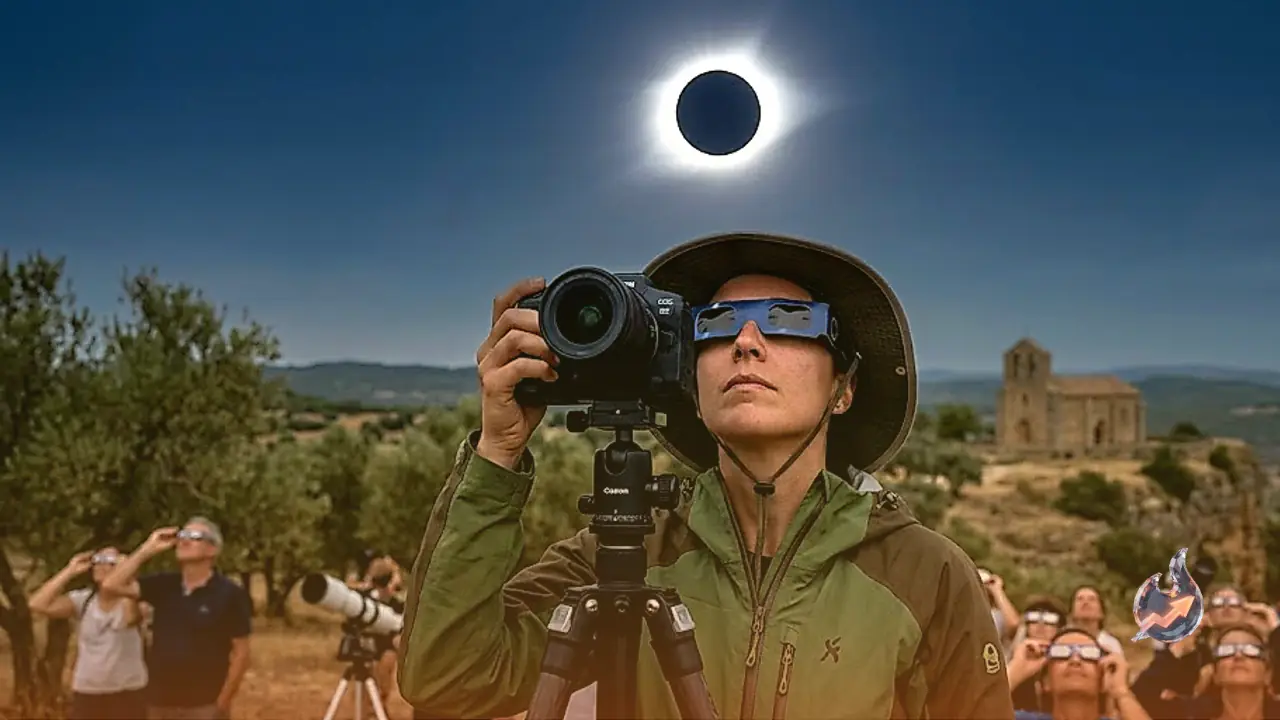
The crowning astronomical centerpiece of August 2026 is a total solar eclipse scheduled for August 12. Although total eclipses cast a relatively narrow path of complete darkness across Earth's surface, regions positioned along this narrow corridor will witness a remarkable event. The path of totality will trace a tight sliver spanning parts of Greenland, Iceland, Portugal, and Spain. Territories situated just outside this narrow path will still experience a substantial partial solar eclipse.
The timing of this solar event adds a layer of dramatic visuals, as totality is slated to occur right around sunset on August 12. With the Sun sitting exceptionally low along the horizon, observers situated within the path will witness the solar corona surrounding a darkened orb suspended just above the landscape, creating a rare and photogenic spectacle.
For the Iberian Peninsula, this event marks the first total solar eclipse visible from the region in more than a century. The path of totality will encompass Spain's capital, Madrid, along with broad administrative regions including Galicia, Asturias, Castile and León, Aragon, Catalonia, Valencia, and the Balearic Islands. Outside these regions, the rest of the country will observe a deep partial eclipse.
For individuals located outside the physical eclipse corridor, major scientific organizations such as NASA and the European Space Agency plan to broadcast live streams of the event. Safety remains the paramount guideline for anyone attempting direct observation: under no circumstances should anyone look directly at the Sun without certified solar protection equipment.
Six-Planet Pre-Dawn Planetary Alignment
Adding to the cosmic density of August 12, the early morning hours just prior to sunrise will feature a rare planetary alignment involving six planets of the solar system. Jupiter, Mercury, Mars, Uranus, Saturn, and Neptune will position themselves in an apparent straight line across the sky.
Observing this multi-planet lineup presents a greater observational challenge than viewing meteor showers due to the varying brightness of the planets involved. Under favorable atmospheric conditions and clear skies, observers can spot Mercury, Mars, and Saturn with the naked eye positioned near the horizon shortly before sunrise. However, locating the more distant ice giants, Uranus and Neptune, will strictly require the aid of a telescope or high-powered astronomical equipment.
Near-Total Partial Lunar Eclipse to Conclude August
The astronomical showcase concludes on August 27 with a partial lunar eclipse that will obscure up to 96 percent of the lunar disk in Earth's shadow. In contrast to solar eclipses, which are restricted to narrow ground tracks, lunar eclipses are visible across vast geographic expanses.
This lunar event will be visible across virtually the entire Western Hemisphere, spanning from northern Canada down to the southern tip of Argentina. Unlike solar viewing, observing a lunar eclipse requires no specialized eye protection or filtering equipment. Observers simply need to find a dark location clear of light pollution with an unobstructed line of sight to the horizon. Stargazers in the Southern Hemisphere are advised to dress warmly, as late August falls during their winter season.