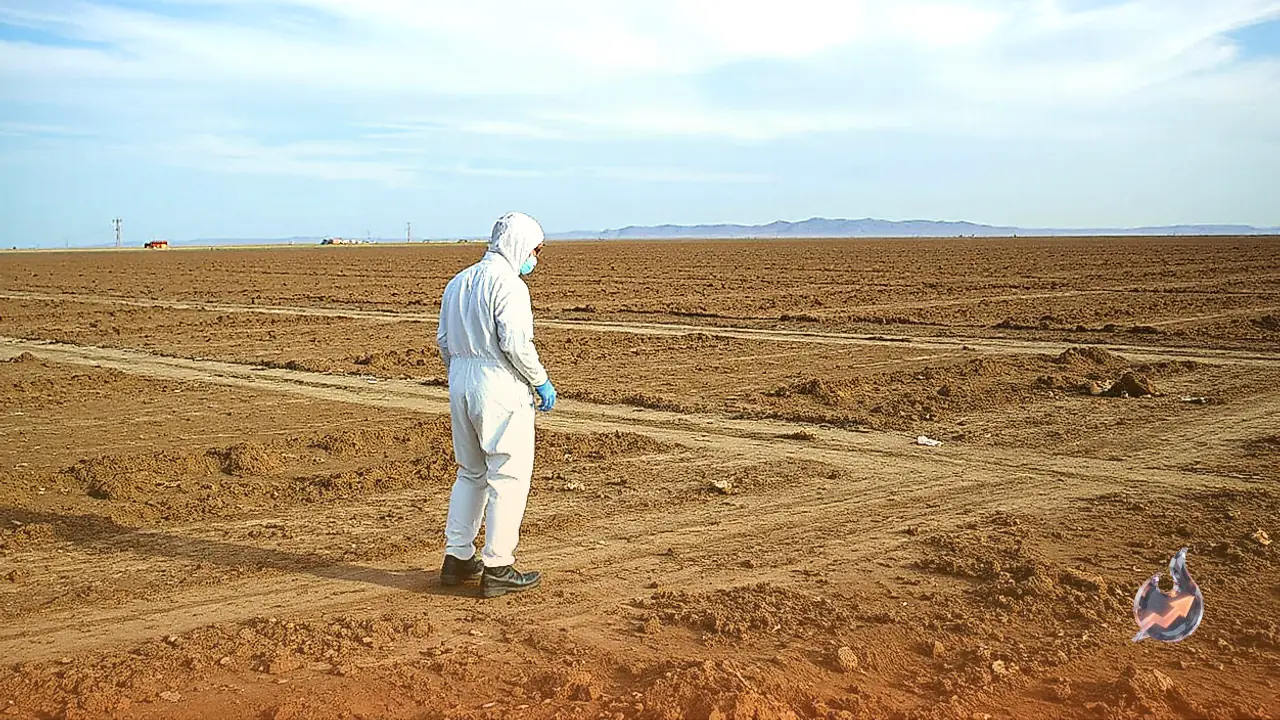

Challenging established scientific assumptions about life and metabolism, a new study demonstrates that soil declared completely dead in a laboratory setting can still continue to release carbon dioxide. For a long time, the scientific consensus held that metabolic processes involving energy production and the breakdown of sugar molecules were exclusively restricted to living cells, but these recent findings question those fundamental claims.
The Soil That Kept Breathing
The sequence of events began when researchers were attempting to establish a baseline carbon level in soil as part of an experimental setup. After radiation was applied to a sealed jar containing soil, all resident microorganisms were completely wiped out. Following this, the rate of carbon emission dropped sharply, but it refused to disappear entirely, remaining remarkably stable for over a hundred days.
When these unusual findings were shared with peers, they advised treating the outcome as a mere experimental artifact and moving on. However, the research team felt compelled to understand whether a tightly orchestrated metabolic process typically confined to biological cells could unfold inside sterile soil. To investigate what was happening, they added a dash of enzymes extracted from yeast cultures into the dead soil.
Immediately following this addition, the carbon emissions from the soil spiked significantly. The researchers speculated that the introduced enzymes had successfully ramped up a chemical reaction that was already quietly underway within the earth.
Winning over the wider scientific community proved to be an uphill battle, as manuscript reviews brought forth considerable skepticism, particularly concerning whether the soil was truly sterile. This pushed the team to spend the next decade chipping away at their obsession to definitively prove that their irradiated samples remained completely free of life.
Rigorous Testing Over a Decade
During years of careful examination, the team considered every possibility, including whether the soil harbored hidden life, subjecting it to even harsher rounds of radiation, intense pressure, and sustained heat. Despite these aggressive sterilization attempts, the soil continued emitting carbon for months on end.
Electron microscope analysis by a graduate student revealed physical cells within the irradiated soil, but staining procedures showed a complete absence of RNA or DNA molecules, confirming the cells were entirely dead. When researchers intentionally introduced live microbes to simulate contamination, those cells rapidly recolonized the soil microcosm and released a much higher volume of carbon dioxide. This demonstrated conclusively that the activity observed in the sterilized samples was not the result of inadequate antiseptic measures.
Long-Term Incubation and Krebs Cycle Indicators
Moving forward by 2018, the team focused deeply on understanding the underlying mechanisms by studying two sets of sealed, irradiated soil samples—one normal and one supplemented with glucose—over a span of six years. After taking regular air emissions data for 142 days, the samples were left to sit in an incubator for over a thousand days while researchers pursued other projects.
When measurements were taken again at days 1,606 and 2,442, the emission rate had slowed down further, but the soil was still breathing. The glucose-augmented jars displayed higher emission levels, reinforcing the hypothesis that nonbiological catalysts in the earth can induce reactions resembling the metabolic breakdown of sugar.
Typically, the Krebs cycle is viewed as a tightly controlled biological sequence occurring only inside living cellular confines. To test if soil could play a comparable role, a specialized fuel cell was devised to detect electrons moving through the soil as an electric current. The current measured was several times higher than a control setup containing saltwater, demonstrating that sterile soil supports a flow of electrons indicative of oxygen-dependent metabolic processes. Furthermore, a 2025 preprint reported observing four of the eight intermediate molecules of the Krebs cycle in six-month-old sterile soil, suggesting that earth can catalyze these reactions independently of life.
Implications for the Origins of Life
Discussing these results, soil ecologists noted that glucose naturally forms some Krebs cycle intermediates during oxidation, and many soils rich in iron and aluminum oxides can readily catalyze such conversions. This fits squarely into emerging theories about the origins of life, where metals like iron and zinc sit at the core of ancient enzymes, suggesting that life-associated chemical reactions might have predated actual living cells.
Some biochemists argue that cell-free metabolic reactions could be far more common than previously assumed and do not require overly complex conditions to initiate. This perspective aligns with evolutionary ideas about how metabolism might have begun before genetic controls evolved to regulate it at a higher level, though low-oxygen conditions during early Earth introduce additional complexities.
The Debate Over Residual Enzymes
An alternative explanation suggests that enzymes freed from the destroyed cells might linger in the soil for extended periods, maintaining stable backbones capable of continuing their biochemical functions. While experts suggest that residual enzymes could easily survive for long stretches, the primary researchers contend that the activity of such enzymes diminishes exponentially, making it very unlikely that six years of sustained respiration is driven solely by leftover enzymes.
Ultimately, this multi-year obsession underscores how difficult it is to accurately distinguish between processes indicating the presence or absence of life, even in an environment as familiar as terrestrial soil. Researchers are now expanding their scope to look for prebiotic origins of other biochemical cascades hidden right beneath our feet.