






















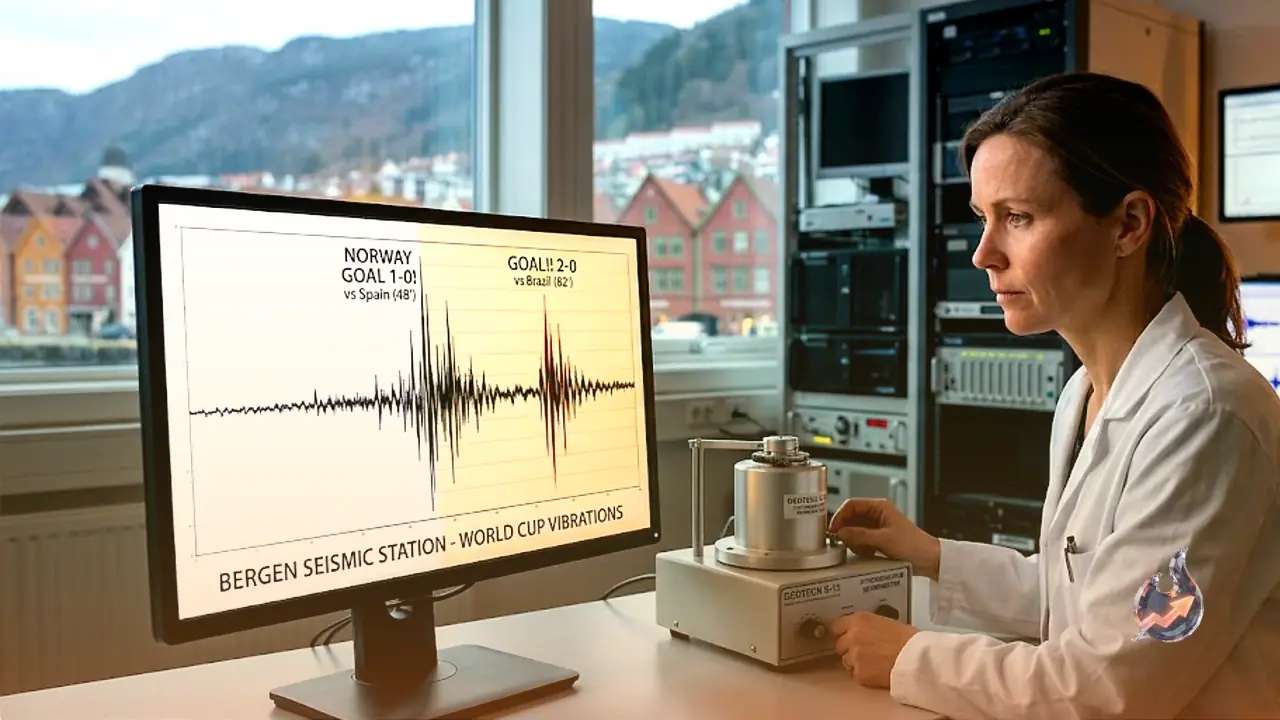

Seismometers are normally installed to track ground movement and seismic waves, the kind set off by earthquakes. But this year's World Cup turned one such instrument into an unlikely football fan. A seismometer kept in a basement on the University of Bergen campus has been recording anomalous signals during Norway's matches, the sort of readings you would usually expect from the earth itself. What makes it remarkable is the sensitivity of the device, which can detect ground vibrations as tiny as one-millionth of a millimeter.
What the scientists said
In a statement released with their findings, professors Mathilde Sørensen and Lars Ottemöller said the activity shows that Bergen is a vibrant city brimming with energy. They signed off the statement with a cheer of their own, go Bergen, and go Norway.
Haaland's goal lit up the readings
The University of Bergen team first spotted the oddities during Norway's match against Iraq on June 17, a game the national side won 4-1. The signal stood out sharply at the moment striker Erling Haaland struck one of his two goals.
The pattern returned only days later, on the night of June 22 to 23, when Norway edged Senegal 3-2. Once again, every Norwegian goal showed up as recognizable vibrations in the data captured by the seismometer.
Why the ground trembles
As the researchers explain, when thousands of people cheer, jump, and shout at the same time, they release a considerable amount of energy. That energy travels through buildings and down into the ground. In other words, collective excitement became something scientifically measurable in Bergen during this year's World Cup. This is not the first time sporting events, concerts, or other large gatherings have been detected this way, but the case of Bergen is one more reminder of how human activity can be picked up even by instruments built to study the Earth.