
























The concept of a single individual fathering dozens or even hundreds of children often sounds like a myth, yet historical archives and ancient texts contain extraordinary accounts of massive offspring counts. In ancient Indian scripture, King Dhritarashtra is described as having 101 children, while recorded history attributes over 800 offspring to a 17th-century African ruler. Beyond legendary tales and historical anomalies, modern biological science offers a clear explanation of how male fertility functions, its age limits, and the theoretical maximum number of children a man could father over a lifetime.
The Mahabharata Narrative of Dhritarashtra and His 101 Children
According to the epic Mahabharata, King Dhritarashtra became the father of 101 children through two separate mothers. Queen Gandhari gave birth to 100 sons, famously known as the Kauravas, along with one daughter named Dushala. The ancient text describes a unique event surrounding their birth. After Gandhari experienced a prolonged pregnancy that failed to deliver, news arrived that Queen Kunti had given birth to Yudhishthira. Troubled by concerns regarding the royal succession, Dhritarashtra established a relationship with a maid from the Vaishya caste, resulting in the birth of his 101st child, a son named Yuyutsu.
The narrative surrounding Gandhari’s children involves a divine intervention. Following blessings from Maharishi Ved Vyas, a lump of flesh from Gandhari was divided into 101 individual pieces. These pieces were carefully preserved inside jars filled with ghee, from which the 100 Kaurava brothers and their sister Dushala eventually emerged.
Biological Mechanisms of Male Fertility and Age Factors
From a biological standpoint, a man’s capacity for fatherhood begins with the onset of puberty, which typically occurs between the ages of 13 and 15. Unlike women, whose reproductive timeline is constrained by menopause, men continuously generate sperm throughout their adult lives. Theoretically, this allows a healthy male to father children across several decades, extending into advanced old age.
Medical research indicates that peak male fertility occurs between the ages of 22 and 35. During this optimal window, sperm quality, count, and motility reach their highest levels, making conception safest and most effective. Although reproductive capacity declines gradually with advancing age, it rarely disappears entirely. Documented medical cases show that healthy elderly men have successfully fathered children in their 80s and 90s.
Legal Boundaries and Historical Realities of Fatherhood
While biological capability begins in early adolescence, modern legal frameworks establish different parameters for marriage and family building. In India, the Prohibition of Child Marriage Act sets the minimum legal age of marriage for men at 21 years. However, historical records contain numerous instances of parenthood occurring at much younger ages prior to modern regulations.
A prominent historical example involves Mahatma Gandhi, who became a father at the age of 19. His wife, Kasturba Gandhi, gave birth to their first child at the age of 15, though the infant passed away shortly after birth. The couple subsequently had four surviving children. Another notable figure, Osama bin Laden, who died at the age of 54, was father to 24 children across his lifetime.
Extreme Historical Records of Offspring
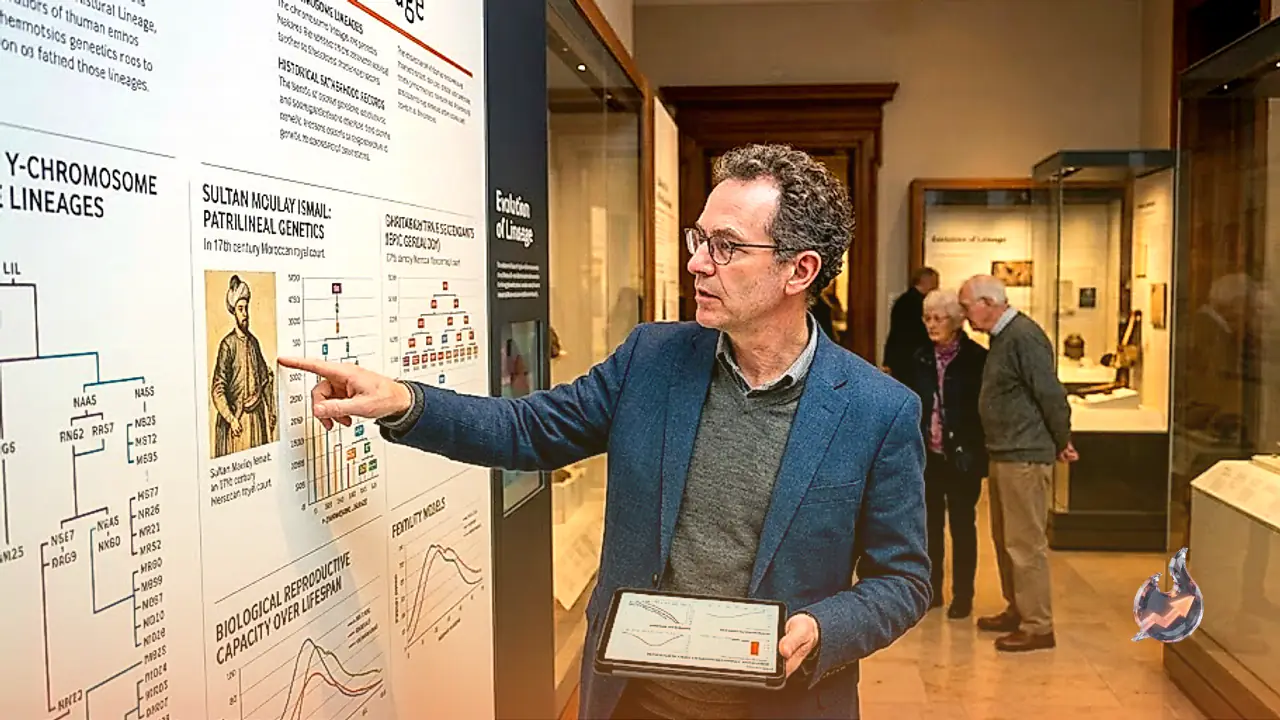
When examining historical records for the highest number of children fathered by a single man, Moroccan Sultan Moulay Ismail stands at the top of documented history. Archives from the 17th century record that the emperor fathered more than 800 children during his reign through his royal court.
In more recent times, Musa Hasahya Kasera of Uganda attracted global attention for his massive family size. Living with 12 wives, he fathered a total of 102 children and became grandfather to 578 grandchildren. On the female side of reproductive extremes, official records cite Valentina Vassilyeva, the 18th-century wife of Russian peasant Feodor Vassilyev. She holds the world record for female births, having given birth 27 times to a total of 69 children, which included multiple sets of twins, triplets, and quadruplets.